Choosing the right supplier for China Clay Pots For Plants requires more than comparing prices. Wholesale buyers must examine clay quality, firing temperature, drainage design, finishing consistency, and export packaging. A low quote may hide fragile rims, uneven glazing, or excessive breakage during transit. Those details become expensive when hundreds of pots arrive damaged.
Li Mei, a China-based ceramic horticulture sourcing consultant, says, “A good plant pot must protect the roots before it impresses the buyer.” Her point is practical. Unglazed terracotta can support airflow around roots, while glazed surfaces offer stronger moisture retention and easier cleaning. However, neither option suits every plant or growing environment. Buyers should request samples before placing large orders. Check the drainage hole size, pot-wall thickness, base stability, and surface texture by hand. Small differences matter.
This guide examines how to evaluate China Clay Pots For Plants for wholesale purchasing. It covers factory selection, customization, minimum order quantities, quality inspections, packaging methods, and shipping considerations. Reliable factories should explain their clay composition and production process clearly. They should also provide consistent measurements across repeat orders. That sounds basic, but it is often overlooked.
Expect some uncertainty. Natural clay may produce slight color variations, even within one batch. That is not always a defect. Still, buyers need agreed tolerances in writing. A careful sourcing process balances appearance, function, budget, and delivery risk. The best supplier is not necessarily the cheapest. It is the one that performs consistently when the order becomes large.
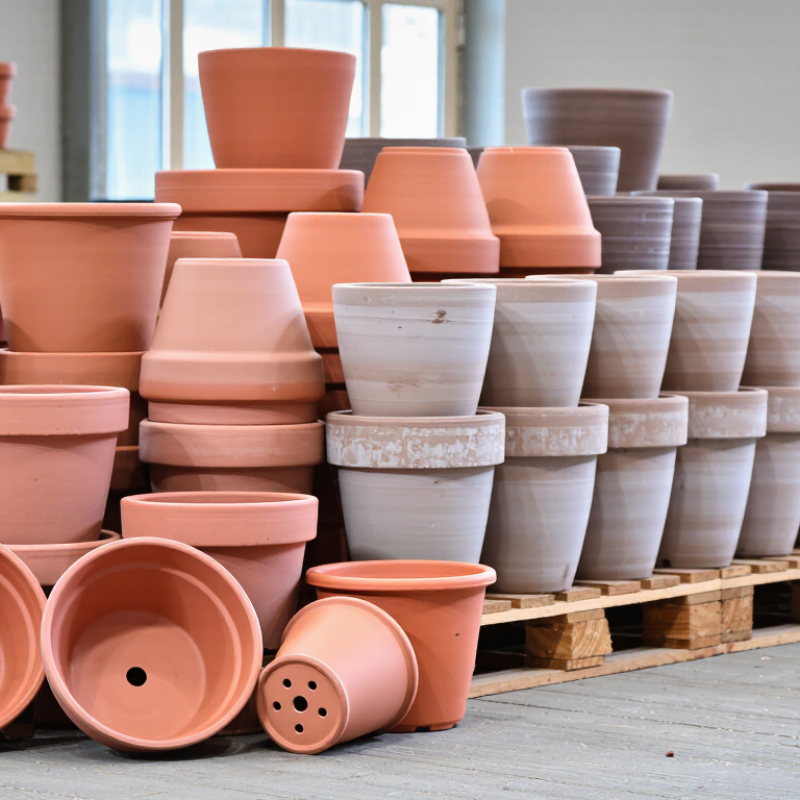
Clay pots are containers formed from natural clay, shaped, dried, and fired at high temperatures. Their porous walls allow air and small amounts of moisture to move through the pot. This can help plant roots breathe and reduce soggy soil after careful watering. Terracotta, a common fired clay material, also develops a warm, earthy surface that suits balconies, windowsills, and nursery displays.
From hands-on growing, clay pots work especially well for herbs, succulents, and many indoor plants that dislike constantly wet roots. Their weight adds stability when tall stems meet a sunny window or outdoor wind. The main weakness is dryness. Clay can pull moisture from soil quickly, and thin pots may crack during freezing weather. Drainage holes remain essential; a beautiful pot without drainage can still damage roots. Wholesale buyers should check wall thickness, hole size, rim strength, and consistent dimensions before ordering large quantities. Small variations are normal because these pots are not always perfectly uniform.
Tips: Match the pot size to the root ball, leaving limited extra space. Water by checking the soil, not by following a fixed calendar. Use a saucer indoors to protect wooden surfaces. For humid plants, clay may dry too fast, so glazed or less porous options might perform better. I once underestimated summer heat and watered too late. The plant recovered, but the lesson was clear.
Unglazed clay pots are porous containers made from fired natural clay. Their breathable walls allow moisture and air to move through the pot, helping reduce waterlogging and making them suitable for plants that prefer well-drained soil.
The chart uses a relative 0–100 performance index based on common material characteristics: higher scores indicate greater breathability, evaporation, drainage support, and stability. Unglazed clay generally provides stronger airflow and moisture release than non-porous plastic, while plastic retains moisture longer and is lighter.
China Best Clay Pots for Plants Wholesale Guide: How to Evaluate Clay Pot Quality for Wholesale Purchasing
Wholesale buyers should judge clay pots by performance, not surface color alone. The U.S. Geological Survey’s Mineral Commodity Summaries 2024 reported about 23 million metric tons of U.S. common clay production in 2023. Large raw-material supply does not guarantee consistent pots. Ask for the clay source, firing temperature, and batch records. A well-fired pot should feel dense, ring clearly when tapped, and show even wall thickness. Some cracks hide.
Test drainage holes for clean edges and steady water flow. Measure several samples from one carton, because size variation can affect plant fit and packaging costs. ASTM C373 provides a recognized method for measuring ceramic water absorption. For unglazed terracotta, compare absorption results between batches. Excessive absorption may cause rapid drying, while very low absorption can suggest an unsuitable finish for breathable plant use. The 2024 Global Ceramic Products Market analysis by Grand View Research also identifies durability and finish consistency as important purchasing factors. Treat such market data as direction, not proof.
Tips: Rub the rim with a damp cloth. Loose dust suggests weak surface bonding. Place samples on a flat table and check rocking. Photograph defects before approval. A small pilot order is safer than trusting one perfect sample. I would also break-test a rejected pot when possible; the fracture can reveal voids, layered clay, or uneven firing. Do not judge quality from color alone.
For wholesale buyers in China, clay pot selection should begin with the plant, not the catalogue. A 10-centimetre pot suits many small succulents, herbs, and rooted cuttings. Medium plants often need 15–25 centimetres. Large indoor foliage may require 30 centimetres or more, but only when roots are established. Measure the root ball and leave two to four centimetres of space. Too much extra soil can stay wet. It matters.
Round pots are dependable for fibrous roots and efficient packing. Tall pots suit palms, taproots, and plants needing vertical drainage. Shallow bowls work well for succulents, bonsai-style arrangements, and spreading roots. Square pots save warehouse space, though their corners can chip during transport. Choose unglazed clay for airflow and faster drying. Glazed interiors hold moisture longer. That difference matters in humid rooms. A drainage hole is essential, while matching saucers help reduce water stains.
For China wholesale orders, request samples before approving a full shipment. Check rim thickness, hole alignment, weight, glaze consistency, and hairline cracks. Test several pots after watering and drying them for a week. Sizes can vary slightly between production batches. Easy to overlook. Pack nested pots with separators, not excessive pressure. Confirm carton dimensions, breakage allowances, and inspection records in writing. A beautiful shape may sell poorly if it tips under a heavy plant. Recheck your assumptions with local growers, because climate changes the right pot size.
| Pot Size (Approx. Top Diameter) |
Typical Capacity | Recommended Shape and Style | Suitable Plants | Key Functional Benefits | Wholesale Selection Notes |
|---|---|---|---|---|---|
| 6–8 cm (2.4–3.1 in) |
0.15–0.35 L | Mini round pot, shallow bonsai pot, or small nursery-style pot | Seedlings, miniature succulents, air plants with a small root base, and rooted cuttings | Compact footprint; easy to group in trays; porous clay can help reduce excess surface moisture | Useful for sampler sets and small retail plants. Confirm that the drainage hole is not oversized for lightweight soil mixes. |
| 9–12 cm (3.5–4.7 in) |
0.4–1.0 L | Standard round pot with a drainage hole | Small succulents, cacti, spider plant offsets, peperomia, and young herbs | Good balance between stability and compactness; breathable material supports fast-draining mixes | A versatile entry size for wholesale assortments. Offer matching saucers when indoor use is expected. |
| 13–16 cm (5.1–6.3 in) |
1.2–2.5 L | Classic tapered cylinder, flared round pot, or ribbed decorative pot | Pothos, fittonia, small ferns, aloe vera, basil, and compact flowering plants | Suitable for established small plants; tapered walls make repotting easier | One of the most adaptable sizes for home, office, and garden-center displays. Check rim consistency across production batches. |
| 17–20 cm (6.7–7.9 in) |
2.8–5.0 L | Medium round planter, cylinder planter, or softly flared planter | Medium pothos, peace lily, snake plant, hoya, herbs, and compact roses | Provides additional root room while remaining manageable for indoor handling | Select a stable base for taller plants. For export orders, review carton dimensions and breakage protection carefully. |
| 21–25 cm (8.3–9.8 in) |
5.5–10 L | Deep round planter, pedestal planter, or textured cylindrical planter | Large snake plants, fiddle-leaf fig juveniles, dracaena, citrus seedlings, and larger herbs | Greater stability and root volume; elevated styles improve airflow beneath the pot | A drainage hole and matching saucer are strongly recommended. Consider reinforced export packaging because clay weight rises quickly at this size. |
| 26–30 cm (10.2–11.8 in) |
11–20 L | Large tapered planter, low bowl, or pedestal bowl | Monstera, large peace lily, bird of paradise juveniles, gardenias, and patio ornamentals | Supports larger root systems and creates a stable base for broad foliage | Low bowls work well for shallow-rooted arrangements; deep planters are better for plants with substantial vertical roots. |
| 31–40 cm (12.2–15.7 in) |
21–45 L | Large cylinder, heavy-duty tapered pot, or wide-mouth planter | Mature shrubs, large palms, citrus trees, olive trees, and outdoor specimen plants | High stability for tall plants; thick clay walls provide durability for sheltered outdoor use | Use pallet-friendly packaging and specify wall thickness, base diameter, drainage design, and maximum acceptable weight variation. |
| 41–50 cm (16.1–19.7 in) |
46–90 L | Extra-large planter, trough, or wide bowl | Small trees, bamboo varieties, large palms, mixed seasonal displays, and outdoor shrub groupings | Suitable for substantial root systems and commercial landscape installations | Best for professional landscaping and hospitality projects. Confirm lifting requirements, pallet load limits, and delivery access before ordering. |
| Long Trough 40–80 cm length |
15–55 L | Rectangular trough with drainage holes | Herbs, salad greens, succulents, seasonal flowers, and compact balcony plantings | Efficient use of horizontal space; suitable for grouped planting and linear displays | Specify internal dividers only when needed. A reinforced rim and multiple drainage points help reduce cracking and waterlogging risks. |
| Hanging Pot 12–20 cm diameter |
1.0–4.5 L | Hanging bowl or wall-mounted pot with drainage outlet | String of pearls, trailing pothos, ivy, ferns, and compact flowering trailers | Uses vertical space; porous clay can suit plants that prefer a drier root environment | Include a load-rated hanger or clearly state that the hanger is sold separately. Test suspension points and drainage direction. |
| Bonsai Pot 15–35 cm diameter |
1.5–12 L | Low rectangular, oval, or shallow round pot with wide drainage openings | Bonsai trees, miniature conifers, jade plants, and shallow-rooted ornamental arrangements | Low profile helps maintain a compact root zone; broad drainage supports bonsai substrate management | Offer several neutral finishes and feet options. Drainage mesh may be required depending on the customer’s substrate and cultivation method. |
| Wholesale specification reminder: Actual capacity varies with wall thickness, taper, interior shape, and drainage design. Before placing a bulk order, request production samples and confirm dimensions, weight tolerance, drainage-hole size, frost resistance, finish consistency, carton packing, pallet configuration, and compliance requirements for the destination market. | |||||
How to Compare Wholesale Suppliers, Prices, and Order Terms
Comparing clay pot suppliers requires more than checking the lowest quotation. I usually request samples in several sizes, then inspect drainage holes, wall thickness, glaze coverage, and rim strength. A reliable supplier should provide clear clay specifications, production photos, and recent quality records. Ask whether the pots are fired in controlled temperatures. Uneven firing can cause cracks after watering or transport.
Price needs a wider calculation. Compare the unit cost, mold charges, sample fees, packaging, inland delivery, and export freight. A pot priced at $1.20 may cost more than a $1.35 pot with stronger cartons. Request a quotation based on identical quantities and specifications. Include the minimum order quantity, production lead time, payment schedule, and acceptable defect rate. Small details matter.
Order terms deserve careful attention. Confirm how broken pots are counted, when inspections occur, and who pays for replacement goods. Use written measurements, color references, and packing standards. I once focused too heavily on carton pricing and overlooked pallet space. The final freight bill changed the calculation. That mistake still influences my supplier reviews. A useful comparison sheet should record response speed, sample accuracy, factory capacity, and willingness to correct errors. Cheap is not always efficient. Ask difficult questions early.
China Best Clay Pots for Plants Wholesale Guide?
Before shipping bulk clay pots, confirm every specification in writing. Check the inner diameter, outer diameter, height, weight, color range, and drainage-hole size. Small differences can affect plant fit and retail pricing. Ask for a production sample from the actual order, not only a catalog photograph. Terracotta may show natural shade variation, but deep cracks, loose rims, and unstable bases need rejection.
Packaging deserves close attention. Each pot should have suitable paper protection, dividers, and strong export cartons. Larger pots may need foam, corner guards, or pallet support. Request photos of packed cartons before loading. Confirm carton marks, quantity per carton, total weight, and container space. A simple drop test on one packed carton can reveal weak protection. It is not perfect, but it is better than guessing.
Receiving inspection should begin before unloading is complete. Count cartons, photograph damaged pallets, and compare the shipment with the packing list. Inspect several cartons from different pallet positions. Look for hairline cracks, chipped drainage holes, uneven glazing, damp cartons, and crushed rims. Record defects with measurements and clear photos. Do not rely only on the supplier’s stated defect rate. A few pieces may be missed during sampling, especially when workers inspect under poor lighting. That is a useful warning. Hold questionable cartons separately until the quantity and condition are verified. Payment terms, replacement procedures, and claims deadlines should also be confirmed before shipping.
Choose the pot according to the plant and root ball, not the catalogue. A 10-centimetre pot suits small succulents, herbs, and rooted cuttings. Medium plants often need 15–25 centimetres. Large foliage plants may need 30 centimetres or more. Leave 2–4 centimetres around established roots. Oversized pots can hold wet soil for too long.
Round pots suit fibrous roots and pack efficiently. Tall pots support palms, taproots, and plants needing vertical drainage. Shallow bowls suit succulents, bonsai-style arrangements, and spreading roots. Square pots save warehouse space. Their corners may chip during transport. Shape affects stability.
Unglazed clay allows airflow and dries faster. Glazed interiors retain moisture longer. This difference matters in humid rooms. Use unglazed pots for plants needing quicker drying. Choose glazed surfaces when slower moisture loss is useful. The choice is not universal.
A drainage hole is essential for most plants. Check its alignment, diameter, and clean edges. Matching saucers can reduce water stains on shelves and floors. A stable base matters for heavy plants. A beautiful pot may tip under a large root ball.
Request samples in several sizes before placing a full order. Inspect rim thickness, wall strength, glaze coverage, weight, and drainage holes. Check for hairline cracks after watering and drying samples for one week. Ask for clay specifications, production images, and quality records. Confirm whether firing temperatures are controlled. Samples can mislead.
Compare identical quantities and specifications. Include unit price, mold charges, sample fees, packaging, inland delivery, and freight. Also record minimum order quantities, lead times, payment schedules, and defect limits. A cheaper pot may need stronger cartons or more warehouse space. I once focused on carton pricing and missed pallet capacity. The final freight changed my calculation.
Use paper protection, dividers, and strong export cartons. Larger pots may need foam, corner guards, or pallet support. Avoid excessive pressure when nesting pots. Request photographs of packed cartons before loading. Confirm carton marks, quantities, weights, and container space. A simple drop test can expose weak protection. It is not perfect.
Count cartons before unloading is complete. Photograph damaged pallets and compare quantities with the packing list. Inspect cartons from different pallet positions, not only the top layer. Look for cracks, chipped holes, uneven glazing, damp cartons, and crushed rims. Record defects with measurements and clear photographs. Separate questionable cartons until verification is complete. Check the paperwork again.
This guide explains how to choose China Clay Pots For Plants for wholesale purchasing. Clay pots are valued for their natural appearance, breathability, and ability to absorb excess moisture, making them suitable for many indoor and outdoor plants. Buyers should evaluate clay density, wall thickness, firing quality, drainage holes, surface finish, and resistance to cracking. A consistent color and stable shape are also important indicators of reliable production.
The guide also covers how to match pot sizes, shapes, and styles with different plant types and root systems. When comparing wholesale suppliers, consider unit pricing, customization options, minimum order quantities, production time, packaging, payment terms, and communication efficiency. Before shipping and receiving bulk orders, confirm product specifications, inspect samples, request protective packaging, and check the shipment for breakage, quantity differences, and quality consistency. These steps can help reduce purchasing risks and support dependable wholesale cooperation.