+86 13959259055 [email protected]

10 Easter Bunny Clay Tips for Global Buyers?

Time:2026-10-18 Author:Aria
0%

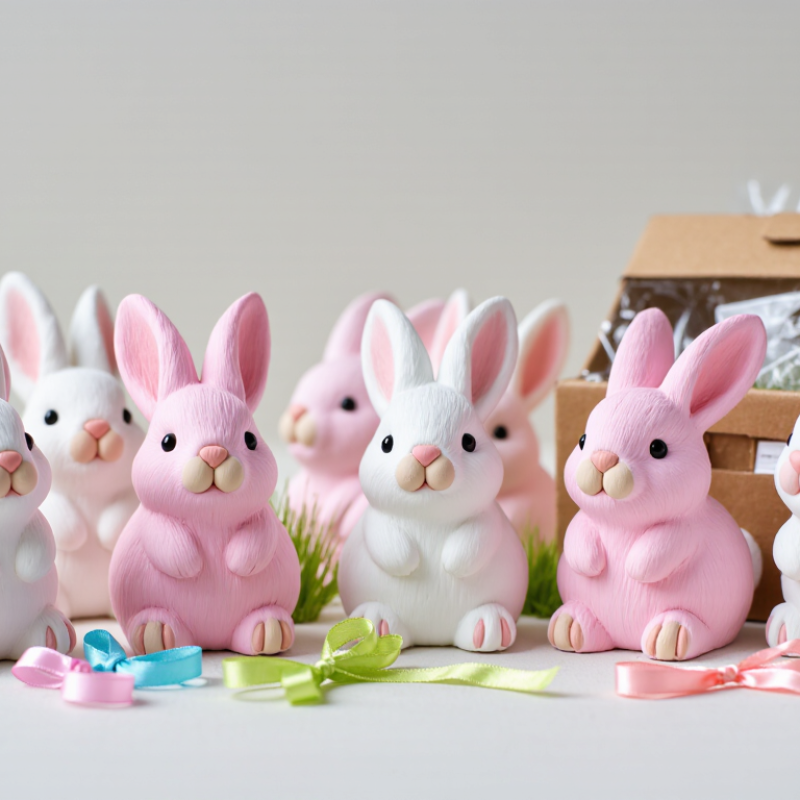
For global buyers, Easter Bunny Clay is more than a seasonal decoration. It is a product shaped by material quality, surface detail, packaging, and buyer expectations. A small bunny may need to survive a long journey from a humid workshop to a dry retail shelf. That journey can reveal weak joints, faded colors, or careless wrapping.

Polymer clay educator Donna Kato is widely associated with the practical reminder, “There are no mistakes, only design opportunities.” That idea fits Easter Bunny Clay production, although every design still needs honest testing. A crooked ear may look charming in a handmade collection. It may look defective in a wholesale shipment. Buyers should inspect clay consistency, curing results, paint adhesion, weight, dimensions, and odor before approving large quantities. Tiny details matter. A smooth belly. Firm ears. Clean edges.

This guide presents ten useful Easter Bunny Clay tips for international purchasing decisions. It considers color matching, sample approval, protective packaging, carton efficiency, seasonal lead times, and clear product specifications. It also highlights details that are easy to miss, such as moisture barriers and the risk of fragile grass or ribbon decorations. No supplier is perfect. Samples can differ slightly from production pieces. That is why written specifications, photos, and pre-shipment checks remain valuable. A beautiful bunny is only part of the order. Reliable consistency matters more when products cross borders.
10 Easter Bunny Clay Tips for Global Buyers?

Understanding Easter Bunny Clay Products and Buyer Requirements

Easter Bunny Clay Products: What Global Buyers Need to Know

Global demand begins with clear product positioning. The National Retail Federation reported that 81% of U.S. adults planned to celebrate Easter in 2024. Its survey also projected record seasonal spending of about 24 billion dollars. This supports demand for handmade-looking decorations, gift items, and craft kits. Yet demand does not guarantee repeat orders. Buyers should confirm clay type, finished dimensions, weight, color stability, and intended use. A small bunny with a 6-centimeter ear may look charming, but fragile packaging can quickly damage it.

Material documentation matters. For decorative products, request composition details, safety data, pigment information, and migration test results where relevant. If children will handle the item, buyers should review applicable toy-safety requirements in each destination market.

The European Union’s General Product Safety Regulation has applied since December 2024, increasing expectations for traceability and responsible product information.

Packaging should include batch references, care instructions, warning details, and recyclable components when possible. These are not just paperwork tasks.

Production checks should cover sample approval, moisture control, kiln or air-drying consistency, surface inspection, and carton drop testing. Buyers also need realistic minimum order quantities, lead times, replacement policies, and secure payment terms.

In practice, handmade variation can create buyer disappointment. Slight differences may add character, but uneven paint or hidden cracks are quality failures. I would not promise perfect uniformity. A stronger specification defines acceptable variation before production begins, then verifies it with photos and random inspections.

Selecting Safe, Durable, and Suitable Clay Materials

10 Easter Bunny Clay Tips for Global Buyers

Selecting clay for Easter bunny figures starts with the user, not the color chart. Air-dry clay suits lightweight ornaments and needs little equipment. Polymer clay offers stronger detail, but it requires controlled oven curing. Natural modeling clay feels soft and reusable, yet it may dry, stain, or lose shape during transport. Check the safety data sheet, ingredient disclosure, age guidance, and batch traceability before ordering. “Non-toxic” alone is not enough.

For children’s products, ask suppliers for current testing against relevant requirements, such as EN 71-3 or ASTM F963. These standards assess the migration of certain elements from accessible materials. The European Commission’s Safety Gate 2023 report recorded 3,412 product alerts, showing why paperwork and traceability matter. Request test reports from accredited laboratories, not only supplier declarations. Inspect pigment stability, surface odor, moisture content, and crack resistance. Small ears often break first.

Test a sample before placing a large order. Press one bunny gently, bend a thin ear, and leave another in a warm, humid room. Record weight, drying time, shrinkage, and color change. Packaging also matters; sealed bags can trap moisture, while loose packing causes dents. UNEP’s 2023 Turning off the Tap report says plastic pollution could be reduced by 80% by 2040, so recyclable packaging deserves attention. My imperfect lesson is simple: the cheapest clay can create the most expensive rework. Suppliers should explain storage limits clearly. Buyers should question vague claims.

Evaluating Shapes, Sizes, Colors, and Surface Finishes

Shape is the first quality check when evaluating Easter bunny clay items. Ask for front, side, and bottom views. An upright rabbit should stand firmly without leaning. Long ears may look attractive, but they can chip during handling. Check the base carefully. Uneven feet often reveal rushed production.

Size needs a clear measurement system. Record height, width, and weight for every sample. Small figures suit gift boxes and tabletop displays. Larger pieces create stronger visual impact but require safer packing. Compare sample dimensions with the final production tolerance. A difference of two millimeters can change a whole display. I have learned that “small” means little without exact numbers.

Color should remain consistent across batches, especially on pale pink, cream, and soft yellow surfaces. Request a physical color sample when possible. Screens can misrepresent warmth and brightness. Surface finish also affects perceived value. A matte coating hides minor marks, while a glossy finish highlights fingerprints and uneven texture. Inspect ears, cheeks, and raised details under direct light. Look for pinholes, rough edges, and patchy glaze. Not every sample will look perfect. That is useful. Ask whether the flaw is accidental, repeatable, or preventable. For overseas purchasing, confirm finish specifications, inspection methods, and protective packaging before approving bulk production.

Checking Craftsmanship, Packaging, and Product Compliance

10 Easter Bunny Clay Tips for Global Buyers

Checking craftsmanship starts with the ears, seams, and painted faces. Ask for close-up photos under daylight. Check for cracks, pinholes, uneven glaze, loose parts, sharp edges, and unstable bases. Press the clay gently; weak pieces may flex or shed dust. Confirm dimensions, weight, color tolerance, and curing records for every batch. Ten practical checks matter: surface finish, symmetry, adhesion, odor, moisture, breakage resistance, labeling, test reports, carton strength, and traceability.

Packaging needs equal attention. Request a drop-test method, inner cushioning specification, carton measurements, and pallet-loading photos. A bunny arriving with a broken ear is still a failed product. Use sealed polybags only when suitable, and avoid unnecessary plastic. The OECD Global Plastics Outlook projects plastic waste could nearly triple by 2060 without stronger action. Paper padding may reduce waste, but it can absorb moisture during humid ocean transport. That detail is easy to miss.

Compliance depends on the selling market and product claims. If the item is marketed as a toy, request applicable chemical, mechanical, and flammability evidence, such as relevant EN 71 testing in Europe. The European Commission’s Safety Gate report recorded 3,412 alerts in 2023, showing why documentation cannot be treated as decoration. Check material declarations, paint composition, batch codes, warnings, age grading, and importer details. I would not accept one generic certificate for every color. That shortcut sounds efficient, but it can hide formulation differences.

10 Easter Bunny Clay Tips for Global Buyers: Quality and Compliance Priorities

This buyer checklist allocates review attention across craftsmanship, packaging, safety, labeling, and sustainability. Product safety and labeling should be verified against the destination market, including applicable requirements such as EN 71, ASTM F963, CPSIA, REACH, and relevant packaging regulations. Confirm test reports, material declarations, age grading, warning statements, and carton protection before placing an order.

Comparing Suppliers, Costs, Shipping, and Order Terms

10 Easter Bunny Clay Tips for Global Buyers?

Demand affects negotiation. The National Retail Federation’s 2024 Easter survey estimated US spending at $3.1 billion on decorations, food, and gifts. Seasonal clay bunnies therefore need firm production dates, not vague promises. Request supplier photos, clay composition, firing temperature, dimensions, and weight. Compare at least three quotations using the same specifications. A 12-cent lower unit price may disappear through thicker packaging or higher breakage.

Ask for a cost sheet covering molding, painting, cartons, inspection, freight, insurance, and destination charges. Small ceramic-style pieces need corner protection, moisture barriers, and carton drop testing. UNCTAD’s Review of Maritime Transport reports that over 80% of global merchandise trade moves by sea. Sea freight is cheaper, but timing is less forgiving. Air shipping suits samples or urgent replenishment. I once underestimated carton volume; the freight bill became the real product cost. Measure packed dimensions before accepting a quote.

Order terms deserve equal attention. Confirm minimum order quantity, sample charges, payment stages, production lead time, defect tolerance, replacement rules, and cancellation conditions. The World Bank’s 2023 Logistics Performance Index shows that customs, infrastructure, and shipment reliability strongly influence delivery performance. Choose suppliers with traceable inspection records and consistent replies. Ask for a pre-shipment sample. It costs little. Yet sample colors can differ after mass production, so retain approved photos and written specifications. Some terms still remain unclear. Recheck them.

10 Easter Bunny Clay Tips for Global Buyers? – Comparing Suppliers, Costs, Shipping, and Order Terms
No. Buying Tip Recommended Product Specification Typical MOQ Indicative Unit Cost
(USD, EXW)
Packaging Consideration Shipping & Lead-Time Guide Order-Term Checkpoint
1 Choose the right clay type Use air-dry clay for lightweight decorative figures; use polymer clay when higher detail and stronger parts are required. 100–500 pieces $0.80–$3.50 Confirm whether the clay is fully cured and whether moisture protection is needed. Sample approval commonly takes 5–10 days; production often takes 15–30 days after approval. Ask for the exact clay composition, curing method, and finished weight.
2 Compare size and weight Common retail sizes are approximately 5–12 cm high. Smaller figures reduce material and freight costs. 100–1,000 pieces $0.60–$4.00 Request carton dimensions and the packed weight, not only the product dimensions. Air freight is usually charged by actual or volumetric weight, whichever is higher. Include a permitted size and weight tolerance, such as ±3%.
3 Evaluate surface finishing Check paint coverage, smoothness, facial details, color consistency, and resistance to light handling. 100–500 pieces $1.00–$5.00 Use individual polybags, tissue, or molded inserts to reduce paint rubbing and scratches. Hand-painted products may require an additional 5–10 production days for larger orders. Approve a physical or color-controlled sample before bulk production.
4 Check breakage risks Prefer reinforced ears, feet, and tails; avoid very thin unsupported parts for long-distance shipping. 200–1,000 pieces $1.20–$5.50 Use dividers or individual compartments when pieces have protruding ears or accessories. Sea freight is generally more economical for larger cartons, while air freight is faster for seasonal replenishment. Agree on an acceptable defect rate and the evidence required for claims.
5 Request seasonal color options Neutral white, pastel pink, yellow, blue, and natural clay tones are easy to coordinate with Easter displays. 300–1,000 pieces per color $0.90–$4.50 Separate colors inside cartons and label each inner pack clearly. Multiple colors can increase production complexity and may extend the schedule by 3–7 days. Confirm whether color changes require a new sample or carry an additional setup charge.
6 Compare custom designs carefully Custom ears, baskets, flowers, lettering, or facial expressions should be specified with drawings or 3D files. 500–2,000 pieces $1.50–$7.00 Custom accessories should be packed separately if they can detach during transit. Tooling or prototype development may add 7–20 days before mass production begins. Clarify whether mold, sculpting, artwork, and revision fees are included.
7 Verify packaging and labeling Choose retail-ready packaging only when the target market requires shelf presentation or gift packaging. 300–1,000 sets $0.20–$1.80 packaging add-on Confirm carton markings, barcode placement, language requirements, and recyclable-material options. Retail packaging increases cubic volume and may raise shipping costs even when product weight is unchanged. Specify packaging artwork approval, packing quantity per carton, and carton drop-test expectations.
8 Select the correct shipping method Use courier or air freight for samples and urgent replenishment; use sea freight for larger, non-urgent orders. Any quantity; freight efficiency improves with consolidated cartons Courier often $8–$25/kg; air freight often $4–$12/kg; sea freight varies by route and volume Confirm whether freight rates include fuel, handling, customs clearance, duties, and local delivery. Typical international transit ranges from about 3–10 days by air and 25–50 days by sea, excluding production. State the Incoterm clearly, such as EXW, FOB, CIF, or DDP, and identify who handles import duties.
9 Negotiate payment protection Use a written purchase order covering product details, quantity, price, inspection, delivery, and remedies. Usually flexible, depending on order value Common structure: 30% deposit and 70% balance before shipment Do not release the balance until inspection results, packing photos, or agreed shipping documents are received. Payment timing can affect the production slot and dispatch date. Confirm currency, bank charges, refund conditions, late-delivery terms, and balance-payment triggers.
10 Plan Easter inventory early Build stock around the destination market’s retail calendar and allow time for sampling, production, customs, and local delivery. Based on forecast and sales channel Add a 5–15% contingency for seasonal demand or replacement units Reserve space for spare units and use moisture-resistant outer cartons where climate conditions require it. A practical planning window is 8–14 weeks from sample approval to warehouse delivery for international orders. Set a final order date, latest ship date, inspection date, and shortage or replacement procedure.

FAQS

What shape checks should buyers request for clay bunny items?

Request front, side, and bottom views. An upright rabbit should stand firmly without leaning. Check the base and feet for uneven surfaces. Long ears look attractive, but they may chip during handling.

How should buyers confirm product size?

Record height, width, and weight for every sample. Use exact measurements, not vague terms like “small.” A two-millimeter difference can change a display. Compare samples with the final production tolerance.

Which sizes suit different retail displays?

Small figures fit gift boxes and tabletops. Larger pieces create stronger visual impact. They also need safer packing and more storage space. Bigger is not always better.

How can buyers control color consistency?

Request physical color samples for pale pink, cream, and soft yellow items. Screens can show incorrect warmth or brightness. Compare samples under the same lighting conditions. Keep approved photos and written color specifications.

What surface defects should inspectors examine?

Inspect ears, cheeks, and raised details under direct light. Look for pinholes, rough edges, fingerprints, and patchy coating. Matte finishes hide minor marks. Glossy finishes reveal uneven texture more clearly.

How should buyers compare supplier quotations?

Compare at least three quotations with identical specifications. Review molding, painting, cartons, inspection, freight, insurance, and destination charges. A lower unit price may disappear through thicker cartons or higher breakage.

What shipping details matter for fragile clay items?

Confirm packed dimensions before accepting a freight quote. Use corner protection, moisture barriers, and carton drop testing. Sea shipping costs less but allows less timing flexibility. Air shipping suits samples or urgent replenishment.

Which order terms should be confirmed before production?

Confirm minimum order quantity, sample charges, payment stages, lead time, defect tolerance, replacements, and cancellation conditions. Request a pre-shipment sample. Some terms may still remain unclear. Recheck them.

Conclusion

For global buyers, choosing the right Easter Bunny Clay products requires more than attractive designs. Buyers should first define the product’s intended use, target market, quantity, and quality expectations. Safe, durable, and suitable clay materials are essential, especially for decorative or craft-related products. Key details include smooth and stable shapes, appropriate sizes, appealing colors, and surface finishes that resist cracking, fading, or uneven texture. Clear product specifications can help buyers compare options and reduce misunderstandings during purchasing.

Quality evaluation should also cover craftsmanship, detailing, color consistency, and overall durability. Reliable packaging is important for protecting Easter Bunny Clay items during long-distance transportation, while product documentation and compliance information can support responsible market entry. Buyers should compare suppliers according to production capacity, customization ability, pricing, minimum order quantities, lead times, shipping arrangements, payment conditions, and after-sales communication. A balanced assessment of quality, cost, logistics, and order terms can help global buyers select suitable products and build more predictable purchasing plans.


Aria

Aria

Aria is a dedicated marketing professional with a deep passion for innovative strategies and a keen understanding of our company's product offerings. With a wealth of experience in the industry, Aria excels at crafting engaging content that highlights the unique features and benefits of our......