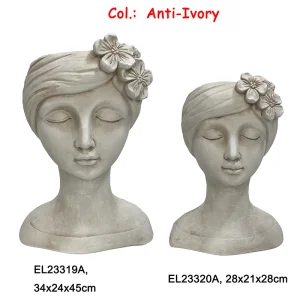
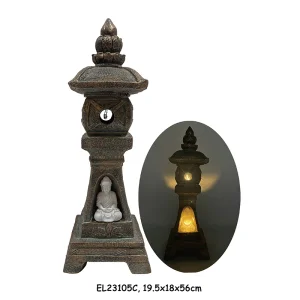
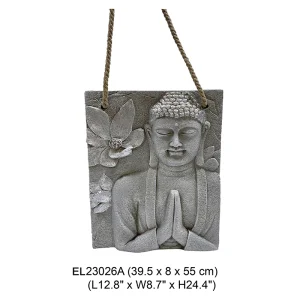
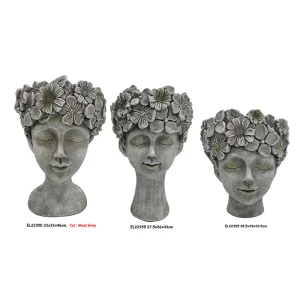
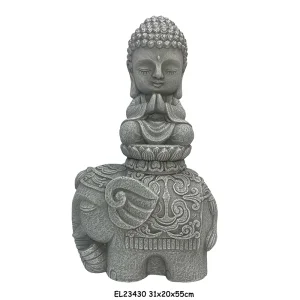
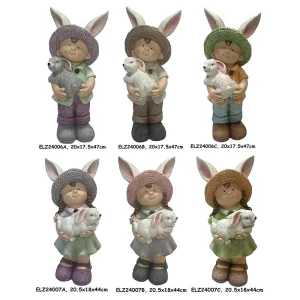
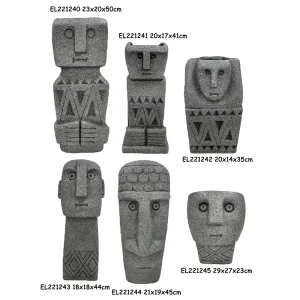
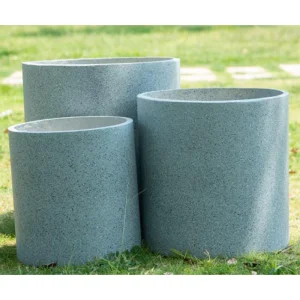
Direct factory supply of weather-resistant fiber clay and MGO statues designed for commercial landscapes, spiritual sanctuaries, and luxury retail.
Understanding shifting procurement paradigms, material science breakthroughs, and high-growth sectors across North America, Europe, and Asia-Pacific.
The global demand for architectural sacred art, meditative garden accents, and luxury wellness décor has experienced exponential growth over the past decade. Among these products, Buddha clay statues and structural relief panels hold a dominant market share in residential landscaping, boutique resort architecture, corporate wellness centers, and public urban parks. However, as international freight costs, climate volatility, and sustainability directives evolve, traditional terracotta and heavy concrete sculptures are rapidly being replaced by advanced material formulations. Enterprise buyers seeking a premier Buddha Clay Exporter must evaluate suppliers not merely on aesthetic artistry, but on material engineering, supply chain reliability, and environmental compliance standards.
Traditional kiln-fired ceramic clay possesses inherent limitations in international B2B trade. Heavy weight inflates ocean freight charges, while low flexural strength leads to high breakage rates during multi-modal transit. Modern industrial manufacturing in China has solved these challenges through the development of Fiber Clay (Fiberglass Reinforced Clay) and Magnesium Oxide (MGO) Clay Composites.
By reinforcing raw clay slurry with alkali-resistant fiberglass mesh and stabilizing magnesium salts, exporters can engineer Buddha statues that retain the authentic visual and tactile texture of hand-carved stone or ancient pottery, while reducing total volumetric weight by 60% to 70%. This technological leap dramatically improves shipping container load factors, lowers carbon footprints, and allows for large-format (2-meter+) single-piece installations that were previously unviable to transport.
Fiber clay's high strength-to-weight ratio allows B2B importers to stack 40ft HQ containers with significantly higher unit quantities without exceeding highway axle limits.
Engineered to withstand freeze-thaw cycles (-20°C to +50°C) without micro-fracturing, making it ideal for European and North American outdoor installations.
Utilizes naturally occurring mineral clays, non-toxic organic binders, and recyclable reinforcement mesh fully compliant with REACH and RoHS standards.
Direct comparison of material properties across common manufacturing substrates used in international export.
| Performance Characteristic | Fiber Clay / MGO Clay | Traditional Terracotta | Polyester Resin / GRC | Cast Solid Concrete |
|---|---|---|---|---|
| Volumetric Density | 1.3 – 1.6 g/cm³ (Lightweight) | 2.1 – 2.4 g/cm³ (Heavy) | 1.7 – 1.9 g/cm³ (Moderate) | 2.4 – 2.6 g/cm³ (Extremely Heavy) |
| Flexural Strength (MPa) | 18.5 – 24.0 MPa | 6.0 – 8.5 MPa | 14.0 – 18.0 MPa | 10.0 – 12.0 MPa |
| Water Absorption Rate | < 3.5% (High Hydrophobic) | 8.0% – 14.0% (Porous) | < 1.5% (Non-porous) | 5.0% – 8.0% (Medium) |
| Freeze-Thaw Resistance | Passed (50+ Cycles ASTM C666) | Fails (Prone to spalling) | Passed | Requires chemical sealers |
| UV Degradation Resistance | Excellent (Inorganic pigments) | Excellent | Fair (Resin chalking risks) | Excellent |
| Container CBM Utilization | Maximum (High volume efficiency) | Poor (Weight limits reached early) | Moderate | Very Low (Weight restricted) |
Why sourcing Buddha clay statues directly from specialized Xiamen and Fujian industrial clusters ensures superior quality and cost leadership.
China remains the undisputed epicenter for high-precision handcrafted ceramic, resin, and fiber clay product manufacturing. Located in Fujian province, hub cities like Xiamen and Quanzhou host integrated industrial supply networks encompassing raw material refining, master mold sculpting, high-tech kiln curing, and deep-sea container port operations.
Sacred iconography—such as the serene facial geometry of a Meditation Buddha, the detailed robes of a Shakyamuni figure, or the complex multi-armed structure of a Ganesha panel—requires exact anatomical symmetry and cultural authenticity. Leading Chinese exporting factories employ master sculptors with decades of experience in traditional Buddhist iconometry, combined with modern 3D scanning and CNC mold manufacturing.
International buyers demand diverse visual finishes to match regional aesthetic preferences—ranging from aged moss patinas for traditional English gardens to sleek metallic bronze hues for modern urban rooftop lounges. Chinese factories utilize UV-stabilized, water-based acrylic paint systems and hand-rubbed mineral pigment waxes that bond chemically with the clay substrate, ensuring anti-fading longevity even in sun-drenched coastal environments.
From luxury hospitality projects to residential retail collections—how specialized clay products adapt to diverse physical spaces.
Large Buddha busts and relief wall panels create immediate tranquil anchor points in hydrotherapy gardens, high-end retreats, and eco-resort lobbies.
Interfacing fiber clay Buddha statues with aquatic elements. Low moisture absorption prevents algae staining and prevents calcium efflorescence leaching into ponds.
Pre-packaged, barcode-labeled, lightweight Buddha statuary ready for big-box floor displays, home decor centers, and seasonal garden pop-up promotions.
Outdoor statuary must endure continuous thermal expansion and contraction. Standard concrete often cracks when trapped internal water freezes. Fiber clay’s microscopic air-entrained matrix permits vapor breathability while rejecting liquid water ingress. Furthermore, internal alkali-resistant glass mesh networks distribute mechanical stress evenly, safeguarding slender features like hands, fingers, and delicate lotus petal motifs during transit and windy outdoor installation.
Essential quality verification protocols and compliance benchmarks for global sourcing directors.
Selecting a reliable exporting partner requires rigorous vendor qualification beyond reviewing digital catalogs. Strategic buyers should audit potential factories against four core operational metrics:
Ensure the supplier provides verified lab reports for material composition. Key certificates include REACH (EC 1907/2006) for heavy-metal-free paint coatings, RoHS compliance, and ASTM C67 compressive and flexural testing. Suppliers operating under ISO 9001 quality management standards deliver consistent batch-to-batch color match and dimensional tolerance stability.
The primary point of risk in clay export is last-mile ecommerce shipping and ocean transport breakage. A top exporter must supply robust packaging solutions:
Detailed answers to key commercial, technical, and logistical questions raised by global buyers.
Fiber Clay combines natural clay slurries with fiberglass mesh for flexible, lightweight durability with a natural matte stone texture. MGO Clay utilizes magnesium oxide and chloride compounds, resulting in a slightly higher density, rock-hard hardness, and exceptional fire-retardant properties. Both offer superior weatherproofing compared to standard ceramic clay.
We utilize non-alkaline raw materials and apply hydrophobic silicone sealers inside and out. Paint finishes are formulated with UV-resistant inorganic mineral pigments and acrylic binders, passing 1,000-hour accelerated QUV weatherometer testing without color degradation or surface salt blooming.
Standard factory MOQ is typically 50–100 pieces per SKU for large statues and 200–300 pieces for smaller tabletop items, with a total minimum container commitment of 1x20GP. Production lead time averages 35 to 50 days post-sample approval and deposit confirmation.
Yes. Our in-house master sculpting team can create custom 3D models and clay prototypes based on client CAD files, photos, or reference sketches within 7 to 10 working days, maintaining exact theological and stylistic fidelity for regional market expectations.
Explore additional high-demand products engineered for global distribution, lawn centers, and architectural supply houses.