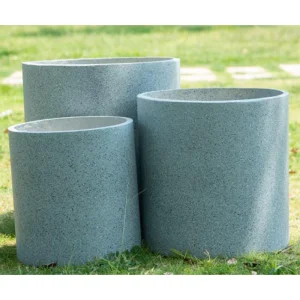
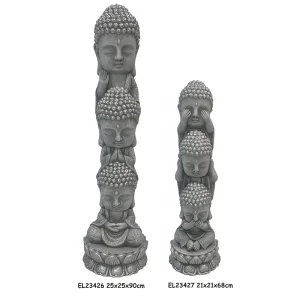
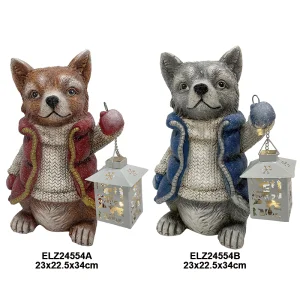
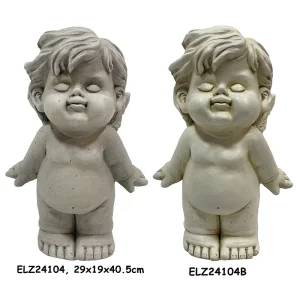
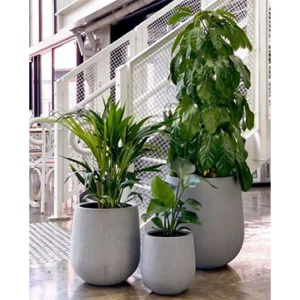
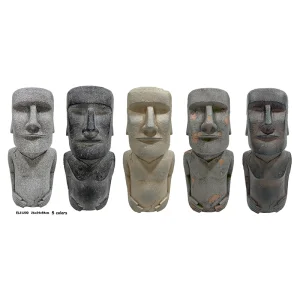
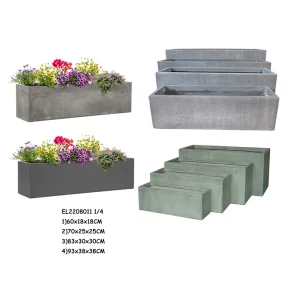
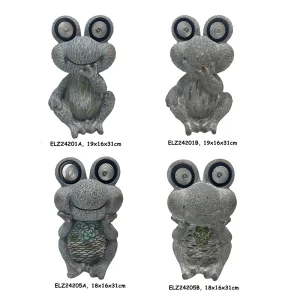
Explore our top-exporting lightweight flowerpots, garden statues, and architectural crafts manufactured for global wholesalers and commercial buyers.
Understanding the technological leap from traditional heavy ceramics to high-performance composite statuary and flowerpots in the global B2B supply chain.
In the contemporary landscape of architectural landscaping, commercial decor, and high-volume home & garden retail, traditional terracotta, cast stone, and heavy pottery have reached severe economic limits. Global logistics constraints, high freight-to-weight ratios, and vulnerability to thermal cracking during transatlantic transit have pushed international buyers toward advanced material science. Fiber Clay (Fiberglass Reinforced Clay) and Magnesium Oxide (MGO) Board/Composite Crafts represent the definitive technological paradigm shift in the multi-billion dollar lawn and garden statuary market.
The global market for outdoor statuary, large-format planters, and decorative garden crafts surpassed USD $4.2 Billion in 2024, projected to grow at a compound annual growth rate (CAGR) of 6.8% through 2030. Driving this expansion is the soaring demand from commercial landscape architects, luxury hospitality chains, urban real estate developments, and national home improvement retailers (such as Kingfisher, Home Depot, Leroy Merlin, and Obi). Sourcing managers are systematically phasing out heavy concrete and unreinforced earthenware in favor of engineered composites that offer authentic natural stone aesthetics at 70% lower mass.
European and North American buyers have increasingly consolidated procurement in coastal Fujian, China (Xiamen cluster), leveraging dedicated raw material supply lines for high-purity magnesite, fiberglass mesh weave, and specialized pigments.
Fiber clay combines natural clay minerals, Portland cement, and glass fiber reinforcement matrices. Unlike polyresin, it does not turn brittle under extreme solar UV exposure, maintaining structural integrity across decades of outdoor deployment.
Engineered to withstand freeze-thaw cycles (-20°C to +50°C), MGO statuary prevents micro-fracturing caused by trapped moisture expansion—a chronic flaw of standard glazed terracotta planters.
How Chinese manufacturers like Elandgo Crafts achieve unmatched scale, precision molding, and cost-competitiveness in Fiber Clay & MGO craft exports.
The global dominance of Chinese factories in the production of lightweight fiber clay crafts, MGO garden statues, and decorative planters stems from an tightly integrated industrial ecosystem. China’s Fujian province—specifically the Xiamen manufacturing corridor—operates as the world's premier production hub. This cluster combines mineral extraction, advanced polymer research, precision silicon mold fabrication, hand-carving artisan workforces, and deepwater container port logistics within a 50-kilometer radius.
| Performance Metric | Traditional Clay / Terrazzo Factory | Polyresin / Plastic Producer | Chinese Fiber Clay / MGO Benchmark (Elandgo) |
|---|---|---|---|
| Raw Material Density | 2,200 – 2,500 kg/m³ (Heavy) | 1,100 – 1,300 kg/m³ (Light) | 1,300 – 1,500 kg/m³ (Optimized Lightweight) |
| Flexural & Tensile Strength | Low (Brittle, high shipping breakage) | Medium (Prone to heat warping) | High (Fiberglass Mesh Reinforced Layering) |
| UV & Thermal Stability | High weathering, prone to frost spalling | Degrades rapidly under UV (Fading & yellowing) | Non-degradable Mineral Matrix, 100% UV Resistant |
| Packaging Container Yield | Low (Weight limit reached before volume) | High (Volume capped) | Maximum Container Utilization (Balanced Weight/Volume) |
| Custom OEM Molding Lead Time | 45 - 60 Days | 30 - 45 Days | 14 - 21 Days (Rapid 3D Print / Silicon Mold Prototyping) |
Leading Chinese facilities utilize automated dosing systems for Magnesium Oxide (MgO), Magnesium Chloride (MgCl₂), perlite fillers, and clay mineral slurries. Exact stoichiometric control eliminates unreacted salts, permanently eradicating surface efflorescence (white salt leaching) in outdoor environments.
Instead of single-layer spraying, high-grade export factories mandate a 3 to 5-layer cross-directional alkali-resistant glass fiber mesh embedding. This imparts high tensile resilience, allowing statues and large trough planters to endure dropping forces without catastrophic structural failure.
Combining industrial molding with generations of Fujian artisan craftsmanship, items undergo multi-stage hand-rubbing, antique wash application, and weather-seal topcoating. This produces realistic stone, oxide iron, terracotta, or concrete patinas unattainable by automated liquid painting.
Where and how global enterprises deploy lightweight fiber clay statues, MGO flowerpots, and outdoor LED-integrated crafts.
Structural load limits on modern high-rise urban buildings restrict the weight of planters. Fiber clay trough planters offer large soil volumes with minimal static load penalty.
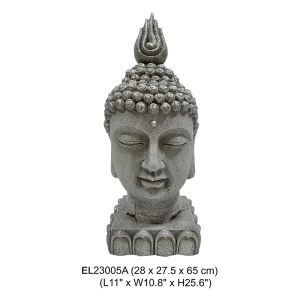
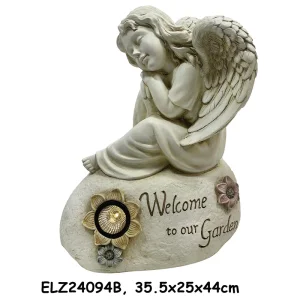
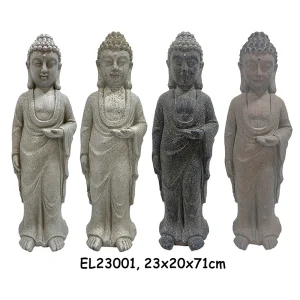
Boutique hotels, dining patios, and retail plazas require large decorative statues (such as Buddha heads or Cherub angels) that staff can easily reposition for venue redesigns.
In Northern European and North American winters, moisture trapped in concrete expands and cracks the vessel. Fiber clay's micro-porous matrix permits micro-expansion without structural fracture.
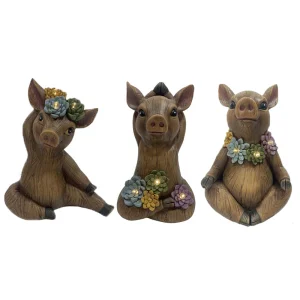
Modern fiber clay statues feature integrated IP65 solar modules, LED accent lights, and automatic twilight sensors, serving dual aesthetic and pathway lighting roles in luxury landscaping.
Next-generation innovations: Eco-binding agents, circular economy materials, and rapid OEM customization technologies.
Transitioning from standard Portland cement additives to reactive magnesia cements lowers kiln calcination temperatures from 1450°C to 750°C, reducing embedded manufacturing carbon footprints by up to 45%.
Leading exporters are replacing hand-sculpted clay master models with 5-axis CNC router carving and 3D digital design. This enables global brand buyers to turn CAD files into physical samples in under 7 days.
Surface treatments utilizing fluoropolymer nanotechnology create a superhydrophobic barrier. Water beads off the surface, taking dirt and atmospheric grime with it (self-cleaning planters for urban spaces).
A step-by-step risk mitigation framework for international importers sourcing fiber clay and MGO products.
To maintain high commercial sell-through and minimize store returns, professional sourcing directors must execute strict factory audit and product quality control protocols prior to vessel loading. Below is the standard inspection methodology mandated by top Tier-1 retailers:
Before mold pouring, the moisture content of the clay mineral base must be calibrated below 5%. Higher moisture distorts curing kinetics, causing internal micro-voids that lead to structural failure under heavy load.
Inspectors verify the alkali-resistant fiberglass mesh weave (minimum 110g/m² density rating) and check that mesh layering is fully submerged within the slurry rather than exposed near outer walls.
Finished packaged goods are subjected to 10-drop tests from heights up to 76 cm onto concrete surfaces, ensuring mail-order packaging (5-ply double corrugated cartons + molded EPS corner protectors) survives ecommerce logistics.
Discover our additional line of solar-powered animal statues, trough planters, Easter Island decor, and spiritual Buddha statuary.
Technical, operational, and commercial answers for importing fiber clay & MGO garden decor from China.
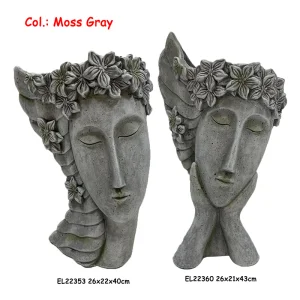
Fiber Clay combines natural clay slurries, Portland cement, and glass fiber mesh layers. It offers a slightly rougher, earthy clay texture highly desired for traditional planters. MGO (Magnesium Oxide) Crafts utilize a slurry of magnesium oxide and magnesium chloride reinforced with fiberglass netting, yielding a smoother, dense matrix ideal for intricate detail sculpting (such as Buddha faces, cherub wings, and fine floral lady head planters) with slightly higher flexural strength.
Unlike standard terracotta or unreinforced concrete, which absorb up to 10-15% water weight (causing expansion cracks when frozen), high-quality Fiber Clay and MGO manufactured by Elandgo Crafts feature a water absorption rate under 3%. The micro-pore architecture combined with glass fiber reinforcement allows residual moisture expansion without structural spalling, enduring sub-zero temperatures down to -20°C (-4°F).
Standard OEM/ODM production MOQs typically range from 50 to 100 units per SKU, with a minimum full container load (1x40'HQ) combined across multiple catalog items. Sample development takes 7 to 14 days using digital mold prototyping, while mass manufacturing lead times generally range between 35 and 45 days after deposit confirmation and artwork approval.
Efflorescence occurs when free calcium or sodium salts react with moisture and migrate to the surface. Elandgo Crafts prevents this by maintaining precise stoichiometric ratios in the MgO matrix, utilizing low-alkali cements, and applying dual-layer penetrating acrylic sealers that block internal salt migration while remaining vapor-permeable.
Yes. Solar-powered animal figurines, holiday gnomes, and angel statues are engineered with sealed battery compartments (IP65 rated), high-efficiency monocrystalline solar panels, and light-sensing circuitry. Electronic components undergo 100% burn-in and salt-spray testing prior to final assembly into the fiber clay housing.
Our facilities comply with ISO9001 quality management systems and BSCI (Business Social Compliance Initiative) social audits. Products exported to Europe and North America comply with REACH, California Proposition 65 (lead and heavy metal paint content limits), and ISTA-3A transit testing standards.