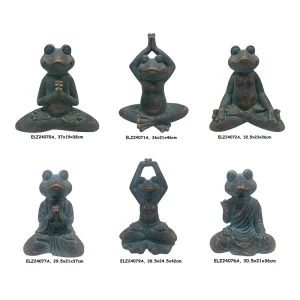
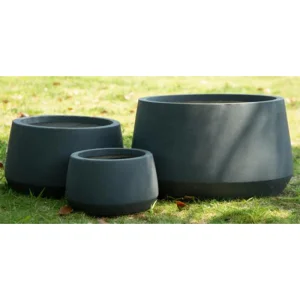
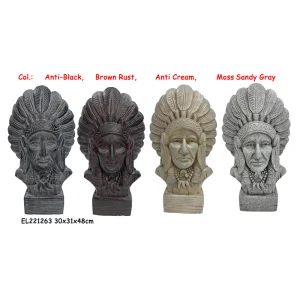
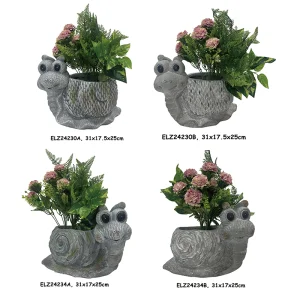
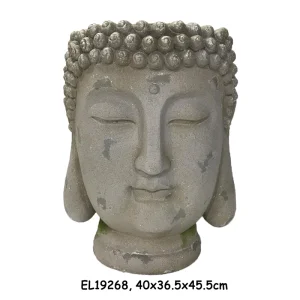
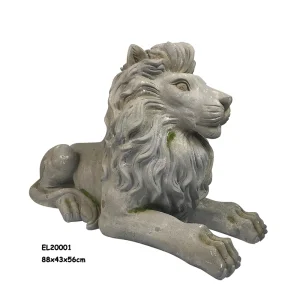
Explore top-performing handcrafted fiber clay, MGO, and solar-equipped tabletop figurines manufactured for global retail chains and wholesale distributors.
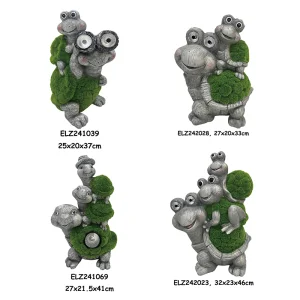
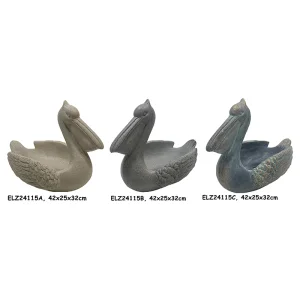
A strategic overview of global procurement trends, shifting consumer aesthetics, and material innovations redefining decorative art manufacturing.
The global home and garden decor sector has undergone a profound transformation. Modern consumer trends favor biophilic interior design, elevated outdoor living environments, and artisanal tabletop accents. Table top figurines—ranging from whimsical animal sculptures and Zen-inspired Buddha busts to sophisticated abstract human forms—are no longer viewed merely as trinkets; they are key spatial anchors for residential, commercial, and hospitality environments.
According to recent supply chain data, global demand for luxury and mid-tier decorative figurines is expanding at a Compound Annual Growth Rate (CAGR) of 6.4%. B2B buyers, big-box retailers, interior design studios, and e-commerce brand aggregators face mounting pressure to deliver high-durability, aesthetically rich products while mitigating astronomical ocean freight costs and fragile damage rates. This structural shift has elevated specialized materials—specifically Fiber Clay, MGO (Magnesium Oxide Cement), and UV-Stabilized Polyresin—to the forefront of modern tabletop decor manufacturing.
Advanced fiber clay and MGO formulations reduce weight by 30-45% compared to traditional solid concrete or heavy ceramics, significantly cutting international freight surcharges.
Engineered for seamlessly transitioning between indoor desk settings and outdoor patio tables, featuring frost-resistance, non-fading pigments, and thermal tolerance.
Transitioning toward bio-based resins, recycled fiber matrices, and low-carbon cement chemistry to meet rigorous European (REACH) and North American environmental directives.
Information Gain Key Takeaway: Procurement managers who switch from traditional terra cotta and fragile stoneware to Fiber Clay/MGO composite table top figurines report a 70% decrease in transit breakage rates and a 25% improvement in net profit margins due to optimized volumetric container loading.
A rigorous comparative breakdown of primary manufacturing raw materials utilized in tabletop figurine and planter exports.
| Performance Metric | Fiber Clay (Fiberglass + Clay) | MGO (Magnesium Oxide) | Traditional Ceramic / Stoneware | Polyresin / Synthetic Resin |
|---|---|---|---|---|
| Structural Density & Weight | Ultra-lightweight to Medium (Optimal) | Medium-dense, Natural Stone Feel | Extremely Heavy & Fragile | Lightweight to Dense |
| Breakage Rate (Ocean Transit) | < 1.2% (High Tensile Resistance) | < 1.5% (High Impact Resistance) | 8.0% - 14.5% (Brittle) | < 2.0% (Resilient) |
| Indoor / Outdoor Versatility | Exceptional (All Weather / UV Proof) | Excellent (Weather & Moisture Resistant) | Moderate (Prone to Freeze-Thaw Cracking) | Good (Requires UV-Stabilizer Additives) |
| Surface Finish & Hand-Crafted Detail | Natural Organic Texture, Earthy Tones | Smooth Carved Stone, Architectural Finish | Glazed Gloss, Traditional Finish | Ultra-Intricate Fine Sculptural Detail |
| Environmental Sustainability | High (Natural Fibers & Clay Base) | High (Non-Toxic Mineral Matrix) | Moderate (High Firing Carbon Footprint) | Low-Moderate (Petrochemical Derivatives) |
Unpacking the industrial clustering, technical craftsmanship, and rapid prototyping capabilities of Fujian's artisan production hubs.
The manufacturing ecosystem in Fujian (notably Xiamen and Dehua regions) represents the world’s most sophisticated cluster for ceramic, fiber clay, MGO, and resin craft production. Unlike isolated factories elsewhere, Chinese suppliers operate within a hyper-dense supply ecosystem. Raw magnesium oxide minerals, specialized fiberglass mats, eco-friendly pigments, and custom packaging manufacturers are located within a 50-kilometer radius. This geographic concentration minimizes raw material lead times and enables rapid scalability during high-season procurement spikes.
The creation of high-end tabletop figurines requires an exact balance between modern engineering and human artistry. Leading Chinese exporters utilize 3D digital sculpt modeling and high-precision CNC master mold carving, followed by hand-layering of fiber clay and hand-painting by skilled artisans. This hybrid model guarantees that every batch maintains 100% dimensional consistency while preserving the unique, tactile craftsmanship demanded by premium retail consumers.
For international buyers seeking custom tabletop lines—such as branded seasonal Easter decor, solar-integrated lawn figurines, or minimalist Scandinavian face-sculpture planters—Chinese factories offer an unmatched turn-key developmental pipeline:
| Phase | Process Step | Deliverables & Quality Gates | Typical Lead Time |
|---|---|---|---|
| Phase 1 | Concept & 3D Render Design | 2D CAD sketches converted to 3D volumetric renders | 3 - 5 Days |
| Phase 2 | Master Prototype Sculpting | Clay master sculpt & physical sample casting | 7 - 10 Days |
| Phase 3 | Silicone / Steel Mold Production | Multi-cavity production tooling & structural testing | 10 - 14 Days |
| Phase 4 | Batch Production & Hand Finishing | Casting, kiln/air curing, priming, hand-painting, flocking | 25 - 35 Days |
| Phase 5 | QA Inspection & ISTA Drop Test | 100% visual inspection, ISTA 1A drop testing for Amazon/Retail | Continuous |
How global buyers position tabletop figurine collections across diverse commercial and residential retail sectors.
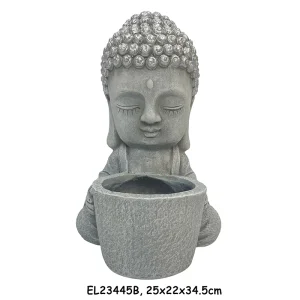
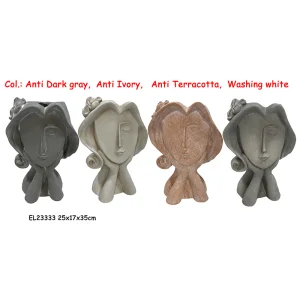
Minimalist abstract lady busts, baby Buddha statues, and geometric planters designed for executive desks, bookshelves, coffee tables, and mantelpieces.
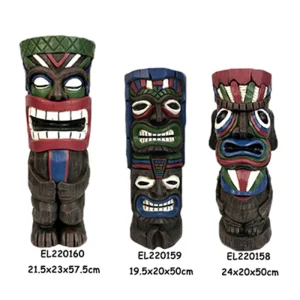
Grass-flocked frogs, solar-illuminated turtles, and Tiki statues engineered to withstand heavy rainfall, UV exposure, and freezing temperatures on outdoor dining tables.
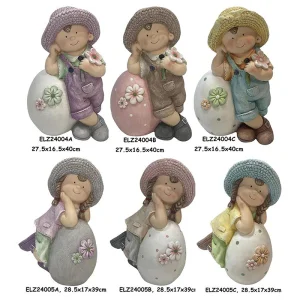
High-turnover seasonal collections including Easter eggshell companions, Halloween fiber clay pumpkins, and holiday gnome series for mass-market retail campaigns.
Direct answers to critical questions asked by global sourcing agents, retail buyers, and importers.
Standard factory MOQs typically start at 100–300 pieces per SKU for existing molds. For custom OEM/ODM designs requiring new mold fabrication, MOQs generally start at 500 pieces per design, allowing amortization of tooling costs.
Our solar-equipped figurines utilize IP65 waterproof-sealed battery housings, polycrystalline high-efficiency solar panels, and UV-resistant grass flocking. They charge automatically under indirect sunlight and illuminate for 8–10 hours per cycle.
Products undergo rigorous third-party testing including REACH (EC 1907/2006) for heavy metal compliance, RoHS certification for electrical/solar components, ASTM F963 toxicity standards, and California Proposition 65 lead/phthalate compliance.
Export packaging complies with ISTA 1A/3A drop test standards. Each item is enclosed in custom-molded EPS foam (or eco-friendly molded pulp), packed in 5-ply double-wall corrugated master cartons, and palletized with stretch wrapping.
Fiber clay and MGO provide an authentic ceramic/stone appearance while cutting product weight by up to 45%. This provides superior structural strength against impacts and lowers ocean and inland shipping costs drastically.
Mass production standard lead time is 30–45 days post-sample approval and deposit confirmation. Ocean freight shipment to major West Coast US ports takes approximately 14–18 days, while European main ports require 28–35 days.
Discover our complete line of whimsical garden statues, abstract busts, and animal planters curated for international market success.