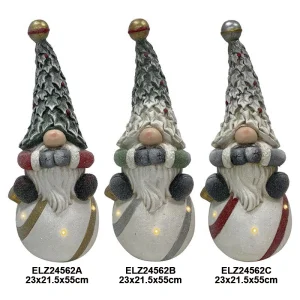
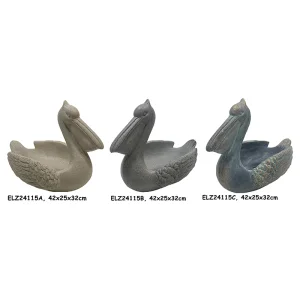
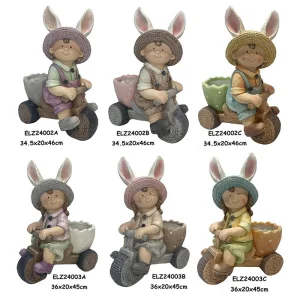
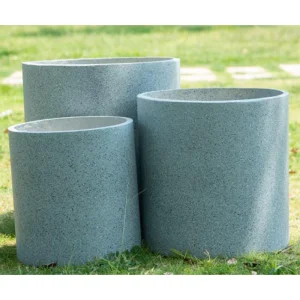
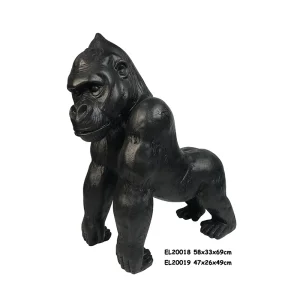
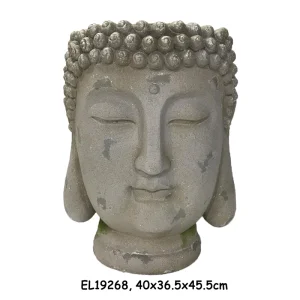
Explore our premier handcrafted fiber-clay, MGO composite, and decorative outdoor products designed for high durability and global commercial distribution.
An authoritative analysis on thermal engineering, material evolution, global procurement standards, and China's smart manufacturing advantages in outdoor bonfire heating equipment.
Rooted in two decades of ceramic and composite material engineering, our manufacturing processes prioritize material integrity, thermal shock resistance, and strict safety compliance across global markets.
Moving beyond basic product listings, this whitepaper delivers empirical data on material science, thermal retention metrics, OEM/ODM custom mold engineering, and end-to-end supply chain logistics.
Combining Magnesium Oxide (MGO) matrix structures with inorganic fiber reinforcement to produce lightweight, fire-rated, non-combustible bonfire enclosures for propane, natural gas, and wood fuel systems.
The global outdoor heating and bonfire equipment market has entered an era of rapid technological shift. Driven by expanding residential outdoor living spaces, commercial hospitality expansion, and growing consumer preference for year-round patio utilization, demand for high-efficiency bonfire heaters has surged. Modern procurement trends highlight three primary macro developments:
Traditional heavy cast concrete and rust-prone sheet metals are increasingly replaced by Magnesium Oxide (MGO) composites and fiber-reinforced clay. These engineered ceramics provide realistic stone/wood textures while reducing weight by 45%, offering superior freeze-thaw endurance, and eliminating rust vulnerabilities in seaside environments.
Environmental regulations across Europe (CE/ERP) and North America (EPA/CSA) are forcing a transition toward smokeless, low-emission heating. Gas-powered bonfire heaters utilizing precision stainless-steel burner rings deliver up to 50,000 BTUs with zero particulate emissions, fulfilling carbon-neutral urban zoning requirements.
Modern commercial buyers demand automated flame adjustment, electronic push-button pulse ignition, and safety shut-off sensors. Furthermore, bonfire heaters are no longer treated as standalone appliances, but as central architectural focal points in luxury resort patios, rooftop bars, and urban gardens.
Decoding what institutional buyers, retail chain importers, and commercial developers look for when partnering with a Chinese bonfire heater manufacturer.
Global distributors require full safety certification compliance: CSA approval for USA/Canada, CE and UKCA marks for Europe, and AGA certification for Australia. Chinese suppliers must provide traceable test reports for gas valves, hoses, and burners.
High commercial turnover requires bonfire units to endure intense UV exposure, torrential rain, saltwater mist, and freezing sub-zero temperatures without surface flaking, micro-cracking, or burner degradation.
Enterprise procurement managers seek manufacturing partners capable of fast-track prototyping, custom color matching (pantone/granite/wood grain finishes), logo branding, and drop-test certified protective packaging.
As the world's leading industrial manufacturing hub, China's bonfire heater sector has evolved beyond simple assembly into an Industry 4.0 ecosystem driven by automated MGO slurry casting, robotic surface finishing, and integrated supply chain clusters.
| Manufacturing Dimension | Traditional Regional Factories | China Industry 4.0 Integrated Hubs | Strategic Procurement Benefit |
|---|---|---|---|
| Raw Material Sourcing | Fragmented raw clay & metal procurement | Direct mine-to-factory MGO matrix supply | 15-25% lower material cost, pure raw material stability |
| Mold Engineering | Manual plaster molding, slow iteration | 3D scanning & CNC precision steel molds | Rapid tooling (7-10 days), zero dimensional error |
| Curing & Thermal Testing | Ambient air drying (weather dependent) | Automated constant temperature/humidity kilns | Zero structural micro-cracks, uniform strength |
| Quality Control (QC) | Random manual visual check | 100% automated pressure & flame ignition testing | Zero defect rate upon container arrival |
| Logistics Cluster | Inland transport delays to port | Deep-water port integration (Xiamen / Fujian) | Streamlined export shipping, lower ocean freight rates |
Understanding why composite MGO (Magnesium Oxide) and fiber-reinforced clay represent the highest standard for commercial bonfire heater shells.
| Performance Parameter | MGO Composite & Fiber Clay | Cast Concrete / GFRC | Stainless Steel / Metal | Traditional Terracotta |
|---|---|---|---|---|
| Structural Weight | Lightweight (Easy handling & transport) | Very Heavy (High shipping cost) | Medium | Fragile & Heavy |
| Fire Rating / Temperature | Non-combustible (up to 1200°C) | High resistance | Warping risk under high heat | Prone to thermal cracking |
| Weather & Corrosion | 100% Corrosion & UV Proof | Surface efflorescence risk | Rust risk in coastal salt air | Absorbs moisture, frost damage |
| Design Flexiblity | Unlimited faux-stone, wood, slate textures | Limited smooth finishes | Metals only (Industrial look) | Traditional clay red/brown look |
| Shipping Damage Rate | < 0.5% (High tensile fiber matrix) | Moderate (Brittle edges) | Low (Denting risk) | High (> 5%) |
Tailored heating and artistic decorative solutions engineered for diverse global architectural environments.
Create iconic outdoor gathering hubs for guests during chilly evenings. High-BTU bonfire heaters provide atmospheric warmth while serving as central landscape art on beach decks and mountain terraces.
Extend outdoor seating seasons late into autumn and winter. Quick pulse-ignition systems allow staff to effortlessly operate gas bonfire units, maximizing table turnover and beverage revenue.
Elevate suburban backyards with lightweight fiber-clay fire tables and complementary decorative garden sculptures, combining luxury aesthetics with low-maintenance weather resistance.
Addressing key technical, safety, logistical, and customization questions from international buyers.
For North America (USA & Canada), gas bonfire heaters must pass CSA (Canadian Standards Association) or ANSI Z21.97 / CSA 2.41 standards covering outdoor gas appliances. For Europe, CE marking under the Gas Appliance Regulation (GAR 2016/426) is mandatory, along with EN 449 compliance. Our manufacturing facility works directly with certified testing laboratories (SGS, Intertek, TUV) to ensure full compliance before shipping.
MGO composite is formed through a chemical reaction between magnesium oxide and magnesium chloride (or sulfate), reinforced with alkali-resistant glass fiber mesh. This inorganic matrix exhibits zero thermal expansion coefficient up to 800°C and does not absorb significant water (<3%), preventing internal ice expansion during freeze-thaw cycles that normally destroy traditional concrete or terracotta.
For standard catalog SKUs, our typical MOQ starts at 50-100 units per model, suitable for mixed container loading. For custom OEM/ODM projects requiring new mold creation, 3D prototype approval takes 7-10 days, sample production takes 14 days, and bulk production cycles range from 30 to 45 days depending on total order volume.
Yes, most of our gas bonfire heaters are engineered with dual-fuel capability. We supply quick-connect conversion kits (including natural gas orifice nozzles, 10ft natural gas quick-disconnect hoses, and gas pressure regulator valves) to accommodate both residential propane tanks and municipal natural gas piping.
We utilize ISTA-3A drop-test certified heavy-duty packaging. Each product is encased in custom-molded high-density EPS foam corners, wrapped in moisture-proof polybags, and packaged inside 5-ply honeycomb corrugated master cartons. For full container loads, palletization with heavy plastic strapping ensures zero shifting in transit.
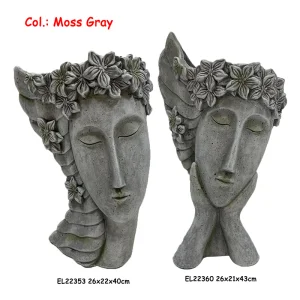
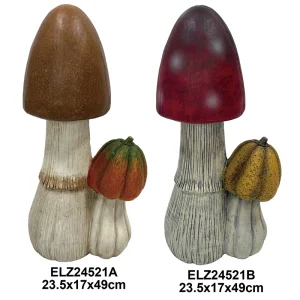
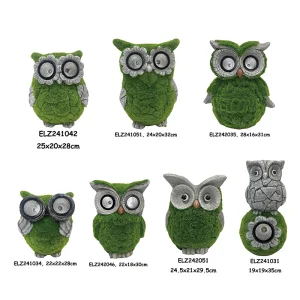
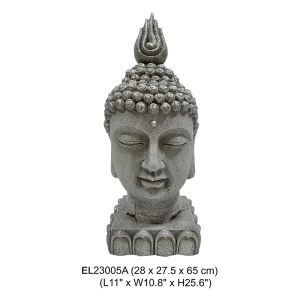
Discover our handcrafted garden planters, animal statues, seasonal decor, and architectural fiber clay series available for immediate wholesale order.