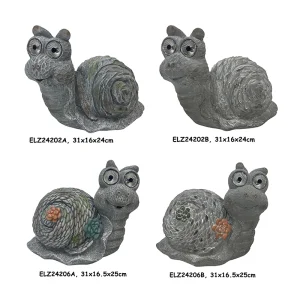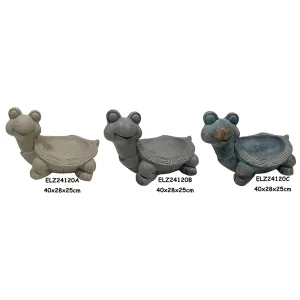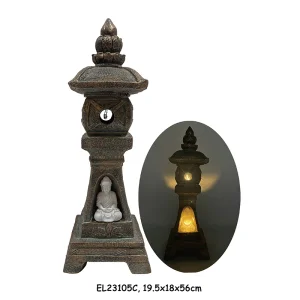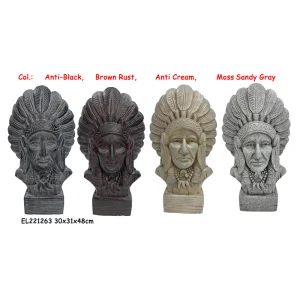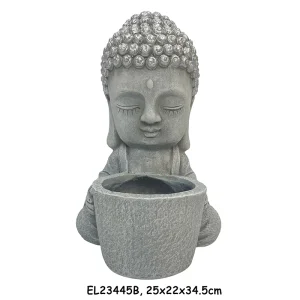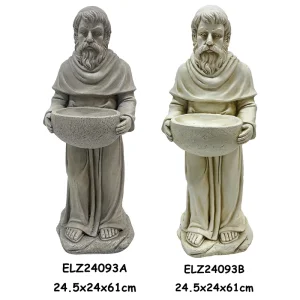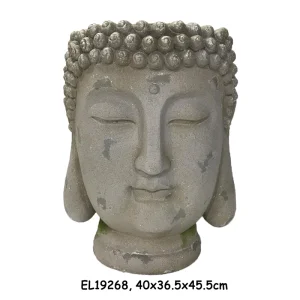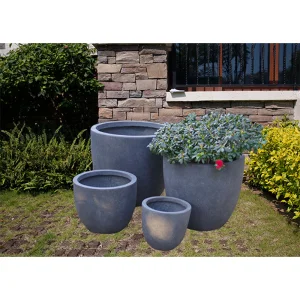
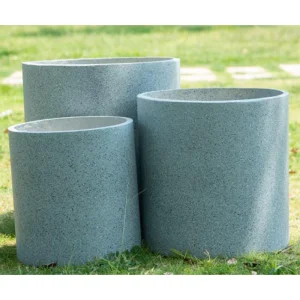
Explore our top-tier export lines of fiber clay planters, MGO decorative sculptures, and solar-powered garden artisan statues manufactured to international structural and environmental standards.
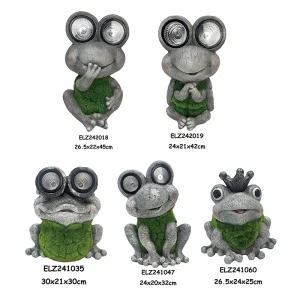
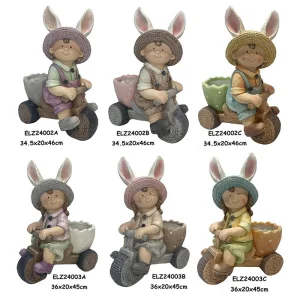
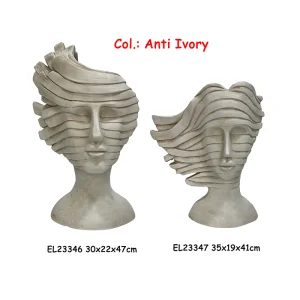
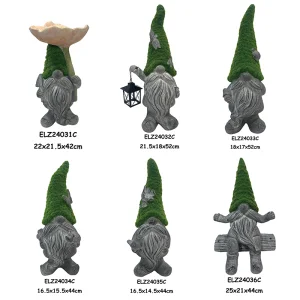
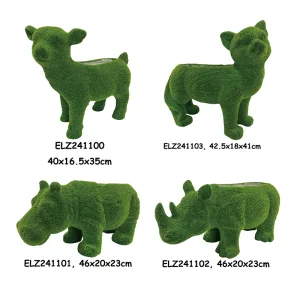
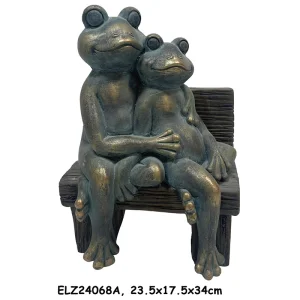
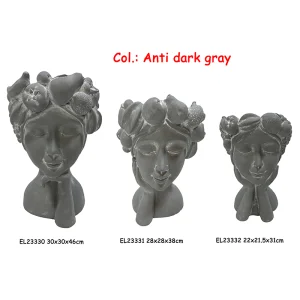
Why modern global landscape designers, commercial project developers, and outdoor living distributors are transitioning from heavy ceramics to engineered Fiber Clay & MGO composite pottery.
In the rapidly evolving global home, garden, and commercial architectural landscaping sectors, the demand for durable, lightweight, aesthetically versatile, and ecologically sustainable planters and decorative statuary has reached an all-time high. Historically, commercial buyers and landscape architects relied on traditional materials such as kiln-fired terracotta, natural carved stone, cast concrete, and glass-reinforced plastic (GRP). However, each of these conventional options carries inherent structural or economic limitations. Terracotta and cast concrete suffer from extreme weight, high breakage rates during maritime transits, and poor resistance to sub-zero freeze-thaw cycles. GRP and synthetic plastic planters, while lightweight, lack organic tactile authenticity, present high carbon footprints, and degrade under prolonged ultraviolet (UV) radiation.
Enter Fiber Clay (Magnesium Oxide Composite / MGO Pottery)—a breakthrough composite material technology pioneered and scaled by Chinese manufacturing hubs, most notably centered in Xiamen and Fujian province. Engineered by bonding high-purity magnesium oxide (MgO), magnesium chloride ($MgCl_2$), inorganic mineral slurries, and multi-layer alkali-resistant fiberglass mesh grids, Fiber Clay offers an unparalleled strength-to-weight ratio. It captures the authentic stone-like texture and earthy warmth of traditional pottery while delivering 60% to 70% structural weight reduction, immune resistance to severe climate swings, and zero-carbon cold-curing manufacturing properties.
| Performance Metrics | Fiber Clay / MGO Pottery | Terracotta / Kiln Clay | Cast Concrete | Fiberglass (GRP) |
|---|---|---|---|---|
| Structural Density & Weight | Lightweight (1.1 - 1.4 g/cm³) | Heavy (1.9 - 2.2 g/cm³) | Extremely Heavy (2.3 - 2.5 g/cm³) | Lightweight (1.2 - 1.5 g/cm³) |
| Freeze-Thaw Durability | Excellent (Minus 30°C certified) | Poor (Cracks easily in frost) | Moderate (Prone to spalling) | Good (Can become brittle over time) |
| Breakage Rate in Transit | < 0.5% (High Impact Resistance) | High (5% - 12% standard) | Moderate (Risk of chipping) | Low (< 1%) |
| Surface Texture Authenticity | Natural Stone / Earthy Clay | Natural Rustic Clay | Industrial Smooth / Rough | Synthetic Plastic / Glossy Finish |
| Carbon Footprint / Eco Impact | Low (Zero-calcination cold cure) | High (High-temp gas firing) | High (Cement calcination) | High (Petrochemical resins) |
| Shipping Cost / 40' Container Load | Optimized (Max Volume Utilization) | Restricted by Weight Limits | Severe Weight Penalties | Cost-Effective Shipping |
Inside the advanced chemical matrix and multi-stage precision molding processes that give Chinese Fiber Clay pottery its superior physical properties.
Formulated using high-purity caustic calcined magnesia combined with aqueous magnesium chloride solutions. This exothermic chemical reaction forms a dense Sorel cement crystalline lattice ($5MgO \cdot MgCl_2 \cdot 13H_2O$), providing tremendous compressive strength exceeding 45 MPa.
Integrated with 3 to 5 layers of heavy-duty $ZrO_2$-enriched (zirconia) alkali-resistant glass fiber mesh grids. This continuous internal structural skeleton prevents micro-cracking, distributes tensile stress, and ensures high impact resistance during commercial handling.
Blended with natural clay minerals, quartz powder, and eco-friendly inorganic pigments. This slurry gives the planter its mineral tactile texture while eliminating the thermal stress and high carbon footprint of high-temperature gas kilns.
Traditional ceramic pottery manufacturing requires heating giant gas kilns to 1,100°C–1,300°C for days, consuming vast quantities of fossil fuels and generating hundreds of tons of direct $CO_2$ emissions. Modern Chinese Fiber Clay manufacturing utilizes an ambient exothermic chemical setting process followed by controlled humidity curing chambers (25°C - 45°C). This tech roadmap yields a 65% reduction in total embodied energy, making Fiber Clay planters the preferred eco-friendly alternative for European (ESG-compliant) and North American green procurement specifications.
Our manufacturing facility employs specialized hand-finishing and automated spraying technologies to achieve diverse surface aesthetics:
How the Xiamen & Fujian industrial clusters deliver unmatched operational efficiency, rapid custom prototyping, and bulk cost control.
Based in Xiamen, Fujian Province, our manufacturing facilities operate within 45 minutes of Xiamen Deepwater Container Terminal—one of Asia's top shipping hubs. This geographic advantage eliminates inland freight delays and drastically reduces drayage overhead.
Leveraging 3D CAD modeling, 5-axis CNC master sculpting, and flexible silicone-fiberglass master tooling, our R&D engineering team can transform client concept sketches into physical sample prototypes in as few as 7 to 10 working days.
Direct bulk sourcing contracts with domestic magnesium mines and alkali-resistant fiberglass manufacturers guarantee steady raw material price stability, buffering global buyers against global supply chain volatility and inflation.
From sub-zero Nordic urban plazas to high-humidity tropical resorts and high-end residential rooftop gardens.
In North American and Northern European climates (Canada, Scandinavia, Midwest US), traditional terracotta pots crack when water trapped in porous walls freezes and expands. Fiber Clay’s engineered low-porosity composite matrix combined with internal drainage design withstands freeze-thaw expansion cycles down to -30°C without structural failure or flaking.
Coastal hospitality resorts in Florida, Mediterranean regions, and Southeast Asia face severe salt spray atmosphere and high humidity. Unlike metallic planters that rust or wood planters that rot, Fiber Clay MGO pottery is completely inorganic and chemical-resistant, retaining structural integrity and surface color under salt fog exposure.
Modern high-rise commercial developments and rooftop residential gardens carry strict structural floor-load limitations. Fiber Clay planters offer the substantial, heavy-stone aesthetic requested by luxury architects while weighing only a fraction of concrete, drastically reducing structural engineering requirements.
Rigorous international quality certifications and how lightweight fiber clay optimizes ocean freight logistics.
100% free of hazardous heavy metals, cadmium, lead, and phthalates. Fully compliant with European Union REACH annex XVII regulations and RoHS environmental standards for indoor/outdoor consumer products.
Rigorously tested for North American market entry. Formulated with non-toxic pigments and eco-binders ensuring zero chemical off-gassing and complete safety for residential organic gardens.
Engineered export packaging using heavy-duty double-wall corrugated cartons, corner protectors, and molded foam inserts tested to withstand 10-angle drop tests for mail-order and e-commerce fulfillment.
Shipping ocean freight is priced based on volume (CBM) and weight limitations. Traditional concrete or clay planters max out a standard 40-foot High Cube (40'HC) container weight threshold long before filling available volume space, resulting in wasted shipping capacity. Fiber Clay's lightweight structure allows distributors to maximize container cubic volume utilization up to 95%+ without triggering heavy-weight vessel surcharges—slashing freight costs per unit by up to 38%.
Detailed answers covering technical specifications, ordering minimums, customization options, and warranty guidelines.
Fiber Clay combines the mineral feel and aesthetic beauty of real stone/clay with lightweight composite performance. Unlike ceramic, it does not crack in freezing conditions (-30°C resistant) and weighs 65% less. Unlike plastic or fiberglass, it is eco-friendly, non-synthetic in tactile appearance, and highly resistant to UV fading and thermal degradation.
Our Fiber Clay matrix incorporates high-density magnesium oxide and multi-layer alkali-resistant fiberglass mesh grids with micro-porous sealant coatings. This allows moisture vapor to transpire without letting water pool inside micro-fissures, preventing hydraulic expansion and cracking even down to -30°C (-22°F).
Yes. We specialize in OEM and ODM manufacturing for global brands and retail chains. Our R&D team can develop custom silicone/fiberglass molds, custom Pantone colors, distressed finishes, and special surface effects (such as flocked moss or metallic oxide patinas) based on CAD files or physical reference samples within 7-10 days.
Standard MOQ is typically 50 to 100 pieces per SKU depending on item dimensions, with a minimum full container load (20'GP or 40'HC) recommended to optimize ocean freight efficiency. Mass production lead time is usually 30 to 45 days after deposit confirmation and sample approval.
Absoltely. All raw materials, adhesives, pigments, and protective lacquers are third-party tested and certified for REACH (EU), RoHS, and California Proposition 65 compliance, ensuring total absence of heavy metals like lead and cadmium.
We utilize heavy-duty corrugated export boxes, corner guards, nested bubble wrap, and fumigated wooden pallets where required. Our packaging designs pass standard ISTA-3A drop test requirements, ensuring near-zero shipping damage rates (<0.5%).
Discover our comprehensive collection of solar-powered animal statues, Buddha garden pottery, pagodas, and lightweight egg-shaped flowerpots ready for global container sourcing.