Precision-molded, lightweight, and weather-resistant statues engineered for high-volume wholesale, commercial landscape architecture, and indoor/outdoor decor.
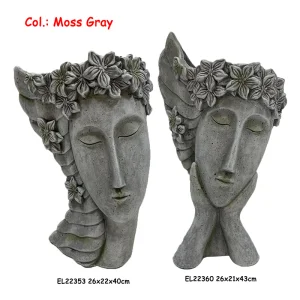
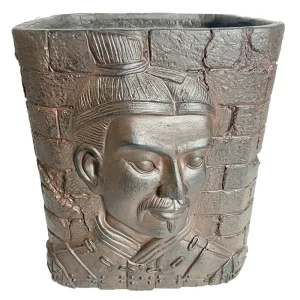
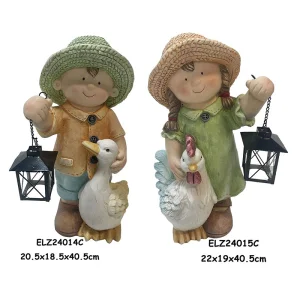
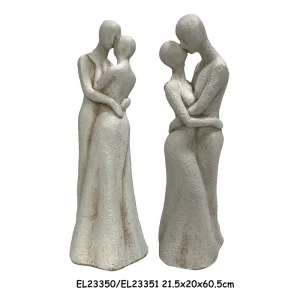
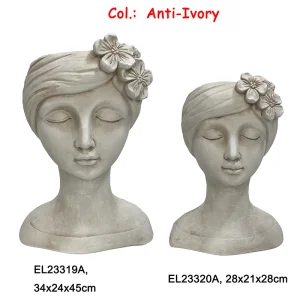
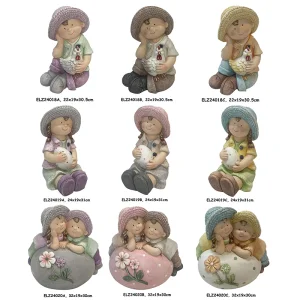
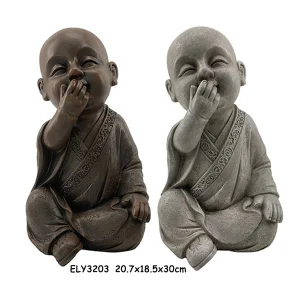
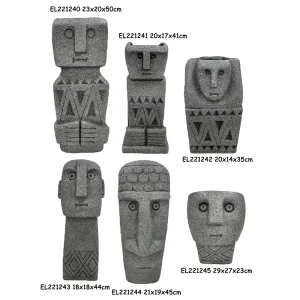
Evaluating material dynamics, structural durability, and total cost of ownership (TCO) across global supply chains for fiberglass, resin, and MGO composite statuary.
The global market for commercial and residential statuary is undergoing a fundamental structural transition. Traditional manufacturing substrates—specifically cast stone, heavy concrete, unreinforced ceramic, and carved marble—face severe headwinds due to escalating global freight costs, high breakage rates during transit, labor-intensive installation requirements, and vulnerability to severe freeze-thaw degradation. As global enterprise buyers, retail chains, and architectural project procurement managers seek operational efficiency and superior product longevity, China's modern manufacturing infrastructure has developed sophisticated composite solutions: Fiber-Reinforced Polymer Resin (FRP) and Magnesium Oxide (MGO) Fiber Clay Composites.
By substituting traditional aggregate concrete with alkali-resistant glass fiber mesh (AR-glass) encased within an unsaturated polyester resin or inorganic MGO matrix, statutory items achieve a 65% to 75% reduction in total mass without compromising structural integrity or wind-load stability.
Polymer-bound fiber matrices eliminate micro-fissuring caused by internal moisture expansion. With an absorption rate below 2.5%, our fiber resin statues withstand extreme thermal cycles ranging from -30°C (-22°F) to +65°C (+149°F) without structural delamination.
Reduced product weight translates directly to higher volumetric loading efficiency inside standard 40ft High Cube (40HQ) containers, dropping overall B2B freight cost per SKU by up to 42% across transoceanic shipping routes.
The following data illustrates the empirical performance metrics comparing engineered Fiber Resin / MGO Clay against traditional materials utilized in mass market statuary exports.
| Material Type | Density (g/cm³) | Flexural Strength (MPa) | Water Absorption (%) | Shipping Breakage Risk | UV / Weather Stability |
|---|---|---|---|---|---|
| Engineered Fiber Resin (FRP) | 1.4 – 1.6 | 120 – 160 MPa | < 0.8% | Extremely Low (< 0.5%) | High (UV-8 Stabilized) |
| MGO Fiber Clay Composite | 1.1 – 1.3 | 35 – 55 MPa | < 2.5% | Low (< 1.2%) | High (Breathable Natural Finish) |
| Traditional Cast Concrete | 2.2 – 2.4 | 10 – 18 MPa | 6.0 – 10.0% | Moderate (Brittle Failure) | Medium (Susceptible to Spalling) |
| Unreinforced Terracotta / Clay | 1.8 – 2.0 | 5 – 12 MPa | 8.0 – 14.0% | High (> 5.0%) | Low (Cracks under Frost) |
Combining traditional artisan craftsmanship with automated polymer metering, digital twin tooling, and rigorous ERP-driven quality control.
China’s manufacturing ecosystem for specialized crafts and architectural statuary has evolved beyond labor-heavy workshop setups into integrated Smart Factory Facilities. By embedding Industry 4.0 workflows into composite resin molding and hand-finishing lines, leading manufacturers eliminate human-error variations in material ratios, curing thermal curves, and structural reinforcement placement.
Exothermic reactions during resin curing demand absolute ratio accuracy between unsaturated polyester, curing agents (MEKP), and filler components. Automated fluid dosing units maintain stoichiometry within a ±0.2% tolerance margin, preventing micro-bubbles, structural brittleness, or uneven surface porosity.
Unlike non-reinforced decorative ceramics, every statue produced incorporates strategically positioned, high-grade alkali-resistant glass fiber netting (AR-Glass mesh). Tensile loads are evenly distributed across the entire outer shell, safeguarding statues against drop impacts and mechanical shipping shocks.
Innovating sustainable bio-resins, hydrophobic nano-coatings, and smart solar-integrated functional garden statuary.
As global sustainability mandates tighten (such as the EU Green Deal and US EPA guidelines), China’s research institutions and leading manufacturers are pioneering low-carbon composite chemistry without sacrificing longevity. The multi-year R&D roadmap for fiber resin statue manufacturing centers around three technological pillars:
Integrating plant-derived polyols (soybean and castor oil derivatives) into unsaturated polyester formulations, reducing dependence on petroleum feedstocks by up to 30% while preserving mechanical flexural strength.
Applying silane-based fluoropolymer topcoats creates a self-cleaning surface with water contact angles exceeding 110 degrees. Rainwater naturally beads off, carrying away airborne pollutants, dust, and organic moss spores.
Seamlessly embedding micro-crystalline silicon solar cells and energy-dense Lithium Iron Phosphate (LiFePO4) storage directly into decorative animal and gnome statue molds for automated dusk-to-dawn accent lighting.
Streamlined concept-to-container pipeline tailored for volume importers, department stores, brand owners, and hospitality developers.
Sourcing customized resin and MGO fiber clay statues requires rigorous engineering protocols to ensure that initial artistic concepts convert flawlessly into mass-producible, structural products. Our end-to-end B2B OEM/ODM service framework guarantees rapid prototyping, mold stability, and color fastness fidelity.
From preliminary sketches or CAD files, our digital sculpture team renders 3D models utilizing ZBrush and Maya. Rapid SLA/SLS 3D printing enables physical master sample verification in as little as 5 business days, reducing tooling lead times by 60% compared to traditional clay sculpting.
Master molds are fabricated using high-durometer liquid silicone rubber backed by heavy-duty fiberglass jacket shells. This dual-layer tooling architecture guarantees sharp undercut retention, realistic skin textures, and dimensional repeatability across over 500 casting cycles per mold set.
Every statue undergoes multi-stage hand painting, distressing, or glazing performed by master artisans. High-grade acrylic polyurethanes with integrated Hindered Amine Light Stabilizers (HALS) ensure resistance against sun yellowing, chalking, and salt spray exposure.
To safeguard goods during multimodal sea and rail transport, finished statues are encased within custom-molded high-density EPS foam cushions or polyfoam inner structures, packed into heavy-duty 5-ply corrugated export cartons certified under ISTA 3A drop standards.
De-risking global sourcing with comprehensive third-party testing, REACH/RoHS compliance, and regional retail packing standards.
Our products strictly adhere to European REACH Regulation (EC 1907/2006) for SVHC candidate list substances and US CPSIA / California Proposition 65 limits regarding total lead, cadmium, and phthalate content.
Subjected to accelerated weathering tests in environmental chamber units, undergoing 100 consecutive freeze-thaw cycles (-20°C to +40°C) and 1,000 hours of continuous Xenon-arc UV radiation exposure.
Fully supporting localized labeling requirements including GS1 UPC/EAN barcodes, inner box color sleeves, custom floor display dump bins, and RFID pallet tagging for streamlined warehouse intake.
Discover our trending decorative lines designed for garden centers, home improvement chains, and online retail marketplaces.
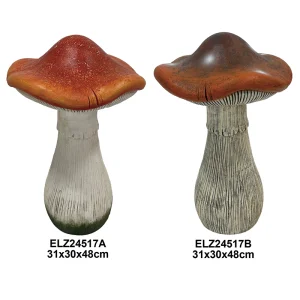
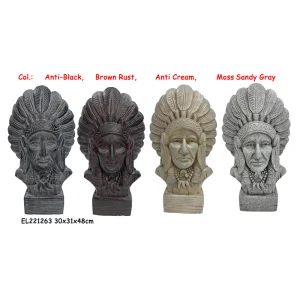
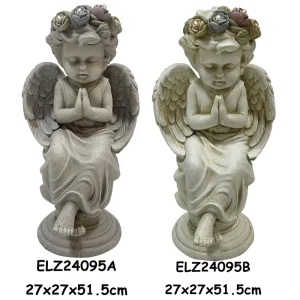
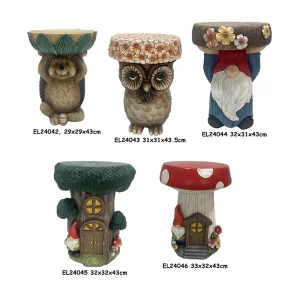
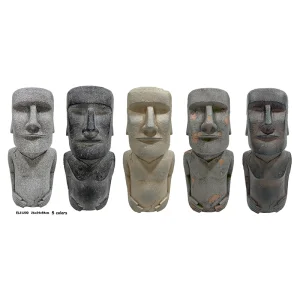
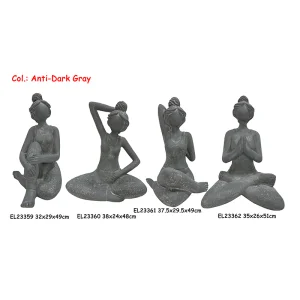
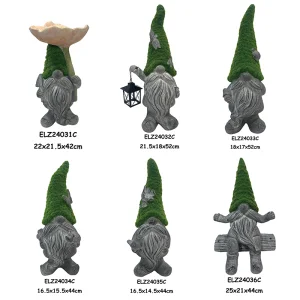
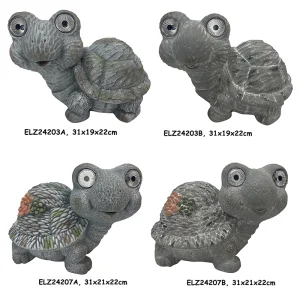
Direct expert answers regarding bulk minimum order quantities (MOQ), custom mold development, freight logistics, and material performance parameters.
MGO (Magnesium Oxide) Fiber Clay utilizes an inorganic mineral cement binder reinforced with fiberglass mesh, yielding a natural matte stone texture ideal for large-scale planters and outdoor garden statues. Polyresin (Unsaturated Polyester Resin) relies on a synthetic organic polymer matrix that excels at capturing ultra-fine surface details, intricate figurative sculpting, and vibrant painted finishes.
Digital 3D sculpting and master prototype printing require approximately 5 to 7 working days. Once the physical prototype is approved, production silicone tooling takes 10 to 14 days. Standard mass production lead time is typically 35 to 45 days following deposit confirmation, depending on order volume and SKU complexity.
We incorporate hydrophobic sealants and strict fiber distribution controls that restrict material water absorption below 2.5% for MGO and below 0.8% for Resin composites. Microscopic moisture traps are eliminated during curing, enabling statues to withstand winter expansion forces down to -30°C without cracking.
Our standard MOQ is 50 to 100 units per SKU for existing running designs, with a minimum total order value of 1x20ft container (mixed SKUs allowed). For custom OEM designs, MOQs are evaluated based on item size and mold amortization requirements.
Yes. Every batch of primer, paint finish, and clear topcoat is third-party certified to comply with EU REACH SVHC guidelines, EN 71-3 (Safety of Toys - Migration of Certain Elements), and US California Proposition 65 heavy metal thresholds.