Direct-from-factory hand-sculpted fiber clay planters, statues, and weather-resistant decorative artifacts engineered for enterprise volume buyers.
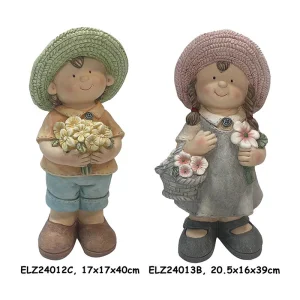
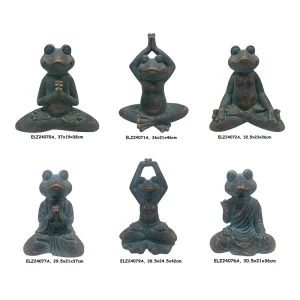
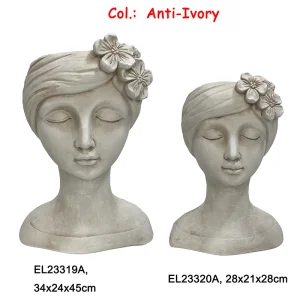
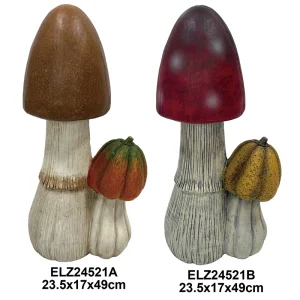
The global marketplace for architectural garden decor, commercial pottery, and hand-sculpted outdoor artifacts is undergoing a monumental paradigm shift. Enterprise buyers, landscape architecture firms, and global retail chains no longer evaluate a China handmade artifacts exporter based solely on unit pricing. Modern procurement strategies prioritize structural material durability, low-carbon composite chemistry, supply chain traceability, and seamless custom OEM design translation.
China's manufacturing ecosystem for handmade artifacts—anchored in specialized industrial clusters across Fujian (such as Xiamen and Dehua) and Guangdong—has evolved from traditional artisanal workshops into high-tech, quality-controlled manufacturing complexes. By combining century-old ceramic hand-carving techniques with advanced material science like MGO (Magnesium Oxide) Fiber Clay composites, Chinese exporters deliver products that withstand high freeze-thaw cycles (-30°C to +60°C), offer up to 70% weight reduction compared to solid cast concrete, and maintain high structural integrity for commercial installations.
As global sustainability mandates tighten (such as European REACH compliance and US TSCA standards), premier exporters like Elandgo Crafts have integrated inorganic fiber reinforcement matrices and non-toxic, water-based UV protective coatings. This technical transformation guarantees that commercial hand-painted finishes resist solar fading and salt-spray corrosion in coastal architectural projects.
Analyzing the structural advantages that give Chinese artifact exporters an unmatched edge in high-volume, custom B2B manufacturing.
Chinese manufacturers lead the world in MGO (Magnesium Oxide) and fiber-reinforced clay chemistry. Combining clay slurry with high-tensile fiberglass meshes produces lightweight, shatter-resistant planters and statues that lower ocean freight logistics costs significantly.
Utilizing 3D CAD modeling combined with hand-clay sculpting master artisans, Chinese exporters turn custom concepts into physical master samples in 7 to 14 days, reducing time-to-market for commercial collections.
From raw material magnesium purity checks to post-curing drop tests and weatherometer UV aging simulations, professional factories ensure zero-defect container loadings for global distributors.
Fully integrated export services—including ISTA-6A drop-test packaging for e-commerce fulfillment, custom wood-crate palletization, and direct shipping lines from Xiamen port to global hubs.
For commercial landscape architects and importers, material selection dictates product longevity, transport damage rates, and retail margin performance. Below is a engineering comparison based on laboratory testing data:
| Performance Metric | Fiber Clay (MGO) Artifacts | Traditional Terracotta | Cast Concrete / Stone | Polyresin / Plastics |
|---|---|---|---|---|
| Specific Gravity / Weight | Lightweight (1.2 - 1.5 g/cm³) | Heavy (1.9 - 2.2 g/cm³) | Extremely Heavy (2.4+ g/cm³) | Ultra-Light (0.9 - 1.1 g/cm³) |
| Tensile Flexural Strength | High (Fiber Glass Reinforced) | Low (Brittle, high breakage) | Medium (Requires rebar) | Medium-Low |
| Frost & Thermal Resistance | Excellent (-30°C to +70°C) | Poor (Prone to cracking) | Moderate (Surface scaling) | Poor (UV warping/fading) |
| Eco-Footprint & ESG | Low Energy Curing Process | High (High-temp kilns) | High Carbon Intensity | Petrochemical Based |
| Artisanal Textural Finish | Authentic Natural Stone/Clay | Natural Matte Clay | Rough Concrete Finish | Artificial / Synthetic Texture |
Modern urban architecture increasingly incorporates green spaces, luxury outdoor living rooms, and resort-style patios. Commercial buyers are aggressively sourcing handcrafted statues (such as meditative Buddha figures, whimsical garden animals, and serene maiden busts) along with large-format cube and low-bowl planters to satisfy consumer demand for organic, biophilic design elements.
With direct-to-consumer (D2C) online sales rising across Amazon, Wayfair, and European home decor channels, fragile handcrafted items face intense transport stresses. Leading Chinese exporters have engineered custom high-density molded EPS foam, drop-tested 7-ply corrugated cartons, and honeycomb corner protections that guarantee ISTA-3A and ISTA-6A transit compliance.
Big-box retailers require exclusive design collections. Through modular silicone molding and custom hand-painted finish matching (Pantone and RAL color matching), Chinese factories allow volume importers to build proprietary product lines with low Minimum Order Quantity (MOQ) thresholds per SKU, maximized via mixed-container shipments.
How global commercial buyers deploy handcrafted fiber clay and pottery artifacts across diverse real-world environments.
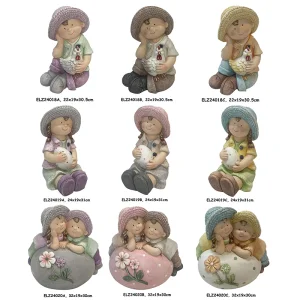
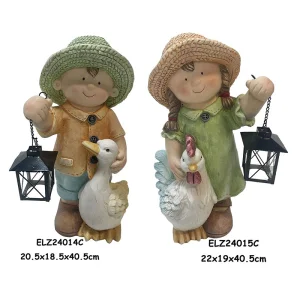
Rustic boy & girl duo statues, solar-powered garden accents, and whimsical animal collections provide nostalgic, artistic charm to private estates, landscaped gardens, and suburban patios.
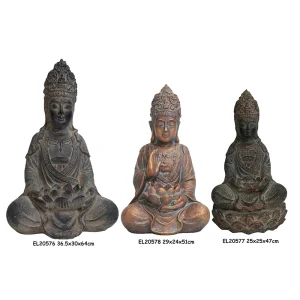
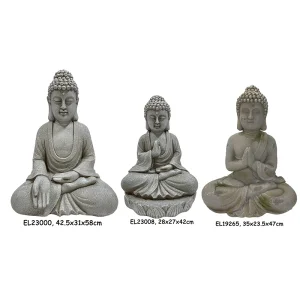
Fiber clay Sitting Buddha statues, Kwan Yin figurines, and large MGO flower pots are heavily utilized in hotel lobbies, spa wellness centers, and courtyard fountains to establish tranquil, high-end environments.
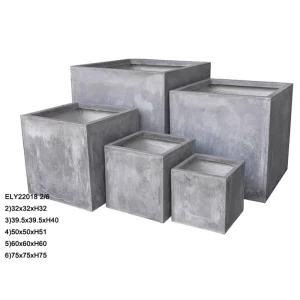
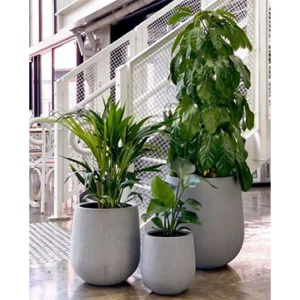
Heavy-duty fiber clay cube pots and low-bowl pottery function as durable perimeter planters and aesthetic urban greenspace features capable of standing up to severe public weather exposure.
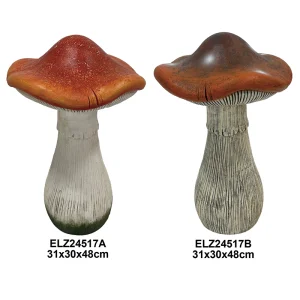
Autumn harvest mushroom statues, Halloween pumpkin collections, and Christmas winter animal series offer high inventory turnover for garden centers during major retail holiday peaks.
High-performance MGO pottery, functional outdoor bird feeders, solar statuary, and low-bowl architectural containers.
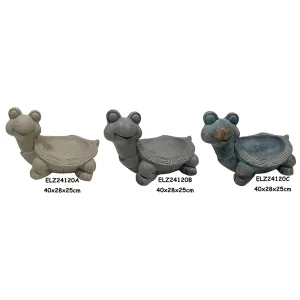
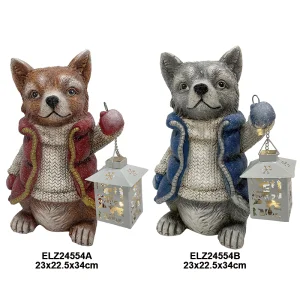
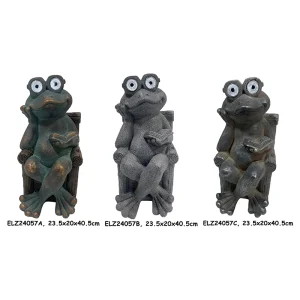
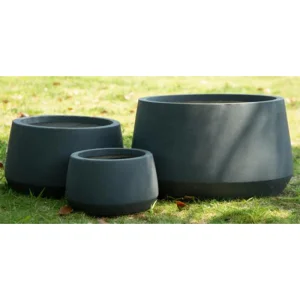
Essential technical and commercial answers for sourcing handmade clay artifacts and fiber pottery from China.
Fiber Clay (often synthesized with Magnesium Oxide/MGO) is an inorganic slurry compound reinforced with glass fiber mesh. Unlike traditional fired clay or concrete, it is lightweight, highly frost-resistant, UV-stable, and significantly reduces shipping freight costs while maintaining an authentic natural stone or clay aesthetic.
Importers provide CAD drawings, 3D renders, or reference physical models. Master sculptors hand-craft an initial clay prototype within 7 to 14 days. Once client approval is granted, silicone or fiberglass production molds are cast for mass manufacturing.
Standard factory production lead time is typically 45 to 60 days following sample confirmation and deposit receipt. MOQs generally range from 50 to 200 pieces per SKU depending on item dimensions, with flexible full-container load (FCL) mixed-SKU options available.
Export-grade packaging utilizes custom-fitted molded polystyrene (EPS) foam, high-strength corner protectors, and heavy-duty 5-ply or 7-ply double-wall corrugated cartons. Crates are palletized on heat-treated ISPM-15 compliant wooden pallets for safe forklift handling.