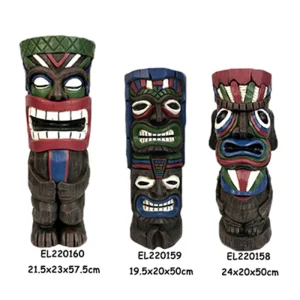
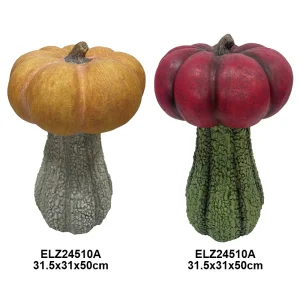
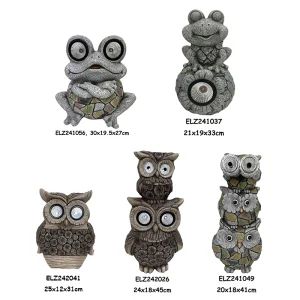
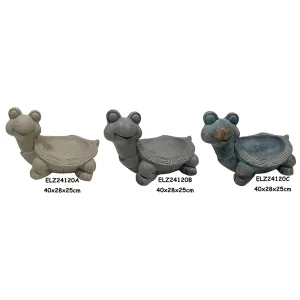
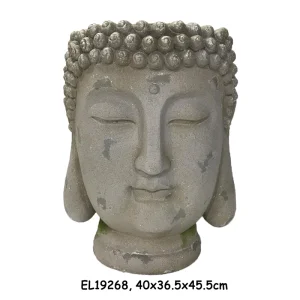
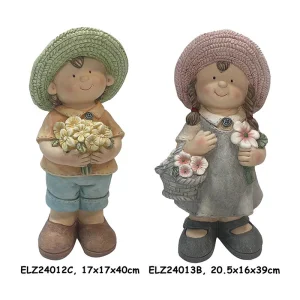
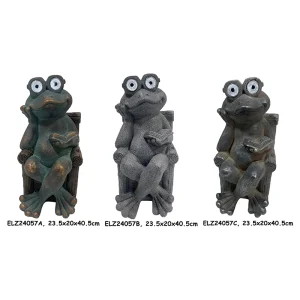
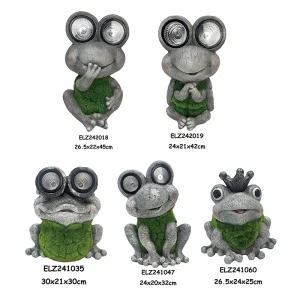
Explore our top-tier handcrafted statues, MGO garden lights, and outdoor decorative figurines built for international B2B importers.
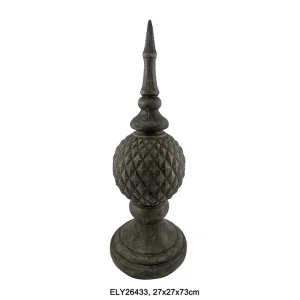
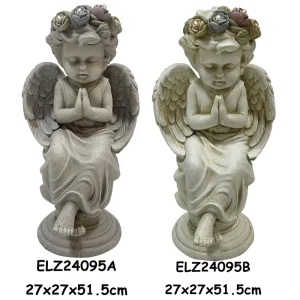
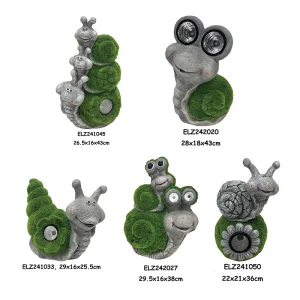
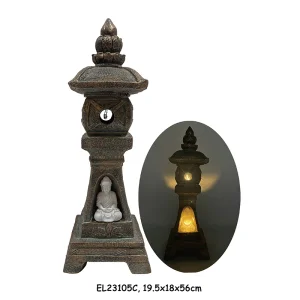
Analyzing the global surge in Polynesian-themed architecture, outdoor hospitality design, and commercial Tiki statue procurement patterns.
Hawaiian Tiki culture—originating from ancient Polynesian mythology representing ancestral gods such as Ku, Lono, Kane, and Kanaloa—has evolved into a major design theme in the global commercial entertainment and hospitality sectors. In North America, Western Europe, and Australia, the market demand for authentic, large-scale Tiki statues, Tiki flowerpots, and exotic totem carvings has expanded exponentially. What was once confined to niche vintage establishments is now a staple of luxury oceanfront resorts, theme parks, botanical gardens, upscale Tiki lounge bars, and high-end residential patio landscapes.
As commercial buyers seek to create immersive, instagrammable experiences for consumers, decorative statues act as anchor visual focal points. However, traditional wood-carved Tiki sculptures suffer from decay, termite infestation, and severe weather cracking when exposed to outdoor environments over long periods. This structural vulnerability has triggered a massive global shift toward innovative material solutions engineered for high durability.
Recent trade analytics indicate that the global market for outdoor garden statuary and thematic hospitality decor is expanding at a CAGR of 6.8%. Within this market, China-manufactured Hawaiian Tiki suppliers control over 75% of total exported volumes. Chinese manufacturers have disrupted the legacy supply chain by combining traditional artistic hand-carving techniques with advanced material chemistry—specifically Magnesium Oxide (MGO) and Fiber Clay composite technologies.
Enterprise buyers, ranging from major garden center chains (such as Home Depot, Kingfisher, and Leroy Merlin) to hospitality procurement firms, heavily rely on Chinese manufacturing clusters in Fujian (Xiamen) to fulfill high-volume OEM/ODM projects with strict structural and weatherproofing specifications.
Understanding why Fiber Clay (Magnesium Oxide) and high-density polyresin have replaced traditional wood and heavy concrete in commercial procurement.
To establish competitive advantages in global distribution, procurement managers must evaluate the material characteristics of Hawaiian Tiki statues. Historically, Tiki statues were carved from native timber or cast in massive concrete blocks. Today, Chinese manufacturers have pioneered composite material formulations that outperform traditional mediums in structural integrity, shipping efficiency, and visual fidelity.
| Performance Metric | Fiber Clay / MGO Composite | Carved Natural Wood | Cast Solid Concrete | Polyresin Craft Compound |
|---|---|---|---|---|
| Weight Efficiency | Lightweight (Easy Installation) | Heavy to Medium | Extremely Heavy (High Freight Cost) | Moderate / Lightweight |
| UV & Weather Resistance | Superior (Non-Fading, UV Stablized) | Poor (Cracks, Rot, Fades) | High (Prone to Freeze-Thaw Spalling) | High (With Outdoor Coating) |
| Moldability & Detail Realism | High Precision (Replicates Wood Grain) | Hand Carved (High Cost per Unit) | Medium (Rough Texture Finish) | Ultra-High Handcrafted Detail |
| Eco-Sustainability | Eco-Friendly Mineral Clay (Recyclable) | Requires Deforestation | High Carbon Footprint | Synthetic Polymers |
| Container Load Capacity | Maximum Yield per Container | Low Yield due to Shape & Weight | Very Low (Weight Limit Exceeded) | High Yield |
Fiber clay is manufactured by combining magnesium oxide, magnesium chloride, fiber mesh reinforcement, and natural clay minerals. This process creates an inorganic matrix that does not burn, melt, rot, or degrade under severe environmental exposure (-30°C to +70°C). For Hawaiian Tiki statues and flowerpots, fiber clay provides a rich, natural stone-like or distressed wood-like tactile experience while reducing product net weight by up to 60% compared to solid concrete. This drastically reduces international ocean freight costs per unit for B2B buyers.
How Chinese factory clusters deliver unmatched cost structures, custom sculpting agility, and standardized export quality control.
China's Fujian province, centered around Xiamen, serves as the global epicenter for outdoor clay crafts, MGO garden statues, and resin arts. This industrial cluster hosts an end-to-end supply ecosystem: raw mineral processing, silicone mold tooling, automated slip-casting, skilled hand-painting, and export logistics. Factories such as Xiamen Elandgo Crafts Co., Ltd. (established in 2010 by industry veteran Mr. Lai, who brings over 20 years of technical expertise) leverage this ecosystem to streamline production cycles, offering rapid turnaround times from prototype approval to mass container shipment.
Global brands and resort developers frequently require proprietary Tiki deity faces, corporate logo engravings, or custom solar lighting integrations. Chinese Tiki suppliers utilize advanced 3D sculpting software paired with traditional master clay sculptors. This hybrid approach enables exact dimensional replication of complex Polynesian wood grain patterns, distressed lava stone textures, and intricate tribal geometry while keeping mold setup costs exceptionally competitive.
Professional Chinese suppliers implement multi-stage quality control protocols aligned with European and North American retail standards. Each batch of Fiber Clay Hawaiian Tiki statues undergoes drop testing, freeze-thaw thermal chamber cycles, UV exposure testing, and water impermeability checks. Furthermore, factory social audits (such as BSCI and ISO9001 certifications) guarantee compliance for international big-box retailers.
Mapping product designs to targeted buyer intent, commercial installation environments, and retail merchandising strategies.
In modern commercial bars, beachfront lounges, and tropical restaurants, Hawaiian Tiki statues serve as essential experiential decor. Large-scale Tiki totems (heights ranging from 80cm to 180cm) function as welcoming entry guards, outdoor courtyard lighting posts, or room dividers. Custom Fiber Clay Tiki planters integrated with exotic tropical foliage (such as monstera, palms, and hibiscus) enhance atmospheric immersion while resisting heavy commercial wear and tear.
Waterparks, tropical resorts, and cruise ship decks require weather-hardened decor capable of enduring constant exposure to chlorinated water, high humidity, and extreme sun. Fiber clay and MGO Tiki statues coated with marine-grade poly-sealants provide long-lasting color retention without leeching chemicals into nearby pool environments. Furthermore, solar-powered Tiki eyes or integrated misting nozzles add dynamic interactive elements to theme park attractions.
Homeowners seeking "staycation" backyard aesthetics fuel high retail demand for medium-sized Tiki statues (40cm - 70cm) and decorative Tiki flowerpots. Retail garden centers stock light-weight MGO fiber clay Tiki statues because end-consumers can easily transport and reposition them across outdoor decks, fire pit seating areas, or flower gardens without physical strain.
Hawaiian Tiki decor experiences significant sales velocity during Spring and Summer promotional windows in North America and Europe. Importers utilize themed Tiki assortments—combining Hawaiian Tiki garden statues, solar Tiki stakes, and Tiki tabletop planters—to create high-margin endcap displays in home decor and garden retail outlets.
A step-by-step technical procurement roadmap for international buyers, wholesalers, and brand owners.
Before placing orders, specify the ambient environmental conditions of your target market. Require suppliers to confirm whether products utilize Standard Fiber Clay, MGO Composite, or High-Density Polyresin. Verify density ratings (typically 1.4 - 1.6 g/cm³ for premium fiber clay) to ensure optimal strength-to-weight ratios.
For custom OEM designs, request a master clay prototype prior to steel/silicone production tool creation. Inspect surface finishing, undercut depth in tribal engravings, and wall thickness uniformity (minimum 8mm-12mm recommended for outdoor statues above 60cm height).
Due to the delicate nature of sculpted crafts during sea freight transit, mandate ISTA-3A or ISTA-1A drop-test compliant packaging. Professional Chinese exporters enforce 5-ply corrugated outer master cartons paired with custom-fit molded Expanded Polystyrene (EPS) foam or recyclable honeycomb protection.
Next-generation innovations reshaping the tropical and garden craft manufacturing landscape.
The modern Hawaiian Tiki statue is rapidly transforming into a smart landscape fixture. Advanced Chinese factories are integrating monocrystalline solar panels seamlessly into the top crowns of Tiki totems, powering warm flicker-flame LED lights inside the eyes or mouth orifices. This creates an authentic torch-light effect at night without requiring external electrical wiring.
Global environmental regulations are driving demand for green manufacturing. Chinese R&D teams are incorporating recycled industrial mineral slag, bio-based binding resins, and natural plant fibers into traditional fiber clay matrices. These eco-composites lower total carbon emissions during kiln curing while maintaining high tensile strength and freeze resistance.
Expert answers addressing common procurement, technical, and shipping inquiries for China Tiki products.
Chinese suppliers offer unrivaled economies of scale, extensive mold libraries, and advanced material innovations like Fiber Clay (MGO) and weather-hardened resin. This enables global buyers to purchase intricate, durable Tiki statues at significantly lower unit costs while accessing flexible OEM custom sculpting options.
Fiber Clay (Magnesium Oxide composite) combines mineral oxides, clay compounds, and fiberglass mesh. It is lightweight, non-combustible, resistant to UV degradation, freeze-thaw cycles, and rot, making it vastly superior to traditional carved wood or heavy cast concrete in outdoor environments.
Yes. Factories such as Xiamen Elandgo Crafts Co., Ltd. offer full OEM/ODM services. Buyers can submit 3D CAD files, 2D sketches, or physical reference samples. Master artisans construct custom clay models and silicone/steel molds tailored to exact client specifications.
Standard factory MOQs generally range between 50 to 200 pieces per SKU for large statues (above 60cm), and 300 to 500 pieces per SKU for smaller items or tabletop Tiki planters. Mixed-item full container loads (FCL 20GP/40HQ) are highly recommended to optimize ocean freight efficiency.
Export products are packed using drop-test certified packaging methods, including thick inner styrofoam (EPS) wraps, protective corner guards, individual inner boxes, and heavy-duty 5-ply outer corrugated cartons. Palletization with stretch wrap is also available for LCL shipments.
Integrated solar panels collect sunlight during the day to charge built-in rechargeable Ni-MH or Lithium batteries. Automatic twilight sensors trigger internal warm LEDs at night, casting realistic flickering torchlight without requiring wiring or manual operation.
Look for established factories with documented export histories (e.g., Elandgo Crafts founded in 2010), verified business licenses, social compliance certificates (BSCI/ISO), and direct contact details with expert sales representatives (such as Wendy Jiang at [email protected]).
Standard production lead time is typically 45 to 60 days following sample approval and deposit confirmation. During peak pre-season ordering periods (Q4 to Q1), planning orders early ensures timely container delivery for spring retail launches.
Discover our extended line of Hawaiian Tiki garden statues, solar animal sculptures, MGO flowerpots, and outdoor seasonal decorations.