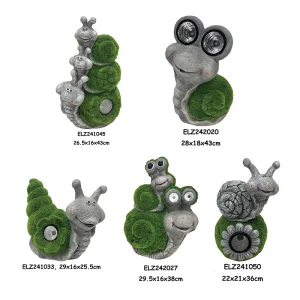
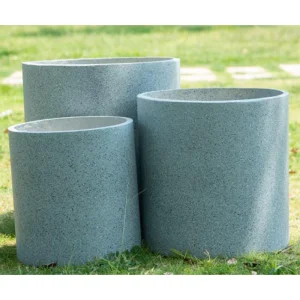
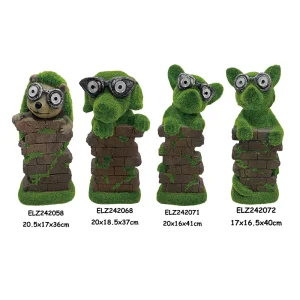
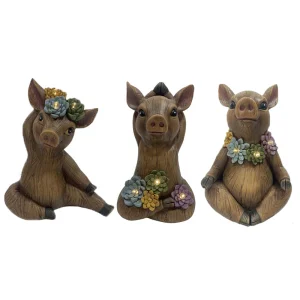
Direct factory catalog highlighting lightweight MGO, fiber clay, and resin crafted outdoor sculptures.
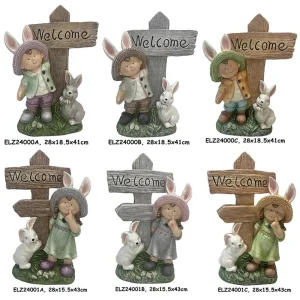
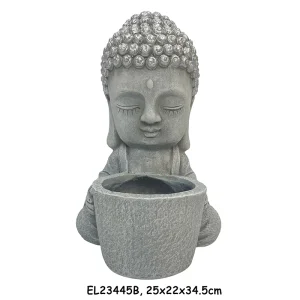
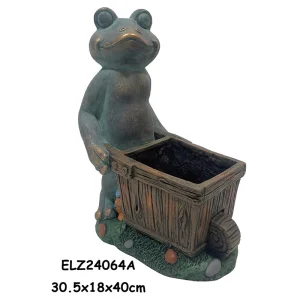
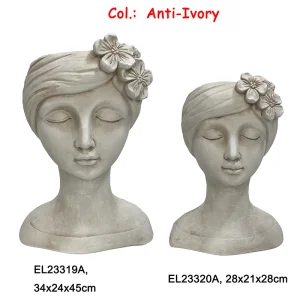
A rigorous technical analysis of how advanced composite manufacturing, regional supply ecosystems, and digital quality control are reshaping the global commercial Polynesian statuary industry.
The international demand for Polynesian-inspired architectural decor, outdoor landscape accents, and themed hospitality installations has underwent a massive structural shift. Historically dependent on hand-carved natural timber or heavy, brittle concrete castings, global enterprise buyers—ranging from resort chains and commercial theme parks to national home-and-garden retail franchises—are now pivoting toward high-tech composite materials. Leading this manufacturing revolution is the ecosystem of specialized China Hawaiian Tiki Factory & Factories, primarily clustered in Fujian and Guangdong provinces.
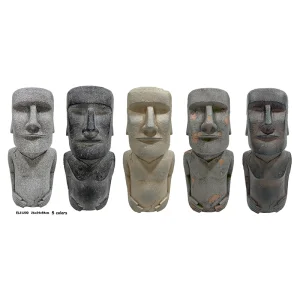
Modern Chinese Tiki production hubs have evolved far beyond basic artisanal carving shops. Today, these facilities operate as Industry 4.0 integrated manufacturing hubs capable of combining traditional sculptural artistry with advanced composite chemistry. By deploying Magnesium Oxide (MGO) matrix formulas, fiber clay reinforcement netting, and weather-resistant polymer coats, Chinese manufacturers deliver structural Tiki totems, fire pit enclosures, and decorative planters that offer up to 70% reduction in tare weight while dramatically improving structural tensile strength and freeze-thaw endurance.
Evaluating the performance metrics, structural chemistry, and operational advantages of contemporary Tiki sculpture materials.
Achieving long-term durability in outdoor commercial settings requires rigorous material science. Traditional natural wood Tiki sculptures succumb to wood-rot, termite infestation, and moisture warping within 12 to 24 months of tropical or sub-zero outdoor exposure. Conversely, cast solid concrete creates unmanageable shipping weight and high breaking rates during transatlantic transit. The modern **China Hawaiian Tiki Factory** solves these challenges through two primary proprietary material paths:
Fiber clay utilizes a specialized blend of inorganic clay minerals, natural fiber mesh, and Portland cement reinforced with alkali-resistant glass fibers. This combination generates micro-porous strength, allowing the Tiki sculpture to "breathe" during sudden temperature shifts without micro-fracturing. It exhibits high tactile authenticity, replicating organic stone or ancient carved volcanic basalt.
MGO composite engineering relies on an exothermic reaction between Magnesium Oxide ($MgO$) and Magnesium Chloride ($MgCl_2$) or Sulfate solutions, forming Sorel cement structures reinforced with multilayer fiberglass netting. MGO Tiki statuary offers fire rating (Class A non-combustible), total mold resistance, and extraordinary impact tolerance at ultra-light payload specs.
| Performance Index | Natural Carved Wood | Cast Concrete / Stone | Fiber Clay (China OEM) | MGO Composite (Factory 4.0) |
|---|---|---|---|---|
| Structural Density (g/cm³) | 0.6 - 0.9 | 2.2 - 2.4 | 1.4 - 1.6 | 1.1 - 1.3 |
| Freight Weight Ratio | Medium | Extremely Heavy (100%) | Lightweight (-60%) | Ultra-Light (-75%) |
| Freeze-Thaw Endurance (-30°C) | Poor (Cracks/Splits) | Moderate (Surface Spalling) | Excellent (Passes ASTM C666) | Superior (Non-porous) |
| UV & Thermal Stability | Fades/Rotates | High | High (UV-Stable Pigments) | Maximum (Polymer Sealers) |
| Custom Design Scalability | Low (Hand labor bound) | Low (High mold cost) | High (Modular Silicone Molds) | Maximum (3D Digital Molds) |
How integrated industrial hubs in Xiamen and Fujian leverage automated molding, solar curing, and smart logistics to secure global delivery timelines.
Modern Chinese export factories have transitioned from traditional clay maquettes to 3D CAD modeling and high-resolution spatial scanning. Sculptors collaborate directly with Western landscape architects to refine Tiki facial expressions, traditional Hawaiian symbolism (Ku, Lono, Kane, Kanaloa), and ergonomic integration for internal wiring or drainage channels.
Quality control starts at the mold level. Using reinforced silicone matrices inside rigid fiberglass backings, workers apply micro-layers of MGO or fiber clay slurries alternated with cross-woven alkali-resistant fiberglass netting. This guarantees uniform wall thickness (12mm–18mm) and eliminates structural hollow-point vulnerabilities.
Unlike energy-intensive kiln-fired ceramics that emit heavy carbon outputs, MGO and fiber clay statuary undergoes low-energy ambient humidity curing chambers. This eco-friendly process reduces scope 1 greenhouse emissions while ensuring structural hydration equilibrium to prevent surface crazing or shrinkage cracks.
Tailored OEM/ODM manufacturing workflows for global enterprise client segments.
Large-format Hawaiian Tiki totems up to 3 meters in height engineered with internal steel armatures. Fully compliant with public safety wind load calculations, flame-retardant exterior glazes, and anti-graffiti surface lacquers ideal for high-traffic Polynesian theme parks and luxury beachfront resorts.
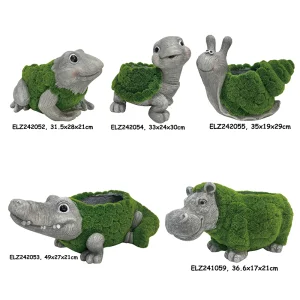
High-density SKU development including solar-powered Tiki accent statues, integrated planter pots, and tabletop LED torches. Stackable nesting designs engineered to maximize sea container cubic meter (CBM) utilization, reducing landed unit shipping costs for volume importers.
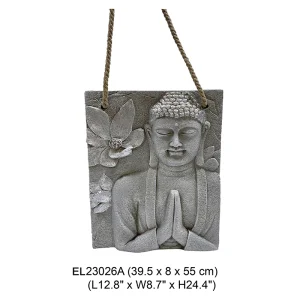
Custom Tiki bars, wall-mounted relief panels, and ambient water fountain sculptures. Crafted with precise acoustic and weight balances to allow effortless ceiling or wall installation within urban tiki bars, restaurants, and entertainment venues worldwide.
Ensuring flawless entry into North American, European, and Australian commercial jurisdictions through strict international testing standards.
Enterprise procurement managers require verified documentation before finalizing supply contracts. Top-tier China Hawaiian Tiki Factories work with third-party testing agencies (SGS, TUV, Intertek) to issue certified test reports across multiple key parameters:
A practical operational manual for international buyers negotiating OEM orders with Chinese Tiki factories.
Procuring large outdoor Hawaiian Tiki statues involves managing high volume-to-weight ratios. Optimization of freight charges and packaging protection is as crucial as product craftsmanship. Below is the standard B2B procurement workflow established by tier-1 manufacturers:
Establish 3D models or hand-carved clay master samples within 7 to 10 days. Color swatches and patina finish options (antique bronze, weathered lava stone, tropical teak wood) are confirmed via HD video inspection or physical air express samples.
Flexible silicone internal tooling with exterior glass-fiber skeletal frames are produced. A single master set permits 150 to 200 high-precision castings before mold re-calibration is required, ensuring design fidelity across thousands of units.
Statues are encased in custom molded expandable polyethylene (EPE) foam inside heavy-duty 5-ply corrugated mail-order cartons. Pass ISTA 3A drop testing standard to minimize e-commerce fulfillment breakages.
Direct expert insights addressing common technical, logistic, and commercial inquiries from global wholesale buyers.
Explore our expanded range of indoor and outdoor artisan statuary, animal planters, and relief wall panels.