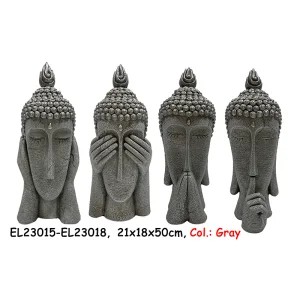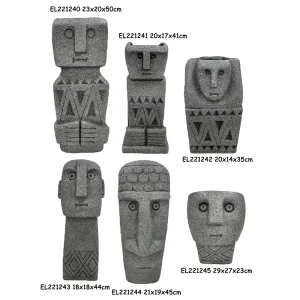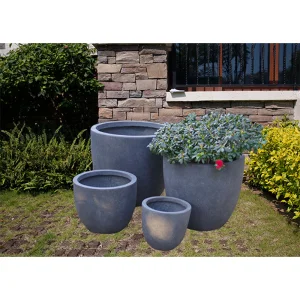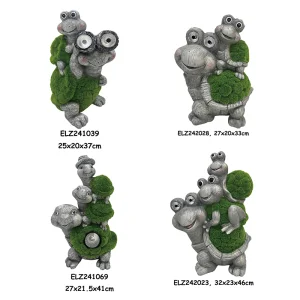
A comprehensive overview of how high-performance fiber clay and MGO composites are transforming the global architectural statuary and seasonal display landscape.
In the contemporary landscape of global B2B procurement, soldier crafts—encompassing ceremonial guards, historical replicas, festive nutcrackers, Terracotta soldier reproductions, and architectural sentinel sculptures—represent a specialized, high-margin segment within the commercial decor and landscaping industries. Historically constrained by the immense weight of cast bronze, natural carved stone, or traditional concrete, the international market has undergone a structural paradigm shift toward advanced composite materials. Leading global importers, commercial real estate developers, landscape architects, and municipal project procurement managers are increasingly turning to China soldier craft factories and exporters who specialize in Magnesium Oxide (MGO) and fiber clay engineering.
Traditional stone or concrete soldier statuary imposes severe freight penalties, accounting for up to 60% of total landed cost. Fiber clay and MGO technology engineered by Chinese manufacturers reduces deadweight by 65–70% while maintaining equivalent compressive strength, dramatically reducing transoceanic shipping fees and localized site installation costs.
This industrial whitepaper examines the global commercial status of soldier craft manufacturing, evaluating how China's integrated manufacturing ecosystems, raw material innovations, and precision tooling capabilities provide an unassailable strategic advantage to international buyers. By integrating high-density fiber mesh into inorganic cementitious matrixes, modern Chinese factories produce indoor and outdoor soldier sculptures that withstand thermal shock, severe freeze-thaw cycles, high UV exposure, and mechanical impacts without sacrificing intricate facial textures, sharp armor detailing, or historical fidelity.
Understanding the molecular integrity, tensile durability, and atmospheric endurance of modern Chinese synthetic clay formulations.
To evaluate the technical superiority of products sourced from premier China soldier craft factories, one must examine the underlying material science. Modern industrial soldier statuary relies primarily on two advanced formulations: Magnesium Oxide Cement (MGO) and Fiber Clay (Polymer-Reinforced Fiberglass Cement). Both materials replace toxic resins and brittle ceramics with environmentally inert mineral compounds.
The table below provides a engineering-grade comparative breakdown between traditional statuary materials and the optimized fiber-cement composites manufactured in Chinese exporting centers:
| Performance Metric | MGO Composite Craft | Fiber Clay (Glass-Mesh) | Traditional Resin (FRP) | Cast Concrete / Stone |
|---|---|---|---|---|
| Bulk Density (g/cm³) | 1.1 – 1.4 Lightweight | 0.9 – 1.2 Ultra-Light | 1.4 – 1.7 | 2.2 – 2.5 (Heavy) |
| Flexural Strength (MPa) | 18.5 – 24.0 | 15.0 – 20.0 | 12.0 – 16.0 | 4.5 – 8.0 (Brittle) |
| Thermal Shock (-30°C to +70°C) | Passes 50+ Cycles | Passes 50+ Cycles | Cracks / Yellows | Micro-fractures |
| Fire Safety Rating | Class A1 Non-combustible | Class A1 Non-combustible | Combustible (Toxic Fumes) | Class A1 Non-combustible |
| Eco-Footprint & Recyclability | Zero Plastic, 100% Inert | Biodegradable Fillers | Petroleum Synthetic | High Carbon Kiln Footprint |
| Intricate Surface Mold Fidelity | Micron-Level Precision | High Detail Capture | Very High | Medium / Coarse |
MGO-based soldier crafts utilize a chemical reaction between magnesium oxide powder and magnesium chloride or sulfate solutions, reinforced by structural alkali-resistant (AR) glass fiber strands. This process generates a dense crystal lattice that resists moisture absorption (hydrophobic treatments applied during curing), preventing spalling and frost expansion when installed in cold North American or European climates.
How Fujian and Guangdong manufacturing clusters deliver unmatched scale, cost efficiency, and design flexibility.
Chinese production hubs in regions like Xiamen and Quanzhou feature complete supply-chain integration—from raw mineral quarrying and refined chemical binder production to automated silicone mold toolings and artisanal hand-painting studios within a 30-mile radius.
Developing custom 3D soldier sculptures requires heavy upfront tooling investment. Chinese export factories amortize master mold costs across massive production volumes, allowing B2B buyers to order bespoke, OEM soldier designs at a fraction of Western mold creation fees.
Utilizing 5-axis CNC router carving and 3D digital modeling, top Chinese manufacturers compress sample turnaround times from the industry standard 8 weeks down to just 10–14 days, accelerating time-to-market for retail clients.
Despite mechanized base molding, detailing on soldier crafts—such as antique bronze weathering, metallic foil application, and realistic face expression paint—is executed by master craftspeople with decades of heritage sculpting expertise.
By nesting soldier crafts, designing detachable weapons/accents, and using custom-molded drop-tested EPS packaging, Chinese exporters maximize unit count per 40ft HQ container, reducing per-item ocean freight costs.
Leading exporters operate under ISO9001 quality management systems, conducting 100% pre-shipment inspections for salt-spray durability, UV coating adhesion (cross-hatch testing), and drop-impact resistance.
From luxury hospitality spaces to public municipal parks, explore where fiber clay soldier crafts deliver high aesthetic impact.
Soldier crafts and associated statuary are non-generic, high-intent architectural elements deployed across specific commercial, civic, and residential environments. Understanding these deployment scenarios allows procurement officers to select the appropriate material specifications and surface treatments:
Deployment: Memorial plazas, civic park entryways, historical reenactment spaces.
Spec Requirement: High-density MGO with anti-graffiti nano-coatings and anchor bolt insert plates for wind-vandalism resistance.
Deployment: Life-sized Nutcracker soldier sentinels, festive holiday entrances, immersive retail pop-up photo zones.
Spec Requirement: Lightweight fiber clay for rapid seasonal mobility, vibrant multi-layer acrylic paint, and flame-retardant certification.
Deployment: Gate post guardians, formal Italianate or classic garden sentinels, driveway lion and soldier statues.
Spec Requirement: Aged stone patina, faux terracotta finish, hydrophobic moisture barriers to resist moss build-up.
Deployment: Resort walkway accent statuary, oriental Zen gardens (Terracotta warrior replicas), luxury hotel lobby entryways.
Spec Requirement: Solar-powered LED lighting integration, eco-friendly zero-VOC finishes, extreme heat resilience.
The convergence of eco-friendly materials, smart lighting integration, and modular manufacturing in China’s export sector.
As search intent and global buyer preferences shift toward environmentally sustainable products, premier China soldier craft factories are investing heavily in next-generation material science. Three core technological trends are redefining the export landscape:
Traditional Portland cement production releases substantial carbon dioxide. Forward-thinking Chinese factories are adopting alkali-activated slag and pozzolanic industrial byproducts to formulate zero-carbon binder matrixes. These eco-friendly clays deliver superior compressive strength while appealing to ESG-conscious retail buyers in North America and Western Europe.
Modern soldier crafts are evolving beyond static sculptures. By embedding discrete, high-efficiency solar panels and dusk-to-dawn micro-LED modules directly into soldier helmets, lanterns, or armor accents, manufacturers produce dual-purpose decorative-lighting units. These self-powered night features require no external wiring, simplifying commercial outdoor installation.
To bypass rising ocean container shipping rates, engineers have developed modular soldier statues featuring concealed magnetic or stainless-steel interlock pins. High-stature pieces (e.g., 6ft to 10ft ceremonial guards) can be disassembled into 3 compact components, increasing container load efficiency by over 140%.
A step-by-step framework for international buyers to ensure seamless custom OEM tooling, quality assurance, and logistics compliance.
Navigating cross-border sourcing of ceramic, MGO, and fiber clay soldier crafts requires clear procedural controls. Below is the standard operating workflow established by leading Chinese exporting partners:
The buyer provides 2D concept art or reference photos. The factory generates a 3D digital model, followed by a hand-carved master clay prototype to finalize facial expressions, armor proportions, and surface textures.
Upon sample approval, a multi-piece flexible silicone mold with a fiberglass outer jacket is built. Raw fiber clay or MGO slurry is mixed with UV stabilizers and water-repellent polymers under vacuum degassing.
Cast soldier sculptures undergo controlled humidity curing for 7–14 days to maximize crystal lattice bonding. Batch samples are subjected to freeze-thaw chamber testing and 24-hour water immersion quality checks.
Statues receive a primer sealer, followed by multi-layered hand painting, dry-brush antiquing, or metallic foiling. A clear polyurethane or fluorocarbon topcoat is applied for long-term UV protection.
Finished goods are encased in custom 360-degree molded expanded polystyrene (EPS) foam, packed into 5-ply double-wall corrugated cartons, and drop-tested according to ISTA 3A international shipping standards.
The exporter prepares comprehensive customs documentation, including Harmonized System (HS) code classification (e.g., HS 6810.99 for inorganic fiber-cement crafts), certificate of origin, and bill of lading issuance.
Addressing core technical, logistical, and commercial inquiries for global sourcing professionals.
Standard factory MOQs for catalog fiber clay or MGO soldier statuary typically range between 50 to 100 pieces per SKU. For fully custom OEM designs requiring new silicone mold fabrication, initial MOQs are generally 100–200 units, though mold creation fees can be credited back once cumulative order volume reaches an agreed threshold (e.g., 1,000 units).
High-quality fiber clay and MGO crafts manufactured by top Chinese exporters incorporate hydrophobic mineral sealers and polymer additives that drop water absorption below 3%. Because moisture cannot penetrate the internal core, the material does not experience freeze-expansion micro-cracking, allowing it to withstand harsh winter environments down to -30°C (-22°F).
Polyresin uses petroleum-derived synthetic resins, which can become brittle under UV radiation and release volatile organic compounds (VOCs) when burned. Fiber clay and MGO are eco-friendly, mineral-based inorganic cementitious materials. They offer superior natural stone-like tactile qualities, full fire retardancy (Class A1), and significantly lower raw material costs for large-scale sculptures.
Exporters utilize a multi-layer protective packaging system: 1) High-density custom-contoured EPS foam clamshells enclosing the statue; 2) Heavy-duty 5-ply outer export cartons; 3) Standardized wooden palletization with edge guards and plastic stretch wrapping. All packaging configurations undergo ISTA 3A or 1A drop-testing to guarantee zero breakages during transport.
Standard lead times for full container load (FCL) orders are 35 to 45 days. For peak seasonal items (such as Christmas Nutcracker soldier statues), procurement should ideally initiate by March or April to allow for production curing, quality inspection, sea transit (20–35 days), and customs clearance before autumn delivery schedules.