Engineered for longevity, extreme climate resistance, and high-end aesthetic value across commercial and residential landscapes.
Analyzing macroeconomic demand drivers, shifting consumer psychographics, and material transitions in international lawn & garden manufacturing.
The global market for sacred art, mindfulness landscape iconography, and architectural statuary—specifically centered on the Lying Buddha (Parinirvana pose)—has evolved from a niche cultural craft into a high-growth multi-billion-dollar commercial export sector. Historically restricted to natural stone masonry and heavy bronze casting across South and East Asia, modern demand is fueled by the rapid expansion of wellness hospitality, luxury spa resorts, urban biophilic residential complexes, and tranquil landscape architecture throughout North America, Europe, and the Middle East.
From an industrial export perspective, the primary bottleneck in scaling traditional reclining Buddha statuary has always been shipping logistics, volumetric weight penalties, and structural fragility. Standard concrete or carved granite Lying Buddha statues exceeding 1.5 meters in length often weigh between 400 kg and 900 kg, severely restricting e-commerce distribution, retail shelf adaptability, and freight cost-efficiency for international buyers.
Global procurement directors, garden center chains, and hospitality importers no longer look solely for decorative appeal. Modern sourcing criteria prioritize audited tensile durability, environmental sustainability, compliance with zero-VOC indoor/outdoor sealants, and structural resistance to thermal stress ranges from -30°C to +60°C.
A deep technical breakdown comparing composite materials against traditional stone, concrete, and resin media.
Achieving superior detail in a Lying Buddha statue—capturing serene facial expressions, intricate robe drapes, and elongated anatomical proportions—requires precise material fluidity during molding paired with structural resilience upon curing. Below is an engineering comparison matrix that outlines why Fiber Clay and MGO composites lead the global export sector:
| Material Property | Fiber Clay (GFRC) | Magnesium Oxide (MGO) | Pre-cast Concrete | Polyresin / Polyester |
|---|---|---|---|---|
| Average Density / Weight | Lightweight (1.4 - 1.6 g/cm³) | Ultra-Light (1.1 - 1.3 g/cm³) | Heavy (2.3 - 2.5 g/cm³) | Medium (1.5 - 1.8 g/cm³) |
| Flexural Strength (MPa) | 18 - 25 MPa (High) | 15 - 20 MPa (Medium-High) | 4 - 7 MPa (Brittle) | 8 - 12 MPa (Moderate) |
| Weatherability & UV Stability | Exceptional (Inorganic) | Exceptional (Inorganic) | High (Prone to cracking) | Poor (UV discoloration) |
| Thermal Range Endurance | -40°C to +80°C | -30°C to +70°C | -15°C to +50°C | -10°C to +40°C |
| Environmental Footprint | Low-Carbon / Recyclable | Zero-VOC / Eco-Clay Base | High CO2 Footprint | Petroleum / Chemical Base |
At our specialized Xiamen production facilities, manufacturing premium reclining Buddha statuary and botanical crafts involves a rigorous 5-stage quality process designed for zero-defect exports:
Understanding how modern landscape architects, commercial buyers, and interior designers deploy reclining Buddha statuary.
High-end hospitality destinations utilize life-size and mid-size Fiber Clay Lying Buddha statues near hydrotherapy pools, meditation lawns, and entry courtyards to establish an immediate atmospheric sense of tranquility, luxury, and spiritual repose.
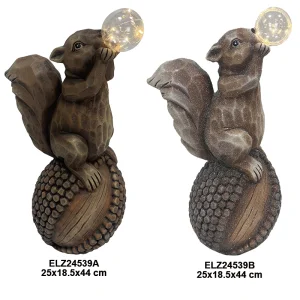
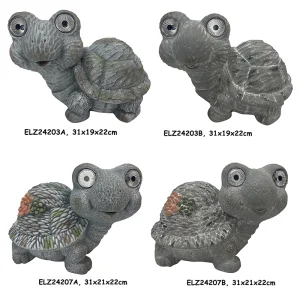
Modern consumers demand dual-functionality. Integrating low-voltage LED warm lighting or embedded crystalline solar panels directly into statuary bases (such as illuminated bowls or lotus pedestals) expands usability into night-time garden illumination.
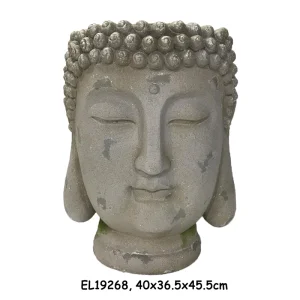
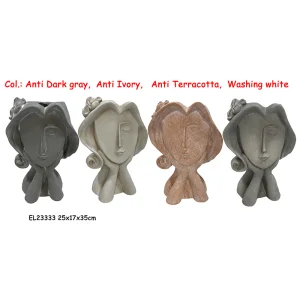
With urban residential spaces scaling down, lightweight Fiber Clay wall panels, abstract head flowerpots, and compact reclining figures allow city dwellers to construct serene balcony gardens without exceeding floor load limitations.
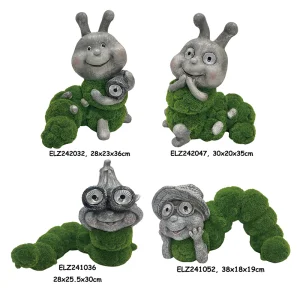
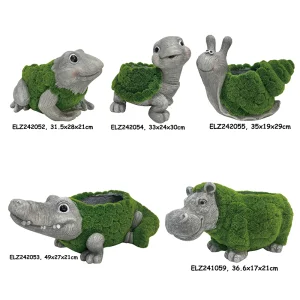
Tactile finishes mimicking natural moss accretion (grass-flocked coatings) or aged stone aged over centuries are dominating European and North American retail seasonal collections, offering instant organic aesthetic integration.
Addressing packaging durability, compliance standards, container load optimization, and turn-key OEM engineering.
As a seasoned exporter operating out of Xiamen, China since 2010 under the leadership of veteran founder Mr. Lai, Elandgo Crafts has constructed an end-to-end B2B infrastructure designed to eliminate international sourcing friction for big-box retailers, garden distributors, and commercial landscape firms.
Statuary products are highly vulnerable to corner chipping and fracture during ocean freight turbulence and last-mile courier transport. We implement a rigorous packaging matrix utilizing custom-molded EPS foam shells, heavy-duty 5-ply corrugated master cartons, and corner-edge guards. Every export SKU passes ISTA-1A and ISTA-6 drop-test protocol prior to mass shipment.
Whether you require customized dimensions for large outdoor Lying Buddha statues (e.g., 2.5-meter garden centerpiece installations) or proprietary brand-exclusive flowerpot motifs, our engineering team translates 2D sketches or mood boards into 3D rendered samples within 7 business days, followed by physical master samples in 14 days.
Pioneering sustainable materials, smart lighting integration, and automated precision casting.
The garden statuary and clay crafts export sector is undergoing a rapid technological migration toward zero-carbon manufacturing and smart home connectivity. Elandgo Crafts’ multi-year technology roadmap focuses on three pivotal innovation pillars:
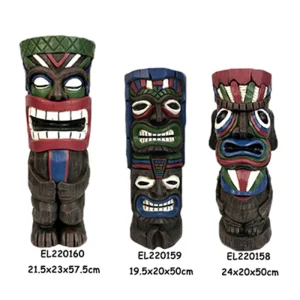
Explore our extended handcrafted collections available for bulk order, mixed container loading, and custom private labeling.
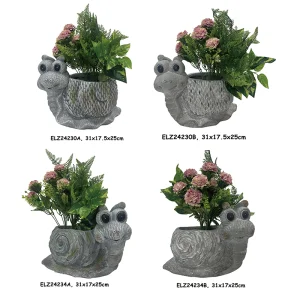
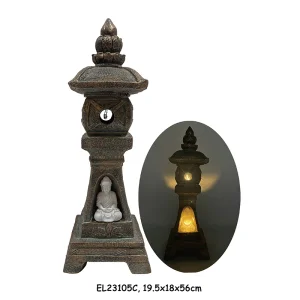
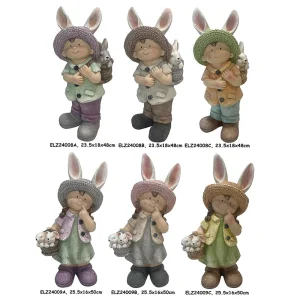
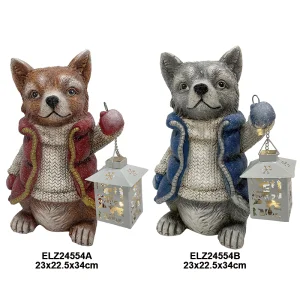
Key technical, logistical, and material inquiries regarding high-quality Lying Buddha exports and fiber clay production.
Fiber Clay (a composite of natural clay slurry, magnesium oxide cement, and alkali-resistant fiberglass mesh) provides a weight reduction of up to 60-70% compared to natural granite or cast concrete while maintaining superior flexural strength (18-25 MPa). Unlike polyresin, Fiber Clay is composed of inorganic minerals, meaning it will not degrade, warp, or yellow under intense UV exposure or thermal freezing cycles.
We provide full turn-key OEM/ODM engineering services. Importers can submit CAD drawings, 3D files, or visual reference sketches. Our master sculptors craft an initial 3D clay model within 7 days. Once approved, we build high-precision silicone matrix molds. Private brand logos, barcoding, and custom retail color-box packaging are integrated directly into the assembly line workflow.
Our standard MOQ per individual SKU is typically 30 to 50 pieces for large statuary (such as reclining Buddha statues and pagodas) and 100 pieces for smaller planter collections. We specialize in consolidated FCL (Full Container Load) shipments, allowing buyers to mix multiple statuary, animal figures, and plant pot SKUs within a single 20ft or 40ft High-Cube container to optimize ocean freight efficiency.
All Fiber Clay and MGO statuary undergo multi-stage waterproofing sealant treatments. By eliminating internal air voids during matrix vibration compaction and applying a hydrophobic micro-pore sealer, water absorption is kept below 3%. This prevents absorbed moisture from expanding during freezing temperatures, protecting pieces down to -40°C.
Our manufacturing facilities operate in strict compliance with ISO 9001 Quality Management Systems. Our products comply with REACH and RoHS material safety guidelines (zero toxic heavy metals, lead, or volatile organic compounds). We routinely host third-party inspection audits (SGS, TÜV, Bureau Veritas) for container loading verification and factory Social Accountability standard checks.