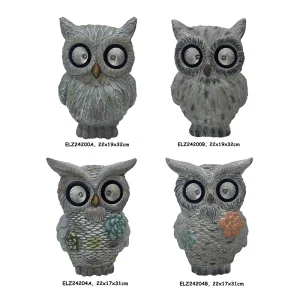
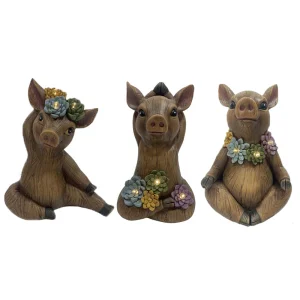
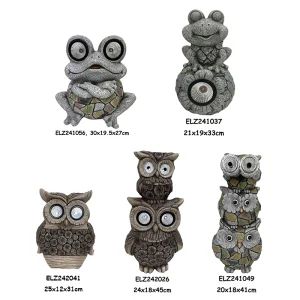
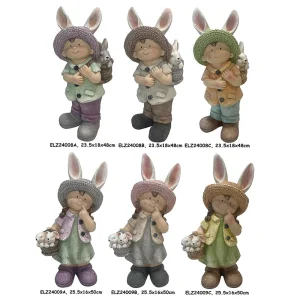
Explore our export-grade line of fiber clay, MGO, and handcrafted weatherproof statuary crafted for high-volume commercial, retail, and landscape distribution.
In the contemporary commercial real estate, luxury hospitality, and thematic landscape engineering sectors, avian and botanical decorative elements have undergone a dramatic structural evolution. Once categorized purely as residential garden novelties, high-end parrot decor, tropical bird statuary, and avian sculptural accents now represent a multi-million-dollar global market segment driven by biophilic design paradigms. Property developers, luxury resort chains, and commercial venue planners are increasingly incorporating life-sized and oversized exotic bird sculptures to curate immersive aesthetic environments that resonate with post-pandemic consumer demands for nature-inspired, sensory-rich spaces.
The international demand for high-grade parrot decor spans across major geographical sectors, with North America and Europe commanding over 58% of global B2B procurement volume. This growth is heavily fortified by expanded investments in outdoor living spaces, eco-resorts, botanical theme parks, and high-end residential compounds. However, sourcing large-scale, high-fidelity avian sculptures presents complex technical challenges: traditional materials such as carved timber, natural stone, or pure concrete either suffer from severe environmental degradation under harsh UV and moisture exposure or impose unsustainable shipping freight surcharges due to excessive structural weight.
Tropical resorts and luxury boutique hotels leverage life-sized parrot statuary to define outdoor pool decks, entrance porticos, and open-air dining pavilions, establishing recognizable branding anchors for guests.
Global retail flagships rely on ultra-realistic avian displays to engineer high-impact seasonal window concepts, driving foot traffic and visual social media engagement across metropolitan markets.
Municipal botanical gardens and nature parks require weather-hardened, non-toxic sculptural fixtures that can endure public contact, heavy UV exposure, and thermal cycling without structural degradation.
To overcome the structural vulnerabilities of legacy materials, modern B2B parrot decor production relies on state-of-the-art material composites. Chief among these innovations are Fiber Clay (Fiberglass-Reinforced Clay) and Magnesium Oxide (MGO) matrix formulations. These engineered substrates combine organic mineral compounds with synthetic strengthening networks to achieve an unprecedented strength-to-weight ratio.
Unlike conventional resin polyresin casting—which can soften under elevated temperatures or become brittle under sub-zero conditions—Magnesium Oxide (MGO) matrix composites undergo a cold-curing inorganic polymerization. This chemical bonding process produces zero internal tension, resulting in superior dimensional stability, fire resistance (Class A1 non-combustible rating), and complete immunity to moisture absorption.
Our industrial formulation combines calcined magnesite powder, magnesium chloride solution, fiber mesh reinforcement, and specialized clay aggregates. This dense structural lattice absorbs mechanical impacts while maintaining intricate feather textures, curvature precision, and anatomical accuracy required for premium parrot statuary.
Surface color retention is executed via automotive-grade acrylic-polyurethane hybrid coatings embedded with hindered amine light stabilizers (HALS). This technical finishing process prevents chalking, fading, or peeling when exposed to continuous Solar Irradiance (>1200 W/m²) and coastal salt fog environments.
China's dominance in the global craft manufacturing and outdoor decor export market is anchored in unmatched industrial ecosystem integration. Concentrated heavily in manufacturing hubs such as Fujian (Xiamen/Quanzhou), Guangdong, and Zhejiang, the specialized supply chain infrastructure for Fiber Clay and MGO statuary offers distinct strategic leverage for international volume buyers.
By integrating 3D CAD modelling, stereolithography (SLA) rapid prototyping, and CNC master carving, Chinese facilities can progress from a conceptual sketch of a custom parrot sculpture to a certified production mold in under 14 working days—reducing development cycles by up to 60% compared to Western manufacturers.
Proximity to world-class raw material refineries (magnesium ore, specialized fiberglass woven roving, and eco-friendly pigments) ensures uninterrupted bulk material pipelines. This concentration translates into an average 25-35% unit cost advantage for bulk B2B procurement without sacrificing structural quality.
Leading tier-1 China factories operate under ISO 9001 quality management standards and maintain full compliance with international environmental and social audits, including BSCI, SEDEX, and REACH certifications. Every batch undergoes multi-point inspection, including drop tests, load-bearing tests, and environmental chamber testing.
Direct access to deep-water container terminals (e.g., Xiamen Port) coupled with localized freight forwarding networks enables seamless FOB, CIF, or DDP delivery models. Automated drop-test packaging lines guarantee transit safety for fragile hand-painted decor across long-haul ocean routes.
High-quality parrot and tropical avian decor items serve diverse spatial functions depending on the architectural typology and regional buyer expectations. Successful deployment requires careful consideration of scale, color psychology, lighting, and installation hardware.
In warm-climate luxury hotels (such as Caribbean, Southeast Asian, or Mediterranean coastal properties), large-scale parrot statues mounted on faux-driftwood perches create instant photo opportunities, framing lush greenery and water features.
In high-foot-traffic entertainment centers, avian sculptures are often fitted with integrated solar LED accent lighting or weather-shielded sound modules, heightening sensory engagement during evening operation hours.
Private villas and luxury residential gardens demand understated elegance. MGO stone-finish or antique patina parrot sculptures blend seamlessly into topiary garden layouts, poolside terraces, and covered verandas.
For corporate sourcing directors, wholesale distributors, and retail chain buyers, executing a successful procurement strategy for craft decor requires standardized quality benchmarks and supplier evaluation metrics. Below is the industry-standard verification checklist developed by leading sourcing experts:
Ensure the average wall thickness of fiber clay statuary meets minimum structural standards (typically 8mm – 14mm depending on overall height). Thin walls lead to structural cracking during shipping vibration, while uneven density indicates poor mold compaction during casting.
All commercial export items must undergo ISTA-3A packaged drop testing (including 10-drop sequence from 76cm height onto concrete) to verify that internal polyfoam cradles and heavy-duty 5-ply double-wall corrugated master cartons prevent transit damage.
Samples undergo cross-hatch tape adhesion tests (ASTM D3359) and rapid thermal cycling (-20°C to +60°C over 48 hours) to guarantee paint coatings will not bubble, micro-crack, or delaminate under harsh climate transitions.
A top-tier supplier should provide custom barcoding, hangtag attachment, branded inner box options, and palletized container shipping configurations tailored for direct distribution into Big-Box retail fulfillment centers.
Key technical and operational questions regarding bulk purchasing, material selection, custom OEM manufacturing, and logistics services for parrot decor and outdoor statuary.
Fiber Clay combines natural clay aggregates with fiberglass mesh, offering a lightweight, stone-like texture ideal for eco-friendly garden items. MGO (Magnesium Oxide) is an inorganic composite that provides maximum fire resistance, extreme weather hardness, and zero cold-weather brittleness. Polyresin (petroleum-based resin) allows for micro-detail sculpting but is heavier and more susceptible to long-term UV fading and thermal expansion cracking compared to inorganic MGO.
Standard manufacturing MOQs for stock catalog items typically start at 50-100 units per style. For custom OEM/ODM designs requiring original mold creation, the initial MOQ is generally 200-300 units depending on product size. Sample development takes 7-14 days, with full container production completed within 35 to 45 days after deposit confirmation.
Professional craft factories employ master control color samples (approved golden samples) combined with standardized pantone mixing systems. Production line artisans utilize multi-stage spray-stencil masking techniques for foundational base colors, followed by hand-brushed detail work executed under calibrated daylight LED stations. Quality assurance teams conduct inline colorimeter spectral testing on every batch.
Yes. Because MGO and Fiber Clay composites feature microscopic air capillary distribution and near-zero water absorption rates (<0.5%), moisture does not collect inside the internal substrate matrix. This eliminates freeze-thaw expansion cycles that cause traditional concrete or ceramic garden ornaments to shatter in sub-zero temperatures.
Absolutely. OEM integration of IP65 waterproof solar panels, dusk-to-dawn light sensors, motion sensors, or rechargeable lithium-ion battery modules is a core manufacturing service. Electronic components are housed in recessed, rubber-gasketed compartments sealed against rainwater intrusion.
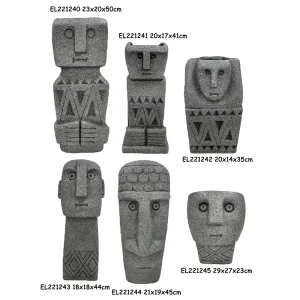
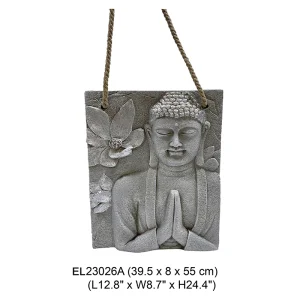
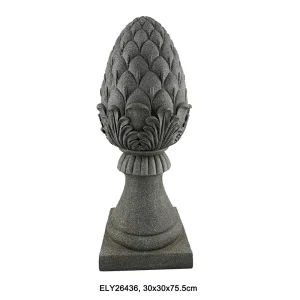
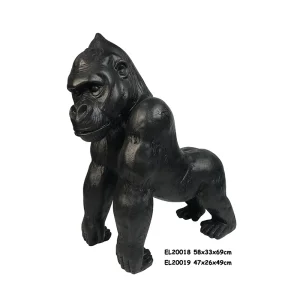
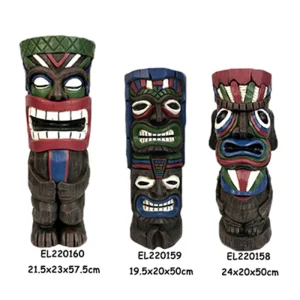
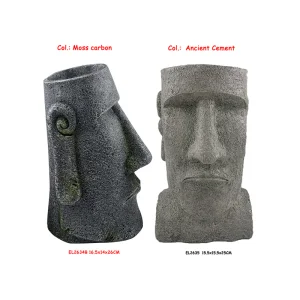
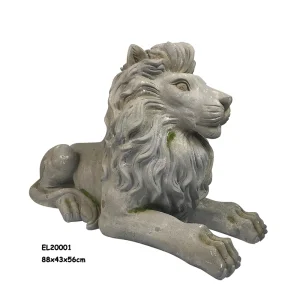
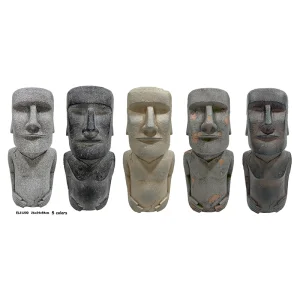
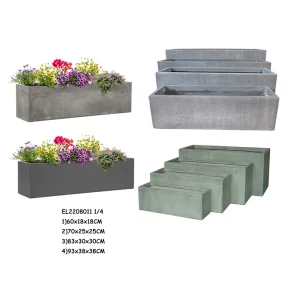
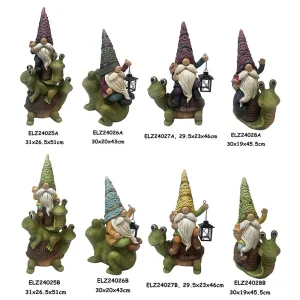
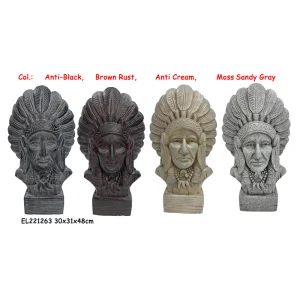
Browse our additional high-demand inventory selections featuring handcrafted Hawaiian Tiki, Easter Island, Animal Statuary, and Planter solutions built for commercial export.