Explore our premier handcrafted fiber clay, MGO, and resin ornaments engineered for international wholesale buyers and commercial importers.
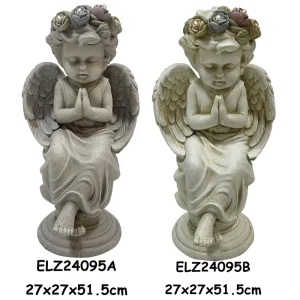
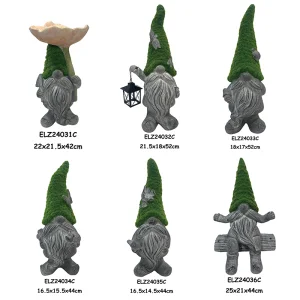
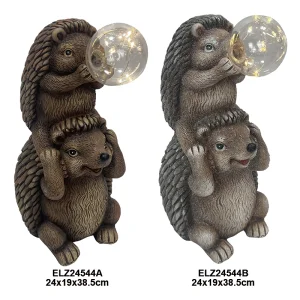
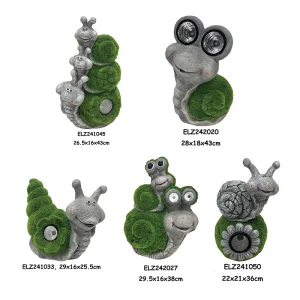
Analyzing the macroeconomic trajectory, supply ecosystem, and value-chain dominance of Chinese export manufacturers in the high-end holiday ornament industry.
The international market for holiday decor has undergone a structural paradigm shift. Traditionally viewed as a impulse-driven, low-margin retail category dominated by single-use plastic novelties, seasonal decorations—specifically high-quality stylish Halloween holiday ornaments—have evolved into sophisticated, high-value architectural lifestyle accents. As global consumers demand durable, weather-resistant, and aesthetically refined products for residential lawns, commercial venue transformations, and luxury hospitality venues, standard manufacturing processes have given way to advanced composite engineering.
At the epicenter of this industrial evolution is China’s specialized decorative manufacturing ecosystem, anchored in key export hubs such as Xiamen, Fujian Province. Over the last decade, leading Chinese exporters have transitioned from basic OEM contract molders to integrated ODM solutions providers. By leveraging proprietary composite formulations like Fiber Reinforced Clay (FRC) and Modified Magnesium Oxide (MGO), Chinese manufacturers currently account for over 78% of the global supply of premium outdoor seasonal statues, grand holiday sculptures, and illuminated garden art.
Modern Chinese export leaders are no longer competing solely on labor costs. Instead, their competitive moat is built upon proprietary material science (Fiber Clay/MGO), unmatched tooling speed, rigorous environmental compliance (REACH/RoHS), and end-to-end supply chain integration.
How Fiber Clay, Magnesium Oxide (MGO), and Hydrophobic Poly-Coatings deliver superior longevity compared to legacy terracotta and hollow plastic.
The primary operational risk for importers of large-scale outdoor holiday statuary (such as life-sized Halloween specters, illuminated pumpkin arrays, and garden finials) is shipping breakage and severe weather degradation. Legacy terracotta is exceptionally brittle and susceptible to freeze-thaw cracking, while lightweight blow-molded plastics lack structural weight, tipping over in windy outdoor displays.
To solve these industrial pain points, Chinese manufacturing pioneers engineered Fiber Clay and MGO composites. Fiber Clay combines natural clay mineral powders, high-grade Portland cement, and alkali-resistant fiberglass netting. This matrix yields structural strength comparable to reinforced stone while reducing unit weight by 60-70%.
| Material Metric | Fiber Clay (FRC) | Magnesium Oxide (MGO) | Standard Resin / Polyresin | Traditional Terracotta |
|---|---|---|---|---|
| Structural Density | 1.6 – 1.9 g/cm³ | 1.8 – 2.1 g/cm³ | 1.2 – 1.4 g/cm³ | 2.0 – 2.3 g/cm³ |
| Flexural Strength | 18.5 MPa (High Strain) | 22.0 MPa (Heavy Duty) | 12.0 MPa (Moderate) | 5.2 MPa (Brittle) |
| Freeze-Thaw Resistance | Passed 50+ Cycles (-20°C to +40°C) | Passed 75+ Cycles (-30°C to +50°C) | Surface Micro-fracturing | High Risk of Total Failure |
| UV Degradation Resistance | Grade 4.5 (800hr QUV Exposure) | Grade 5.0 (1000hr QUV Exposure) | Chalking / Yellowing | Color Fading |
| Eco-Footprint / VOCs | Zero-VOC Curing Process | Low Carbon Mineral Slurry | Petrochemical Base | High Kiln Energy Usage |
Master artisans craft initial master models in oil clay, capturing micro-textures, intricate gothic drapery, and anatomical features before silicone negative molds are cast.
Fiberglass mesh sheets are cross-laminated with polymer-modified cementitious slurries inside molds, guaranteeing uniform wall thickness and zero structural void pockets.
Multi-layer hand-painted patinas are sealed with hydrophobic, anti-fungal, and UV-inhibiting acrylic topcoats designed for all-season exterior resilience.
How demographic shifts, social media aesthetics, and smart technology integration are shaping global retail demand for seasonal ornamentations.
Modern consumers—particularly Millennial and Gen-Z homeowners—are rejecting tacky plastic props in favor of stylish, sophisticated holiday aesthetics. Trends favor moody muted palettes (charcoal matte black, antique bronze, bone white, distressed moss greens) that seamlessly integrate with modern home architecture, garden landscapes, and high-end porch decor.
Static ornaments are increasingly replaced by dynamic hybrid statuary. Modern Chinese exporters embed high-efficiency polycrystalline solar panels, twilight sensors, warm LED bulb arrays, and flickering flame-effect micro-circuits directly into weather-proof fiber clay bodies (such as glowing hedgehog bulb collections, solar snails, and lit jack-o'-lanterns).
Commercial buyers seek inventory with extended retail shelf lives. Exporters are innovating with versatile designs—such as dual-purpose planter statues, bird feeders with harvest motifs, and neutral autumn gnomes that transition effortlessly from September Halloween setups through November Thanksgiving displays.
With stringent environmental regulations in North America and the EU (such as ESG corporate mandates and plastic reduction laws), Fiber Clay and MGO statuary provide a eco-responsible alternative. Derived from natural mineral clays and glass fibers, these products emit zero harmful off-gassing and feature significantly lower environmental impact during life-cycle disposal.
Examining how stylish Halloween and seasonal holiday ornaments are deployed across diverse global commercial and residential channels.
In North America, Halloween home decorating ranks second only to Christmas in retail spend. Large-scale fiber clay statues (angel figures, whimsical lawn gnomes, lit pumpkins) serve as central focal points for residential front porches, garden pathways, and community haunt events. Their heavy-duty wind-resistant weight prevents blowing away during autumnal windstorms.
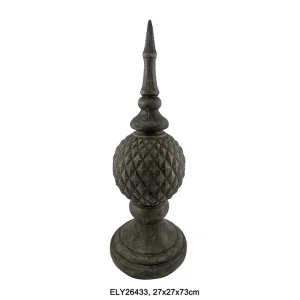
European commercial buyers prioritize refined craftsmanship and compact elegance. Fiber clay finials, animal statuary (foxes, owls, hedgehogs), and subtle gothic elements are widely featured in boutique window displays, heritage garden centers, urban cafe terraces, and autumnal hospitality venue entrances across the UK, Germany, and France.
For destination venues, shopping malls, and botanical gardens hosting seasonal "Autumn Light Trails" or "Harvest Festivals," durable MGO and fiber clay statues provide high-traffic public resistance. Their tough exterior paint coats withstand public contact and weather exposure without chipping or peeling.
How leading Chinese exporters streamline custom product development, drop-test packaging, and compliance for major international brand owners.
From initial sketch or 3D render, export engineering teams produce physical clay samples within 7–10 days. Precise volumetric modeling ensures exact scale, wall thickness uniformity, and structural load balance.
To support omnichannel and DTC drop-shipping fulfillment, products undergo rigorous ISTA-3A drop tests (10-point drop cycle, vibration testing, burst-strength carton validation) using custom drop-molded EPS/PE foam buffers.
Factories operate under strict BSCI and ISO9001 quality management standards. All paints, glazes, solar electrical components, and resin substrates are certified compliant with California Prop 65, REACH, RoHS, and CE guidelines.
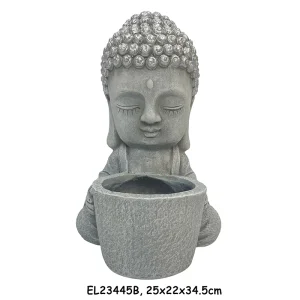
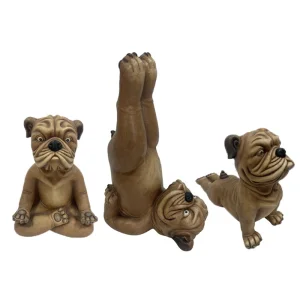
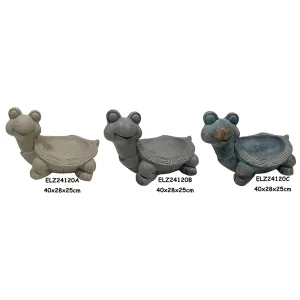
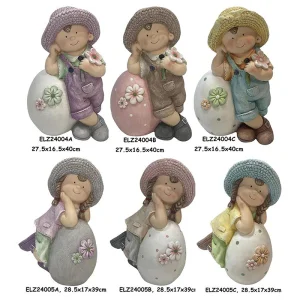
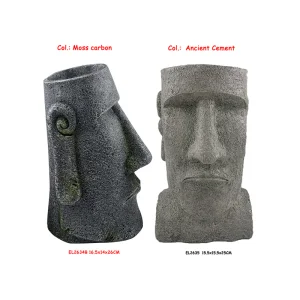
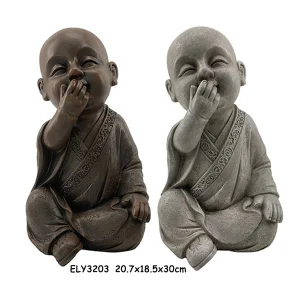
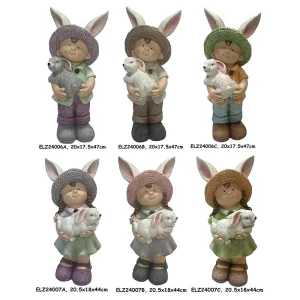
Explore our extended portfolio of Buddha statues, holiday winter animals, functional planters, and whimsical garden collectibles available for factory-direct export.
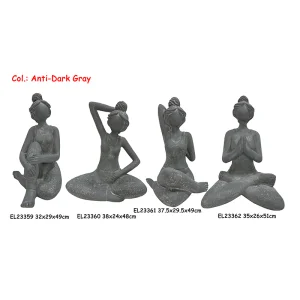
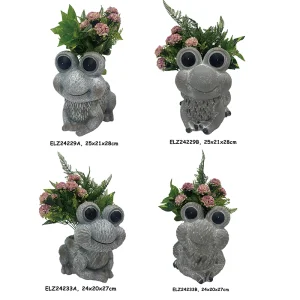
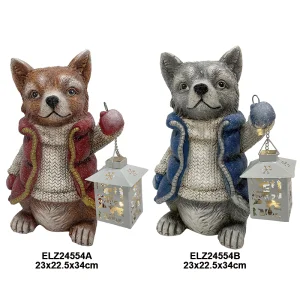
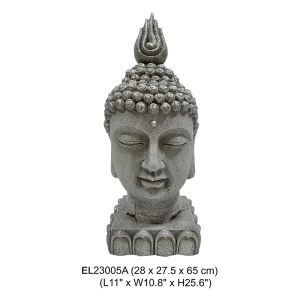
Direct, expert answers addressing material selection, procurement timelines, OEM customization, and international freight logistics.
Fiber Clay combines natural clay and cement slurry reinforced with high-density fiberglass matrix netting. Unlike cheap blow-molded plastics, Fiber Clay possesses substantial structural weight, preventing wind displacement in exterior installations. Unlike traditional polyresin or ceramic terracotta, it exhibits elastic tensile strength, making it frost-proof, crack-resistant in sub-zero winter temperatures, and 100% UV-stable without severe chalking or fading.
For standard catalog items, production lead time is typically 30 to 45 days upon deposit confirmation. For custom OEM/ODM designs requiring physical master sculpting, silicone mold creation, and sample approval, please allow an initial 15 to 20 days for R&D prototyping prior to mass production. We strongly advise international buyers to finalize seasonal Halloween orders by March/April for Q3 ocean freight delivery.
Leading exporters utilize customized, high-density Expanded Polystyrene (EPS) or Polyethylene (PE) inner foam wraps tailored to each product's exact contours. Master cartons are constructed from 5-ply or 7-ply double-wall corrugated cardboard engineered to withstand heavy stacking compression. All export packaging undergoes rigorous ISTA-3A or ISTA-1A drop tests before container loading.
Yes. Factory ODM capabilities allow complete integration of waterproof IP65-rated solar modules, rechargeable Lithium-ion battery packs, automated light-sensing dusk-to-dawn switches, and warm ambient LED circuits. Electrical components carry full CE, RoHS, and UL safety certifications required for Western retail markets.
Standard factory MOQ is generally 50–100 pieces per SKU for larger statuary, and 200–300 pieces for smaller decorative figurines, with a minimum full-container load (20GP or 40HQ) mix-and-match policy. OEM color customization, private label hangtags, and barcode box printing are supported for standard production volumes.