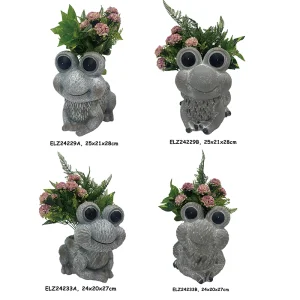
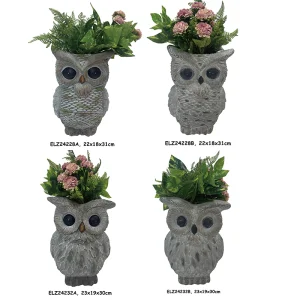
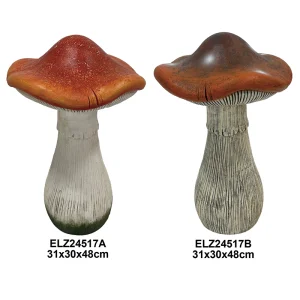
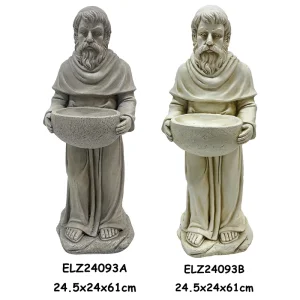
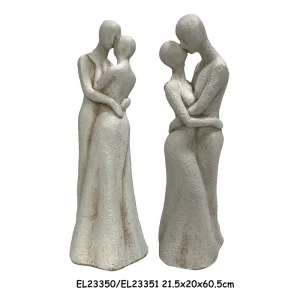
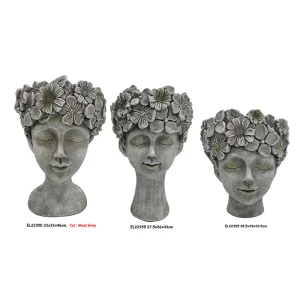
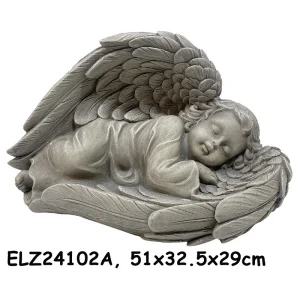
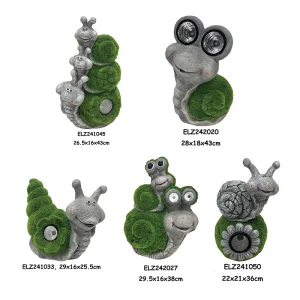
Explore top-tier wholesale fiber clay planters, statues, and garden craft collections manufactured for global commercial importers.
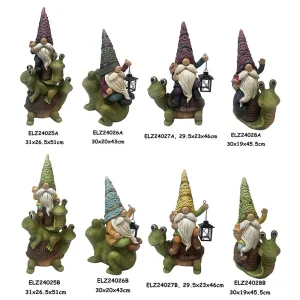
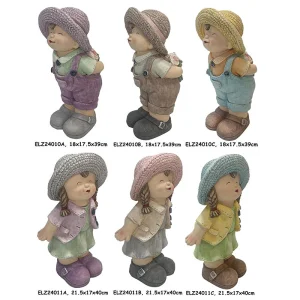
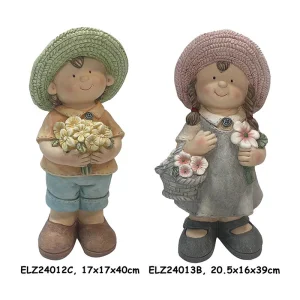
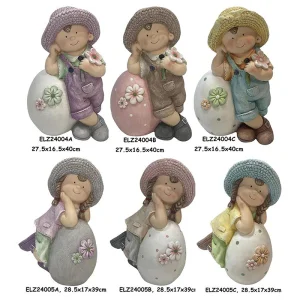
Understanding the chemical composition, physical mechanics, and structural superiority of Fiber Clay (MgO Pottery) over traditional pottery materials.
In the evolving landscape of global commercial landscaping, architectural design, and consumer garden decor, Fiber Clay (frequently referred to in industrial supply chains as Magnesium Oxide Pottery, Clay Fibre, or MGO Planters) represents a pivotal technological shift. Historically, B2B procurement managers and landscape architects were forced to navigate a difficult trade-off: traditional terracotta and ceramic pots offered aesthetic authenticity but suffered from extreme weight and frost-shattering vulnerabilities, whereas synthetic plastics and fiberglass offered durability but lacked tactile premium texture and thermal breathability.
Fiber clay bridges this historical gap through advanced composite material engineering. At its core, fiber clay is an inorganic mineral composite consisting of high-purity Magnesium Oxide (MgO), Magnesium Chloride ($\text{MgCl}_2$) or sulphate binders, natural clay slurry, and non-woven alkali-resistant fiberglass mesh reinforcement (ARG-mesh).
Acts as the cementitious crystalline binder. MgO reacts with chloride/sulphate salts to create a dense, stone-like matrix that achieves exceptional flexural and tensile strength without high-temperature kiln firing.
Multi-layered fiberglass matting embedded within the wall core absorbs structural strain, prevents thermal expansion cracking, and delivers high impact resistance under extreme weather conditions.
Blended into the outer layers to provide the natural weight, organic patina, micro-porosity, and matte aesthetics identical to traditional hand-burnished clay or aged concrete.
Technical Performance Benchmark: Premium fiber clay pots produced by tier-1 China exporters achieve a weight reduction of up to 60-70% compared to equivalent cast concrete, while boasting a flexural strength exceeding 18 MPa and freeze-thaw resilience down to -30°C (-22°F).
| Material Property | Fiber Clay (MgO Composite) | Traditional Terracotta | Glass Fiber Reinforced Concrete (GFRC) | Rotomolded Plastic / Resin |
|---|---|---|---|---|
| Structural Weight | Lightweight to Medium (1.4–1.6 g/cm³) | Heavy (2.1–2.4 g/cm³) | Very Heavy (2.0–2.3 g/cm³) | Ultra Light (0.95 g/cm³) |
| Freeze-Thaw Resistance | Superior (Non-bursting micropores) | Poor (High absorption, high cracking) | Moderate to High | High (Flexes, but degrades under UV) |
| Surface Texture & Finish | Authentic stone, matte, slate, weathered clay | Natural earthy ceramic | Industrial cementitious | Synthetic sheen / artificial plastic feel |
| Logistics Efficiency | Optimal (High density per sea container) | Low (High breakage rate, heavy freight) | Low (Heavy freight costs) | High (Nestable, but high cubic volume) |
| Carbon Footprint | Low (Low-energy ambient curing process) | High (Requires 1100°C+ gas kilns) | High (High cement content footprint) | High (Petrochemical synthesis) |
Why international retail chains, commercial developers, and garden center distributors are migrating en masse to Fiber Clay suppliers.
Global ocean freight dynamics have permanently changed purchasing equations for volume buyers. Traditional pottery exporters in Asia previously shipped heavy terra-cotta items that frequently reached maximum weight limits in 40ft High Cube containers long before the volume capacity was full.
Fiber clay pots solve container weight bottlenecks completely. By reducing unit weight by over 50%, importers can fully pack 40ft HQ containers to maximum volumetric capacity, effectively reducing freight cost per unit by 35% to 50%. Furthermore, the flexural ductility provided by embedded fiberglass mesh slashes transit breakage rates from 5-8% down to under 0.5%.
Modern architectural trends prioritize biophilic commercial spaces, urban green rooftops, boutique hotel patios, and residential balcony gardens. Engineering regulations strictly mandate floor load restrictions (typically maximum 250-400 kg/m² for structural balconies).
Contractors cannot specify heavy cast concrete or terracotta planters once soil wet mass and mature plant root structures are factored in. Fiber clay planters provide the luxurious, substantial appearance of natural granite, basalt, or cast cement while meeting structural dead-load constraints effortlessly.
From raw mineral compounding to multi-layer hydro-sealing, explore how our Xiamen production line guarantees tier-1 quality.
Industrial-grade MgO power, magnesium salts, micro-silica, and inorganic pigment pastes are homogenized under automated temperature control.
Craftsmen layer non-woven ARG fiberglass cloth into custom steel/silicone molds, saturating each layer with the mineral slurry for structural integrity.
Unlike kiln-fired pots, fiber clay undergoes a chemical exothermic reaction in controlled humidity chambers (25°C–35°C, RH 80%) for 7–14 days.
Exterior finishes (hand-painted patina, faux-terrazzo, flocked moss, or matte sealants) and interior waterproof sealant coatings are applied.
As a leading supplier and exporter based in Xiamen, China (with 14+ years of specialized export experience), Elandgo Crafts operates under strict ISO 9001 quality assurance frameworks. Every batch of commercial fiber clay pots and outdoor decorative statues undergoes stringent stress testing prior to container dispatch:
End-to-end B2B services tailored for international garden center chains, home decor brands, and landscape engineering contractors.
Accelerate your product development cycle. Our 3D modelling and master sculptors can transform architectural drawings into physical molds within 14 to 21 days.
Custom packaging solutions including ISTA-1A / ISTA-3A mail-order drop-test certified boxes, color retail sleeves, barcodes, and floor-display pallets for big-box retailers.
Factory audits supported for BSCI, SEDEX, and Target/Walmart compliance standards. Direct export documentation handling for seamless customs clearance worldwide.
Pioneering sustainable materials, smart solar integration, and nano-coating technologies in garden craft manufacturing.
Integration of silicon-based nano-sealants directly into the binder mixture during blending. This creates permanent lotus-effect water repellency across the entire planter body, eliminating moisture absorption without sacrificing breathability.
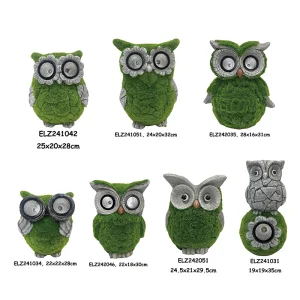
Blending functional electronics into decorative fiber clay statues and garden planters. Utilizing high-efficiency monocrystalline solar panels and IP67 waterproof LED modules (as seen in our flocking solar owl and animal series) for self-sustaining outdoor ambient lighting.
Replacing up to 30% of mineral fillers with post-industrial recycled glass fiber and crushed mineral slag, reducing factory carbon emissions by an additional 25% and contributing to circular economic sourcing for international B2B clients.
Developing closed-cell mineral micro-foaming core structures that maintain structural flexural strength while reducing oversized planter weights down to under 1.2 g/cm³ for extreme architectural height installations.
Technical and commercial answers curated by our senior quality engineers and export managers.
Fiber Clay utilizes an inorganic Magnesium Oxide (MgO) mineral binder mixed with clay powder and fiberglass mesh, yielding a natural, breathable, stone-like aesthetic. Fiber Stone or Polyresin uses synthetic organic polyester resins. Fiber clay is more eco-friendly, fire-resistant (Class A1), and provides superior thermal stability for plant root systems at lower manufacturing costs.
High-quality fiber clay crafted with proper MgO:MgCl₂ stoichiometric balance and alkali-resistant fiberglass mesh does not crack in freezing conditions. The microscopic pore structure accommodates moisture expansion, and our products pass 50+ freeze-thaw test cycles (-20°C to +20°C). Drainage holes must remain unblocked to prevent ice buildup at the base.
For standard catalog items (such as our garden statues, gnomes, and planters), our standard MOQ is typically 100–200 pieces per SKU, with a minimum full container load (FCL) of 1x20GP mixed across multiple SKUs. Custom OEM molds require higher initial commitments depending on size complexity.
Unlike non-porous plastic or dense glazed ceramics, the micro-porous inorganic matrix of fiber clay allows vapor permeability (air exchange). This provides natural root aeration, prevents root rot from over-watering, and insulates plant roots against rapid temperature fluctuations in hot summer or cold winter conditions.
Yes! Elandgo Crafts specializes in integrating functional garden elements into fiber clay bodies. We regularly manufacture solar-powered LED statues, grass-flocked solar critters, and multi-tier garden water fountains built directly with embedded fiber clay housings and waterproof wiring.
Standard mass production lead time is 35 to 45 days after deposit confirmation and sample approval. For peak seasonal orders (e.g., Spring garden season or Christmas decor collections), we recommend placing procurement orders 60 to 90 days in advance to reserve factory capacity.
Discover our extensive range of animal planter statues, seasonal crafts, and decorative home/garden figurines.