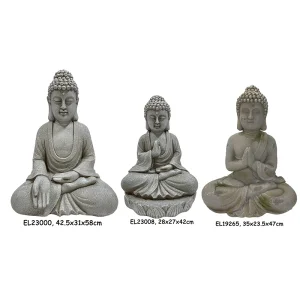
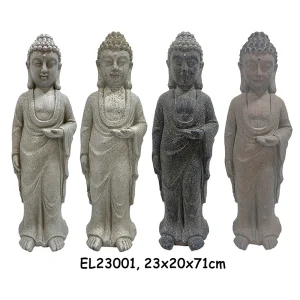
High-demand weather-resistant fiber clay and lightweight MGO statues optimized for global distributors and garden centers.
Analyzing market intent, supply chain dynamics, and technological transformation across global home and garden ornament ecosystems.
The international demand for Wholesale Thai Arts And Crafts has undergone a monumental structural transition over the last decade. Historically rooted in traditional village-level handcrafting across Northern Thailand—focusing on wood carvings, terracotta sculptures, and serene Theravada Buddhist iconography—the global marketplace now demands a sophisticated combination of cultural aesthetic preservation and high-volume, standardized industrial production. Commercial importers, multi-location retail chains, and international landscape architects frequently encounter bottlenecks when relying exclusively on traditional, cottage-industry artisan supply chains. These challenges typically include fragile material composition, vulnerability to frost and weathering, long production lead times, and unstandardized color fidelity.
To solve these operational constraints while preserving the rich, peaceful visual essence of Southeast Asian and Thai artisan traditions, forward-thinking B2B procurement leaders have embraced a dual-hub sourcing strategy. By pairing the visual motifs, serene spiritual expressions, and organic textures of traditional Thai artistry with the high-tech, scalable material science of Chinese manufacturing hubs (such as Xiamen Elandgo Crafts Co., Ltd.), importers achieve unprecedented efficiency. Advanced composite materials like Magnesium Oxide (MGO) Clay and Fiber-Reinforced Clay (Fiber Clay) enable lightweight, structural durability while accurately replicating the intricate textures of traditional carved wood, antique bronze, natural stone, and terracotta.
Traditional terracotta cracks under sub-zero temperatures. Modern fiber clay formulations incorporate alkali-resistant glass fiber mesh, providing anti-freeze and anti-UV resilience for multi-season outdoor display.
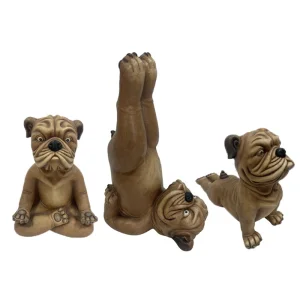
Utilizing high-density silicone master molds, high-precision industrial facilities replicate complex Thai Buddha, whimsical garden animal, and natural planters with zero variance across thousands of units.
Heavy solid concrete or natural stone statues inflate ocean freight expenses. Lightweight MGO clay structures reduce overall container weight, significantly decreasing landed cost per SKU for bulk importers.
Evaluating operational parameters between legacy handmade artisan workshops and modernized fiber clay manufacturing facilities.
| Evaluation Parameter | Legacy Handcraft Workshops | Elandgo Fiber Clay & MGO Factory | B2B Buyer Advantage |
|---|---|---|---|
| Material Composition | Soft Terracotta, Natural Wood, Plaster | Fiber-Reinforced Clay, MGO Composite, Resin | Eliminates transit breakage & extreme temperature cracking. |
| Lead Times (10k Units) | 120 - 180 Days (Weather Dependent) | 35 - 45 Days (Standardized Kilns & Molds) | Enables agile inventory turnover and rapid restocking. |
| Customization & Prototyping | Manual hand-carving (Inconsistent) | 3D CAD Modeling + High-Density Molds | Exact compliance with brand specifications and design IP. |
| Freight Weight Factor | Heavy (High Density Stone / Wet Clay) | Lightweight Hollow Core (FRP Reinforced) | Maximizes container volume utilization; reduces freight costs. |
| Quality Standards Compliance | Informal, lack of chemical certification | REACH, EN71, BSCI Audited, ISO9001 | Guarantees seamless customs clearance into US & EU markets. |
Global retail buyers often face a classic paradox: consumers desire the rich, peaceful, handcrafted look of authentic Thai Arts and Crafts—such as Sitting Buddhas, whimsical lotus frogs, and textured animal features—yet retailers require strict structural integrity, uniform dimensions, barcode labeling compatibility, and strict shipping schedules. By engineering fiber clay formulas that incorporate natural clay minerals mixed with synthetic resins and magnesium fiberglass, modern China-based export facilities seamlessly replicate the visual depth of Thai craftsmanship while complying with strict international retail standards.
How advanced material chemistry enhances outdoor weather resistance and structural integrity.
MGO ceramics utilize inorganic magnesium cement bonded with mineral additives. This results in a non-combustible, zero-VOC material that exhibits stone-like compressive strength at a fraction of the weight, ideal for large Buddha statues and architectural pottery.
Woven fiberglass meshes are embedded within the clay slurry during casting. This structural framework absorbs mechanical shocks, prevents hairline fractures during global transit, and prevents micro-cracking during freeze-thaw cycles.
Statues are finished with non-fading polyurethane sealants and hand-applied antique patinas. This multi-coat finishing process prevents color degradation under direct sunlight and resists water absorption in high-humidity outdoor settings.
Where wholesale Thai arts, fiber clay statues, and outdoor garden pots deliver maximum visual impact and commercial return.
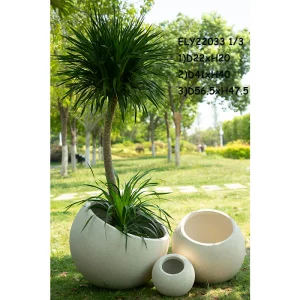
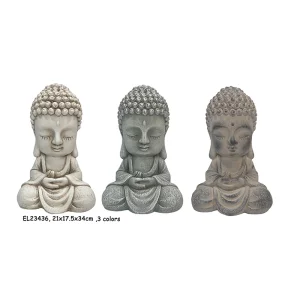
Serene MGO Buddha statues and minimalist sphere planters create tranquil, meditative environments for hospitality destinations, wellness retreats, and upscale boutique hotels.
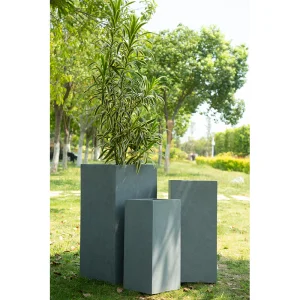
Large fiber clay planters and decorative animal features withstand high foot traffic in public plazas, corporate courtyards, and open-air shopping centers.
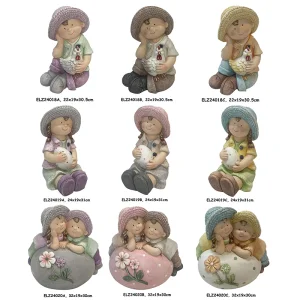
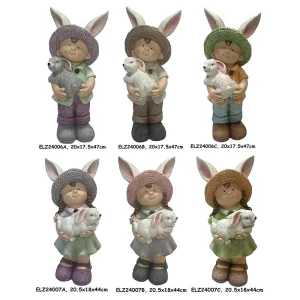
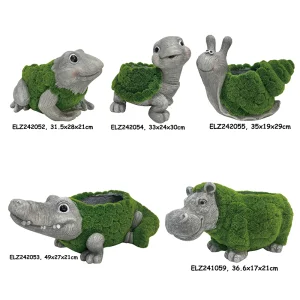
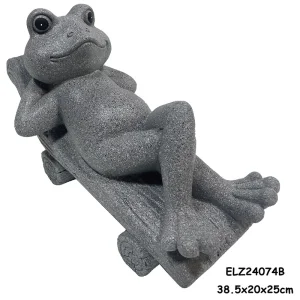
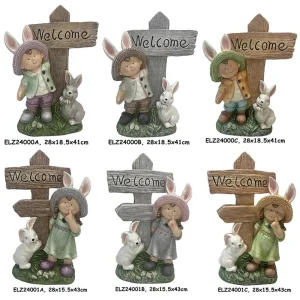
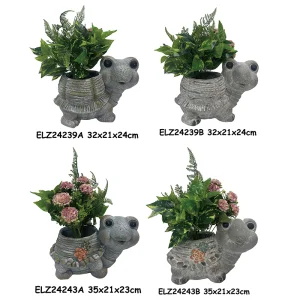
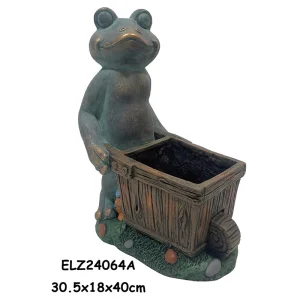
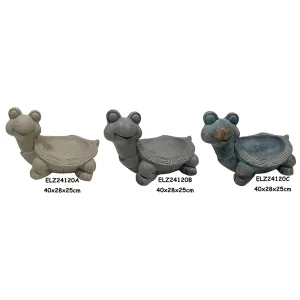
Whimsical designs—such as reading frogs, cheerful welcome children, and grass-flocked animal planters—drive impulse consumer purchases at big-box home improvement and garden centers.
Lightweight fiber clay statues transition effortlessly indoors, offering statement art pieces for entryways, sunrooms, indoor botanical displays, and lobby displays.
Anticipating consumer preferences and supply chain evolution for 2025 and beyond.
As eco-conscious consumerism expands globally, importers of home and garden décor must realign their sourcing portfolios. The future of wholesale Thai arts and crafts manufacturing lies at the intersection of natural artistic forms and sustainable, low-carbon production methods. Leading manufacturing exporters are heavily investing in zero-emission cold-curing clay processes, eco-friendly water-based acrylic stains, and recyclable packaging materials to satisfy strict EU and North American environmental directives.
Modern architectural trends favor organic, textured finishes that blur the line between nature and structure. Statues featuring moss-like flocking, stone patinas, and weathered clay finishes are experiencing significant demand spikes.
Statues that double as self-watering planters, solar-powered light housings, or bird feeders offer higher functional value to end consumers, justifying premium retail price points.
Incorporating digital scanning and automated mold production ensures dimensional uniformity across high-volume orders, reducing returns and claims for international distributors.
Direct technical and procurement insights for commercial buyers, importers, and retail category managers.
Traditional Thai pottery relies on low-fire terracotta clay, which is porous and susceptible to frost damage and impact breakage. Fiber Clay and MGO (Magnesium Oxide) combine natural clay oxides with fiberglass reinforcement and synthetic bonding agents. This creates a lightweight material with significantly higher tensile strength, frost resistance, and reduced shipping weight.
Our engineering team can work from 2D sketches, 3D digital files, or physical reference samples. We create 3D digital renderings for approval, output high-density master clay models, and produce production-ready silicone molds within 14 to 21 days for custom B2B projects.
Yes. Our fiber clay and MGO statues undergo rigorous thermal shock and freeze-thaw testing (enduring temperatures down to -20°C). The interior mesh absorbs thermal expansion, while sealed exterior coatings prevent water ingress, avoiding internal ice expansion and cracking.
Products are packed using custom-molded EPS foam or high-density EPE shock protection, enclosed in 5-ply double-corrugated outer cartons. For bulk FCL and LCL shipments, palletization with stretch wrapping and corner protectors is applied to ensure zero damage upon arrival.
Our typical MOQ is 50 to 100 pieces per SKU depending on product dimensions, with a minimum full-container load (FCL) mixed-order strategy encouraged for optimal sea freight economy. Mass production lead time averages 35 to 45 days post-deposit confirmation.
Absolutly. We welcome third-party inspection agencies such as SGS, TÜV, or BV prior to shipment. Our production facilities maintain compliance with international factory audit frameworks including BSCI and ISO9001 standards.
Discover lightweight MGO Buddha figures, geometric flowerpots, and seasonal garden craft series.