
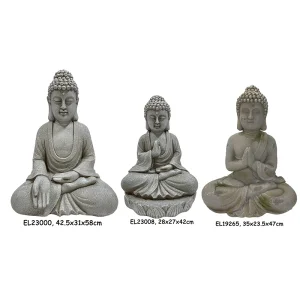
High-demand architectural, spiritual, and decorative garden crafts engineered specifically for Irish wholesale distributors, garden centers, and landscape projects.
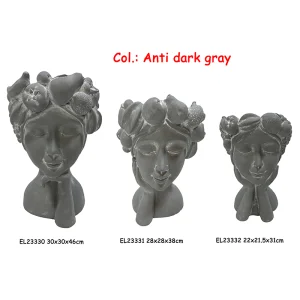
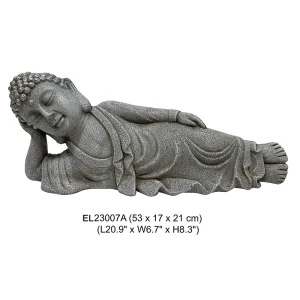
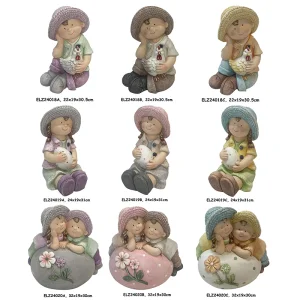
An in-depth analysis of consumer shifts, climate-induced material requirements, and supply chain demands across Ireland's retail and commercial sectors.
The market for garden crafts, outdoor planters, and architectural clay figurines in the Republic of Ireland and Northern Ireland has experienced a structural evolution. Driven by increased consumer investment in home sanctuaries, outdoor living spaces, and commercial outdoor hospitality infrastructure in cities such as Dublin, Cork, Galway, and Limerick, the demand for premium, long-lasting clay decor has reached unprecedented levels.
However, sourcing traditional ceramic or concrete crafts for the Irish market presents severe operational challenges for B2B importers, garden centers, and home goods retail chains. Ireland’s temperate maritime climate is defined by high annual precipitation (averaging 1,000 mm to 1,400 mm in coastal areas), high relative humidity, persistent salt spray in coastal zones, and volatile winter freeze-thaw cycles. Traditional terracotta pots and low-density terracotta figures absorb water easily; when ambient temperatures drop below 0°C, the trapped water expands, resulting in catastrophic spalling, micro-fracturing, and aesthetic degradation.
Standard terra cotta exhibits a high water absorption rate (12%–18%), rendering it vulnerable to Irish frost damage. Advanced Fiber Clay and MGO composite formulations engineered in China reduce water absorption to below 3%, guaranteeing 100% frost resistance down to -20°C.
Irish consumers are favoring lightweight, eco-friendly, and stone-textured outdoor crafts that mimic heavy lead, natural granite, or aged limestone without the unmanageable shipping and handling weights. Commercial pub gardens, boutique hotel courtyards, and urban rooftop bars require robust decor that can endure frequent public interaction and harsh Irish weather.
By leveraging China's optimized Magnesium Oxide (MGO) and fiberglass-reinforced clay manufacturing ecosystem, Irish importers lower total landed container costs. The reduced tare weight allows up to 40% higher unit loading per 40ft HQ container compared to heavy wet concrete or solid ceramic products.
Empirical technical breakdown showcasing why Chinese Fiber Clay and MGO composites outperform legacy craft materials in European climates.
| Material Parameter | Fiber Clay (China Optimized) | Magnesium Oxide (MGO) | Standard Terracotta | Cast Concrete |
|---|---|---|---|---|
| Primary Raw Materials | Clay slurry, alkali-resistant fiberglass mesh, Portland cement | Magnesium oxide (MgO), magnesium chloride (MgCl2), perlite fiber | Natural baked red/brown clay | Sand, gravel, aggregate, Portland cement |
| Density / Bulk Weight | 1.1 – 1.4 g/cm³ Lightweight | 0.95 – 1.2 g/cm³ Ultra Lightweight | 1.8 – 2.1 g/cm³ (Heavy) | 2.3 – 2.5 g/cm³ (Excessively Heavy) |
| Water Absorption Rate | < 3.5% | < 2.5% | 12.0% – 18.0% (Poor) | 5.0% – 8.0% |
| Frost Resistance (-15°C to 40°C) | Passed (50 Cycles ISO 10545-12) | Passed (75 Cycles ASTM C666) | Fails (Cracks & Spalls) | Moderate (Prone to surface pitting) |
| Tensile & Flexural Strength | High (Fiber reinforced mesh matrix) | Very High (Structural cross-linking) | Brittle (Snaps under impact) | High compression, low flexural |
| Carbon Footprint / Eco Impact | Low (Cured at lower temperatures) | Ultra Low (Natural mineral setting) | High (High-temp kiln firing) | High (High cement content) |
For commercial importers supplying Irish hardware chains (such as Woodie's, B&Q Ireland, or independent garden centers across Leinster, Munster, Connacht, and Ulster), material selection directly impacts customer return rates and brand credibility. Traditional terra cotta exhibits unacceptable loss rates due to moisture-induced cracking during severe frost events in inland counties such as Westmeath or Offaly. Chinese MGO and Fiber Clay formulations incorporate synthetic alkalized fiberglass matrices that absorb flexural stresses caused by thermal expansion, completely eliminating structural cracking.
How Chinese advanced molding, precise slurry casting, and hand-finished artistry deliver unbeatable quality and scalability for global buyers.
Our manufacturing partner facilities utilize 3D digital scanning and high-density silicone and fiberglass master molds. This allows rapid prototyping of custom European aesthetic styles, Celtic motifs, or modern minimalist geometric planters within 14 days of design sign-off.
Every production batch undergoes mandatory quality checks, including ultrasonic wall-thickness measurement, water immersion testing, drop-impact structural validation, and UV chamber accelerated aging tests to meet strict EU REACH chemical standards.
While structural casting is automated for consistency, surface finishes—ranging from antique moss, lead oxide patina, rustic iron rust, to hand-flocked grass moss—are executed by master artisans with over 15 years of craft tradition.
From suburban garden transformations to municipal landscape architecture, explore how Chinese clay crafts adapt to local Irish environmental requirements.
Suburban homes in Dublin suburbs (such as Dún Laoghaire, Malahide, or Bray) frequently feature damp patio environments. Fiber clay Buddha statues, whimsical gnome riders, and decorative child figurines provide low-maintenance, mold-resistant focal points that harmonize with lush Irish green flora.
Ireland's thriving pub and restaurant outdoor dining culture demands high-impact visual aesthetics capable of enduring public contact. Large-scale MGO reclining Buddhas, statement bust planters, and solar-illuminated night garden statues provide memorable ambiance for outdoor dining areas.
Explore our full OEM manufacturing range, featuring solar-powered figures, whimsical animals, classical cherubs, and oriental zen craftwork.
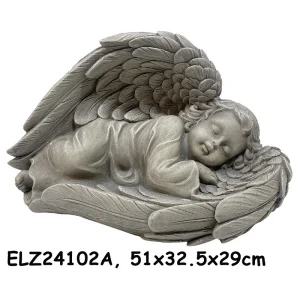
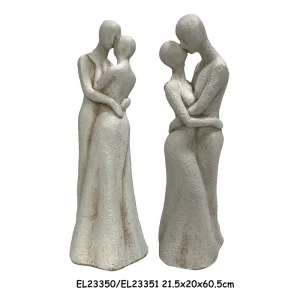
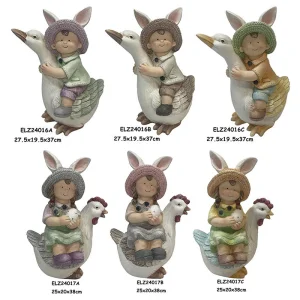
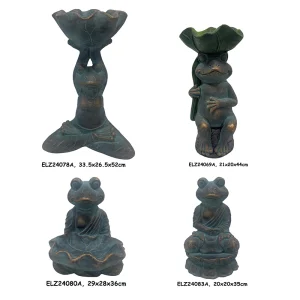
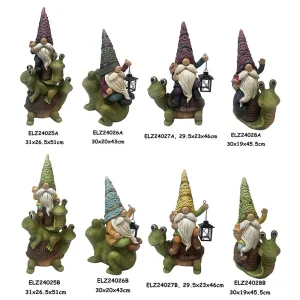
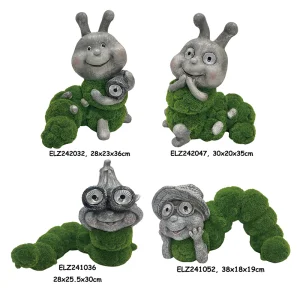
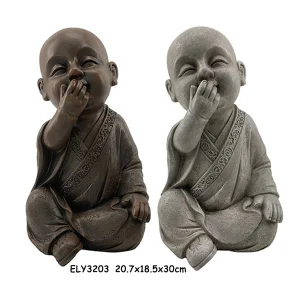
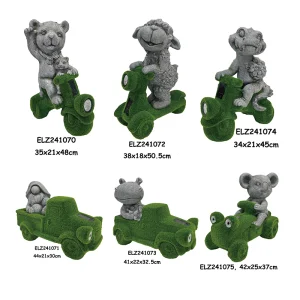
Protecting your margins and ensuring zero breakage on ocean freight routes from Xiamen/Ningbo to Dublin, Cork, and Belfast.
Fiber clay and MGO statues are protected using custom molded styrofoam (EPS/EPE), heavy-duty corner guards, and 7-ply double-wall corrugated master cartons designed to endure rough sea transit across Atlantic lanes.
All paints, glazes, and fiber bonding agents are 100% lead-free, cadmium-free, and REACH certified. Full documentation is provided for seamless Irish Revenue Customs clearance.
By nesting planter sizes and utilizing modular pallet layout planning software, we achieve 98% cubic space utilization inside 40ft HQ containers, dramatically lowering per-unit freight cost.
We provide FOB Xiamen / FOB Ningbo or direct DDP / CIF freight solutions servicing major Irish logistics gateways, including the Port of Dublin, Port of Cork, and Shannon Foynes, with typical transit windows of 30 to 35 days.
Expert answers addressing material durability, MOQ requirements, OEM branding, and climate adaptability.
Fiber clay combines natural clay minerals with synthetic fiberglass mesh and low-absorption binders. Unlike traditional porous terracotta, Fiber Clay resists water absorption (<3.5%), preventing water expansion during winter freeze-thaw cycles that break standard pots.
Our standard Minimum Order Quantity (MOQ) is 50–100 pieces per SKU, with a total minimum initial order of one 20ft container (approx. 28 CBM), allowing buyers to mix multiple styles of statues, planters, and solar crafts.
Our solar craft series utilizes IP65 sealed waterproof solar housings with high-efficiency monocrystalline panels that charge effectively under indirect sunlight. Grass flocking uses UV-stabilized nylon fibers bonded with waterproof epoxy resin that will not shed or fade in damp conditions.
Yes. We offer complete OEM/ODM manufacturing. We can sculpt original models based on reference photos or CAD files, embed custom logos into mold bases, and produce customized consumer packaging with barcode labeling for Irish retail chains.
MGO and Fiber Clay materials are chemically inert minerals resistant to salt-mist exposure. Outer paint coatings utilize alkali-resistant polyurethane topcoats tested to withstand coastal marine air without peeling or flaking.
Sample production takes 7 to 10 days. Mass production lead time is typically 35 to 45 days after deposit confirmation, followed by 30 days ocean freight transit time to Dublin Port.