Analyzing the technical specifications, climate adaptation protocols, and direct supply chain advantages of sourcing Fiber Clay (Magnesium Oxide - MGO) and Resin statues from elite Chinese manufacturing hubs to Central Asia.
Kazakhstan's rapid urban expansion across Astana, Almaty, and Shymkent demands high-durability, lightweight decorative statuary capable of enduring severe continental temperature fluctuations. Traditional concrete and unreinforced ceramics suffer structural micro-cracking in extreme frost. China’s advanced Fiber Clay (MGO) composite manufacturing bridges the gap by delivering stone-like aesthetic value, high flexural strength, and reduced logistics tariffs along the Belt and Road Eurasia railway corridors.
High-demand light-weight Fiber Clay and MGO statues engineered for commercial landscaping, outdoor retail channels, and hospitality developments.
Understanding the macro-economic drivers, construction surges, and climatic imperatives shaping ornamental statuary procurement across Central Asia.
Kazakhstan's National Infrastructure Plan has accelerated commercial and residential construction projects in Astana and Almaty. Developers are aggressively sourcing ornamental exterior statues, garden finials, and architectural centerpieces to elevate high-end villa communities and boutique commercial plazas.
With winter temperatures plunging to -40°C in Northern Kazakhstan and summer heat exceeding +40°C in Southern regions, traditional stone or standard clay statuary fractures due to ice expansion. Modern MGO (Magnesium Oxide) Fiber Clay offers superior freeze-thaw cycles without surface spalling.
The Khorgos-Eastern Gate Dry Port creates an unmatched logistical corridor between Chinese manufacturing centers in Fujian/Zhejiang and Kazakh distributors. Overland rail freight delivers bulk statues in 7–12 days, bypassing costly ocean routes and reducing inventory cycle times.
Why Chinese Fiber Clay (Magnesium Oxide + Fiberglass Matrix) has become the global benchmark material for international statue sourcing.
| Technical Performance Metric | Fiber Clay / MGO Statues | Traditional Cast Concrete | Polyresin / Fiberglass | Fired Terracotta Clay |
|---|---|---|---|---|
| Material Density & Weight | Lightweight (0.8 - 1.2 g/cm³) | Heavy (2.2 - 2.4 g/cm³) | Medium (1.1 - 1.4 g/cm³) | Medium (1.6 - 1.9 g/cm³) |
| Frost & Freeze-Thaw Resistance | Exceptional (-40°C Tested) | Poor (Cracks under expansion) | Moderate (Brittle under freeze) | Very Poor (High absorption) |
| Water Absorption Rate | < 0.5% (Sealed Formula) | 5% - 8% | < 0.1% | 8% - 14% |
| UV & Thermal Expansion Stability | Zero UV degradation / Non-fading | High stability | Prone to UV yellowing & warping | High stability |
| Compressive & Flexural Strength | High Flexural (Fiber Reinforced) | High Compressive / Low Flexural | Moderate Strength | Fragile / Low Impact |
| Eco-Friendly Footprint | Low Energy Cold-Curing Process | High Carbon (Cement Industry) | Petroleum Synthetic Resin | High Energy Kiln Firing |
Fiber Clay is manufactured by combining raw Magnesium Oxide (MgO), Magnesium Chloride (MgCl2) or sulfate salts, and alkali-resistant fiberglass mesh with natural clay minerals. This exothermic chemical reaction creates a crystalline matrix that hardens at ambient temperatures without requiring energy-intensive high-temperature kilns, guaranteeing low environmental impact and superior structural rigidity.
When moisture enters unsealed outdoor statues, freeze-thaw cycles cause volumetric expansion of ice by ~9%, fracturing the internal matrix. China’s leading statue factories utilize multi-stage silicone sealant infusion and micro-porous air-entraining additives. This ensures zero water pooling within micro-voids, making Fiber Clay statues ideal for Kazakh winter conditions.
Why international buyers choose OEM/ODM statue manufacturers in Xiamen and Fujian industrial clusters for global delivery.
Chinese statuary hubs maintain extensive libraries of over 500+ standard silicone and steel molds covering traditional European lions, Eastern Buddha figures, modern animal sculptures, and minimalist geometric shapes. Custom CAD/CAM 3D prototyping reduces sample creation from months to just 7 days.
With direct access to abundant mineral reserves of high-purity magnesite and clay in China, raw material procurement costs remain highly competitive. Automated batch mixing and standardized quality control yields up to 40% cost efficiency compared to European or local Central Asian artisanal workshops.
Overland container transit across Central Asia involves significant vibration and handling. Experienced Chinese statue exporters employ reinforced drop-tested 5-ply corrugated master cartons, molded EPS styrofoam casing, and fumigated wooden palletizing to guarantee zero breakage during transit to Kazakh depots.
From Astana’s modern architectural land-use projects to private estates in Almaty, explore where Fiber Clay statuary delivers maximum economic value.
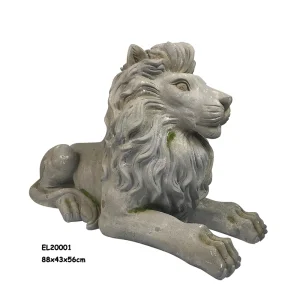
Private estates in Almaty's foothills and Astana’s executive suburbs require grand entryway sculptures (e.g., majestic lion statues, ornamental finials, and classic garden accents). Lightweight Fiber Clay allows installation on suspended terraces and upper garden balconies without structural reinforcing loads.
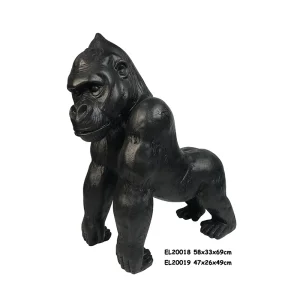
High-traffic retail venues utilize weather-proof animal collection statues and seasonal festive decor to boost customer engagement. Fiber Clay’s high impact resistance prevents chipping in public spaces subject to heavy foot traffic.
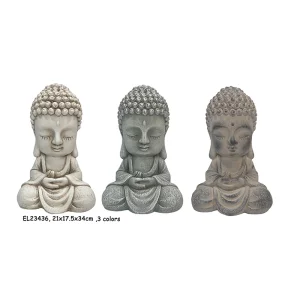
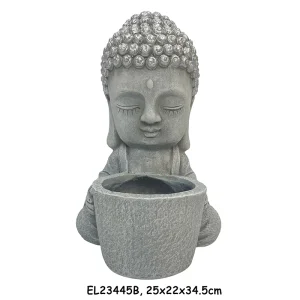
Boutique hotels and wellness sanctuaries incorporate tranquil Zen sitting Buddha figures, reclining Buddha statues, and pagoda garden lighting. Neutral stone patinas enhance serene environments in indoor spa foyers and outdoor botanical gardens.
Municipal developments in cities like Shymkent, Karaganda, and Aktau require large-scale planters and decorative accents that withstand intense sunlight and extreme winter cold without color fading or structural cracking.
Explore our full line of Fiber Clay, MGO, and hand-finished outdoor statues engineered for global wholesale, distributor, and project buyer procurement.
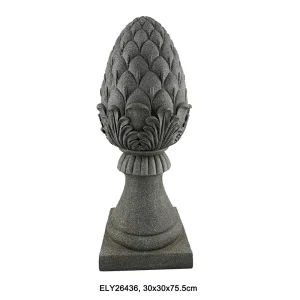
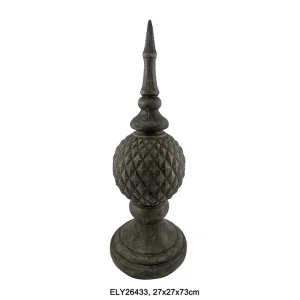
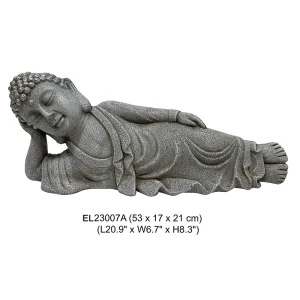
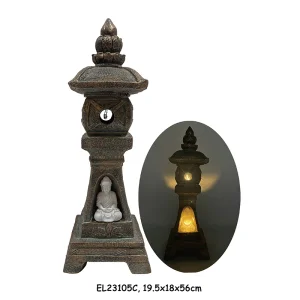
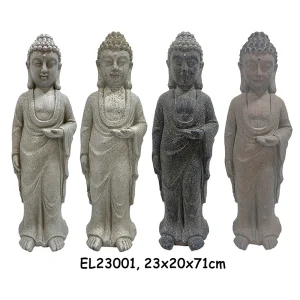
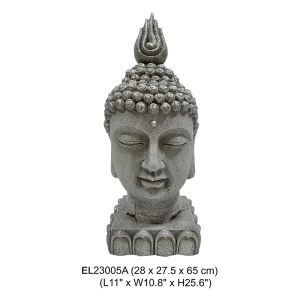
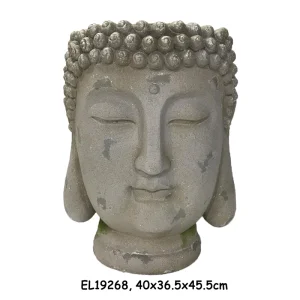
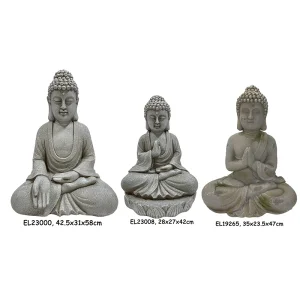
Navigating international quality standards, environmental regulations, and logistics efficiency for wholesale statuary procurement.
Global buyers and European/Central Asian commercial importers are increasingly mandating eco-friendly production practices. Unlike traditional pottery and cement firing that release significant carbon emissions, Fiber Clay utilizes ambient exothermic curing. This process slashes energy consumption by over 60% during manufacturing while using non-toxic natural mineral components.
Modern retail brands require exclusive surface hand-painted finishes, including simulated granite, weathered basalt, antique bronze, terracotta, and cement look-alikes. Chinese manufacturers provide OEM barcode labeling, customized color boxes, and proprietary surface lacquering tested against salt spray and UV fading.
Sourcing statues for Kazakhstan is optimized via direct container rail transport (e.g., Yiwu/Xiamen to Almaty via Khorgos Dry Port). Railway transit avoids ocean port congestion, offering fixed transit schedules and simplified customs documentation under Eurasian Economic Union (EAEU) trade frameworks.
Leading Chinese exporters enforce strict multi-stage quality checks: raw material mesh density checks, 24-hour water immersion testing, structural drop testing from 1-meter heights, and UV aging resistance verification under ASTM international testing guidelines.
Answers to essential technical, logistical, and commercial inquiries for importing Fiber Clay statues into Central Asia.
Fiber Clay (MGO) combines lightweight magnesium oxide with high-tensile fiberglass reinforcement. Concrete statues absorb water and micro-fracture when frozen at temperatures as low as -40°C in Kazakh winters. Fiber Clay features a water absorption rate under 0.5% and low thermal expansion, ensuring zero freeze cracking while remaining 70% lighter for lower import shipping costs.
For containerized overland railway freight departing from major Chinese industrial centers through the Khorgos / Dostyk dry ports, transit time to Almaty is typically 7 to 12 days. Production lead times range from 25 to 35 days depending on batch quantity and OEM custom molding requirements.
Yes. We provide complete OEM/ODM customization. Our hand-painting artisans create custom patinas including antique sandstone, dark basalt, weathered granite, rusted iron, bronze, and stone textures tailored to match hotel exteriors, public parks, or private luxury villas.
Every statue is wrapped in protective anti-scratch polybags, surrounded by custom-molded high-density EPS styrofoam, and sealed inside 5-ply heavy-duty corrugated export cartons. For bulk shipments, cartons are stacked on fumigated wooden pallets and stretch-wrapped for maximum stability across long-distance overland rail transport.
Our standard MOQ per product design is 20 to 50 pieces for large garden statues, and 100 pieces for smaller figurines. We support mixed-SKU full container load (FCL 20GP / 40HQ) orders, allowing importers to diversify their retail or project catalog within a single shipment.
Direct Factory Sourcing for Kazakh Wholesalers, Distributors, and Commercial Landscape Contractors. Request an Instant Quote & Full 2025 Product Catalog Today!
Send Inquiry Now