Premium handcrafted fiber clay products tailored for commercial, residential, and outdoor landscaping deployments across Egypt.
An empirical analysis of Egypt's expanding construction sector, urban modernization, and the increasing reliance on advanced clay composites.
The Arab Republic of Egypt is undergoing an unprecedented urban transformation led by Vision 2030. Projects such as the New Administrative Capital (NAC), New Alamein City, and expansive mixed-use developments by top tier developers in Cairo (New Cairo, 6th of October City) are accelerating demand for heavy-duty outdoor decorations, commercial planters, and architectural clay crafts.
Traditional terracottas, while culturally revered, frequently fail under modern structural demands due to high moisture absorption, micro-fracturing under stress, and substantial weight overhead. Modern real estate projects mandate light-weight, UV-stabilized, high-tensile clay alternatives—specifically Fiber Clay (Fiberglass Reinforced Clay) and Magnesium Oxide (MgO) composite crafts.
Egypt’s Red Sea Riviera—encompassing Hurghada, Sharm El Sheikh, Marsa Alam, and El Gouna—continues to expand its luxury resort infrastructure. Commercial procurement managers in these regions require exterior aesthetic accents capable of surviving hypersaline air, high ambient humidity, and severe sunlight exposure.
Imported high-grade Fiber Clay and MGO statuary products from certified manufacturing ecosystems offer Egyptian hotel chains, interior design firms, and landscaping contractors an optimal balance of structural resilience, low thermal conductivity, and refined aesthetic finishes.
Understanding the chemical composition, tensile integrity, and performance metrics required for North African climatic deployment.
When sourcing clay crafts for the Egyptian market, architectural specifiers and bulk importers must distinguish between basic unreinforced terra cotta and advanced composite formulations. Fiber Clay blends natural clay, sea-mud minerals, and fiberglass mesh matrices bonded with cementitious compounds. MGO (Magnesium Oxide) ceramics further optimize structural density, creating lightweight statuary and planters with near-zero porosity.
| Technical Performance Metric | Traditional Terracotta | Fiber Clay Composite | MGO (Magnesium Oxide) | Standard Resin / Plastic |
|---|---|---|---|---|
| Density & Weight Ratio | Heavy (High Freight Cost) | Lightweight (Optimal Freight) | Medium-Light (High Stability) | Ultra-Light (Prone to Wind) |
| UV Degradation Resistance | Moderate (Fading / Cracking) | Superior (UV-Stabilized Finish) | Superior (Zero Fading) | Poor (Chalking & Brittle) |
| Thermal Shock Resilience (Sun Exposure) | Low (Fractures at high ΔT) | High (Elastic Fibers Absorb Expansion) | Extreme (Non-expanding matrix) | Low (Melts / Softens >50°C) |
| Salt-Air Corrosion (Coastal Zones) | Poor (Efflorescence occurs) | Impervious (Sealed Layer) | Impervious (Chemical inertness) | High |
| Environmental Footprint | Natural / High Energy Firing | Eco-Friendly / Low-Carbon Curing | Sustainable / Non-Toxic Base | Petroleum Derivative |
Direct sunlight in Egyptian desert regions can exceed 1000 W/m² irradiance. Our proprietary exterior sealants shield the ceramic substrate from photo-oxidation, preserving pigment integrity and avoiding surface flaking over years of exposure.
Multilayer alkaline-resistant glass fiber mesh embedded within the clay matrix yields structural flexural strength, allowing large-scale planters and statues to withstand high physical impacts and structural stress without shattering.
From hand-painted antique glazes and metallic patinas to natural basalt stone textures, our production facility executes specific aesthetic requirements for Egyptian architectural themes, including Mediterranean, Modernist, and Greco-Roman styles.
Leveraging direct-factory production scalings, strict quality assurance, and streamlined logistics routes into major Egyptian maritime ports.
Operating across a 15,000+ sqm manufacturing base in Fujian Province, China, our manufacturing facilities integrate state-of-the-art curing chambers, precision mold-making shops, and manual artisan finishing lines. This hybrid industrial model ensures rapid scalable output for volume orders without sacrificing the intrinsic artistic detailed beauty of traditional clay craftwork.
Egyptian importers benefit from economies of scale, obtaining premium-tier fiber clay products at competitive FOB unit costs that allow generous wholesale margins in regional retail and contracting markets.
We offer full export compliance support tailored for Egyptian customs directives, including ACI (Advanced Cargo Information) system registration, Nafeza portal compliance, and GOEIC certification coordination.
Our B2B export team provides instant quotations, technical data sheets, and sample delivery for Egyptian projects.
Tailored ornamental and structural solutions meeting the design standards of top architecture firms in Egypt.
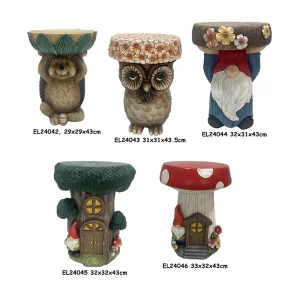
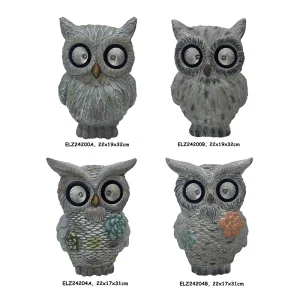
Deploying large-format fiber clay urns, tall square flowerpots, and weather-resistant animal sculptures around pool decks, open-air lobbies, and beachfront promenades in Red Sea hotspots. Resistant to sea-salt air and thermal fluctuations.
Elevating courtyard gardens and rooftop terraces in New Cairo, Sheikh Zayed, and Katameya compounds. Elegant Buddha statues, classic water-feature bases, and animal stools fit seamlessly into contemporary Mediterranean villa aesthetics.
Sturdy, lightweight planters and statement sculptures designed for high-foot-traffic environments. Easy to re-position by site management while maintaining the heavy, authentic look of natural stone or ancient terracotta.
Explore our broader selection of fiber clay, MGO statues, and specialized garden decor available for container-load orders.
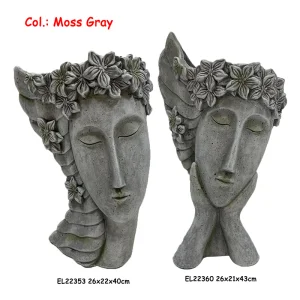
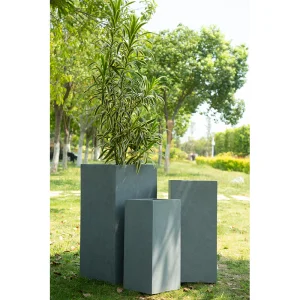
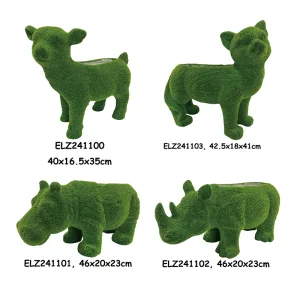
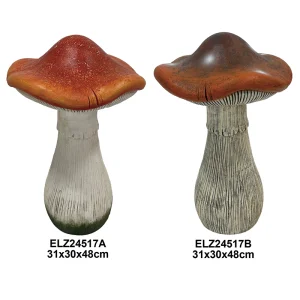
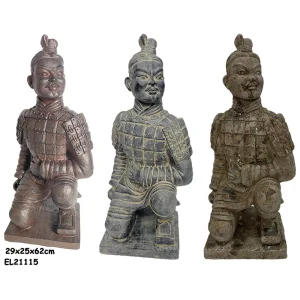
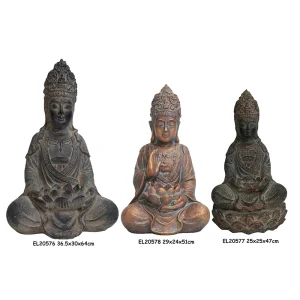
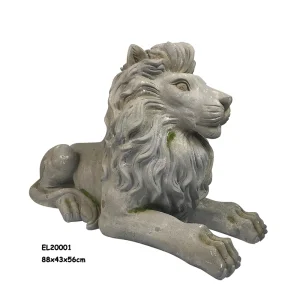
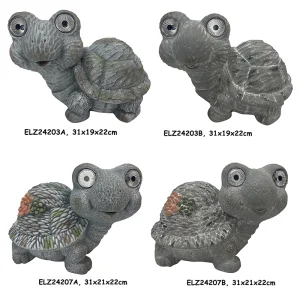
Navigating trade documentation, Nafeza ACID numbers, customs clearance, and quality standards seamlessly.
Under Egyptian customs regulations, all commercial shipments entering ports such as Sokhna or Alexandria require an Advanced Cargo Information (ACI) ACID number issued prior to export vessel loading. Our experienced export documentation team integrates directly with Egyptian importers to verify proforma invoices, HS code classifications (specifically under ceramic/fiber clay chapters), and commercial invoice authentication.
We perform rigorous pre-shipment inspections (PSI) matching GOEIC guidelines. Our factory quality control covers dimensional accuracy, drainage hole integrity, impact endurance tests, non-toxic pigment verification, and heavy metal leaching compliance. Third-party inspections via SGS, Bureau Veritas, or Intertek can be coordinated upon request.
Direct technical and commercial answers regarding minimum order quantities, customization, shipping times, and material performance.
Our standard MOQ is typically 50–100 pieces per product style, depending on total size, with a minimum full container load (20ft FCL) requirement for initial ocean shipments. Mixed-SKU container loading is supported, allowing Egyptian buyers to diversify their retail stock across planters, animal stools, and decorative statues in a single order.
Our Fiber Clay and MgO products are specifically engineered with inorganic binder matrices that do not soften, expand, or warp under desert temperatures exceeding 50°C. Surface glazes feature UV-inhibiting clear coats resistant to abrasion caused by blowing sand and dust storms in arid regions.
Yes. Once a Proforma Invoice (PI) is confirmed, our documentation team immediately provides all mandatory exporter data (Tax ID, Manufacturer Registration, Bill of Lading drafts) to your designated Egyptian customs broker so the ACID (Advanced Cargo Information Declaration) number can be generated on Nafeza before cargo dispatch.
Standard production lead times are between 30 and 45 days after deposit confirmation and sample approval. Ocean transit from Xiamen / Ningbo ports to major Egyptian ports typically takes 20 to 30 days depending on shipping line selection and Suez Canal routing.
Absolutely. We maintain a full-service modeling shop capable of producing custom clay molds based on architectural CAD files, 3D renders, or reference sketches. Custom samples are manufactured within 10–15 days for client sign-off prior to mass production.
Contact our B2B export specialists today to receive product catalogs, technical certifications, and factory-direct pricing for Egypt shipments.
Send Inquiry Now