Engineered for extreme structural durability, lightweight transport, and aesthetic alignment with contemporary Japanese urban design.
Analyzing modern architectural demands, regional seismic engineering constraints, and the synergy between traditional ceramics and high-performance fiber clay.
The Greater Nagoya Metropolitan Area—representing the industrial and economic heartland of Japan's Chubu region—is undergoing a monumental urban transformation. As major commercial hubs such as Meieki (Nagoya Station District), Sakae, and the broader Aichi Prefecture expand their biophilic architectural footprints, the demand for industrial-grade, aesthetically sophisticated planter systems and pottery solutions has reached unprecedented levels. Modern urban master planning in Nagoya emphasizes integrating green infrastructure within high-density commercial complexes, luxury hotel rooftops, and corporate headquarters.
However, sourcing pottery for the Japanese enterprise sector presents structural and regulatory challenges distinct from Western markets. Architectural planters installed across Nagoya must meet strict Japanese Industrial Standards (JIS) regarding structural integrity, seismic sway safety, frost resistance during continental winter blasts from the Japanese Alps, and weight-loading parameters for elevated sky gardens. Traditional heavy terracotta and solid cast concrete planters pose substantial structural load challenges for modern steel-frame skyscrapers, while cheap plastic alternatives fail to satisfy the refined aesthetic standards demanded by Japanese landscape architects.
Aichi Prefecture possesses a legendary ceramic heritage, home to two of Japan's ancient Six Kilns: Seto and Tokoname. Local landscape architects and commercial developers retain a deeply ingrained reverence for ceramic craftsmanship, organic textures, and natural earth tones (Wabi-Sabi design philosophy). To succeed in the Nagoya market, imported enterprise pottery cannot merely replicate cheap mass production; it must embody the visual elegance of handcrafted ceramics while incorporating advanced composite engineering.
Our direct-from-factory manufacturing matrix bridges this technical gap. By combining premium Fiber Clay (Magnesium Oxide - MGO, combined with fiberglass mesh reinforcing matrices), we deliver planters that visually match high-end Japanese stoneware while offering a 60% reduction in tare weight and significantly heightened flexural strength. This material revolution enables Nagoya contractors to install massive scale planters on elevated balconies and commercial podiums without compromising floor-load capacities or structural safety guidelines.
Direct OEM/ODM capabilities, raw material engineering, and cost-optimized supply chains optimized for Nagoya enterprises.
Our state-of-the-art facility utilizes high-purity Magnesium Oxide (MGO) blended with natural inorganic fibers and alkaline-resistant fiberglass mesh. This produces an exceptionally high strength-to-weight ratio, preventing micro-fracturing under intense thermal expansion.
Every batch destined for the Nagoya market undergoes multi-stage laboratory testing, including ASTM C666 freeze-thaw cycles and water absorption testing (<0.4%). Planters resist cracking during cold winter sea breezes across Ise Bay.
Located near major Chinese sea hubs, we provide streamlined container loading (FCL/LCL) directly to the Port of Nagoya. Our optimized nested packaging techniques maximize container volume, slashing per-unit ocean freight overheads for Japanese importers.
| Performance Metric | Elandgo Fiber Clay (MGO) | Traditional Terracotta | Cast Structural Concrete | Standard HDPE Plastic |
|---|---|---|---|---|
| Tare Weight Ratio | Lightweight (1.0x) | Heavy (2.8x) | Extremely Heavy (4.5x) | Ultra-Light (0.4x) |
| Frost & Crack Resistance | Superior (-30°C to +70°C) | Poor (Prone to Spalling) | Moderate (Needs Sealant) | Poor (UV Degradation) |
| Structural Flexural Strength | High (Fiberglass Reinforced) | Low (Brittle Fracture) | Very High | Low (Flexible Deformation) |
| Aesthetic & Surface Texture | Natural Stone / Matte Matte Finish | Traditional Clay | Raw Industrial Concrete | Synthetic Artificial Look |
| Environmental Sustainability | 100% Biodegradable Base | Natural Clay | High Carbon Footprint | Petrochemical Non-Recyclable |
How our customized pottery solutions solve real-world architectural challenges across Aichi Prefecture.
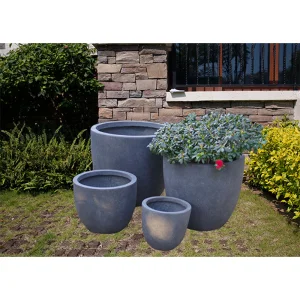
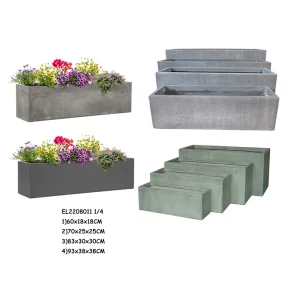
Modern urban planning directives in Nagoya strictly mandate green coverage ratios for newly constructed high-rise buildings. Developers transforming the skyline around Nagoya Station require massive trough and cylinder planters to house heavy decorative bamboo, Japanese maple (Momiji), and shrubs. Our lightweight fiber clay planters allow architects to achieve expansive green roof layouts without exceeding structural dead-load limits established by structural engineering teams.
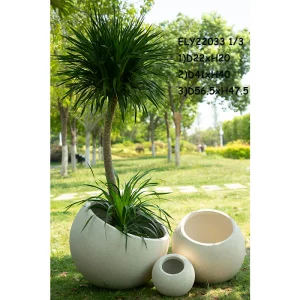
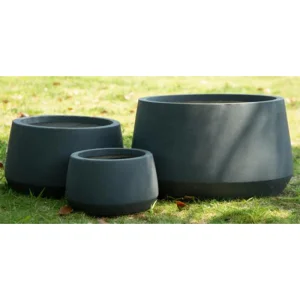
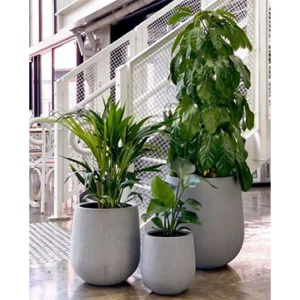
Luxury hospitality venues in Nagoya, as well as traditional hot-spring resort destinations throughout Aichi, demand outdoor pottery that harmonizes with natural landscaping. Our low-bowl and traditional egg-shaped fiber clay collection offers a tactile stone texture that echoes ancient Japanese aesthetic principles while remaining easily relocatable by hotel management staff during seasonal reconfigurations.
Urban pedestrian walkways, outdoor dining plazas, and civic plazas in Nagoya require heavy-duty, impact-resistant planters to define pedestrian safety zones and control vehicular traffic flow. Fiber clay planters reinforced with multi-layered internal alkali-resistant fiberglass netting provide exceptional impact dampening and long-term weatherproofing against humidity, salt air from Ise Bay, and acid rain.
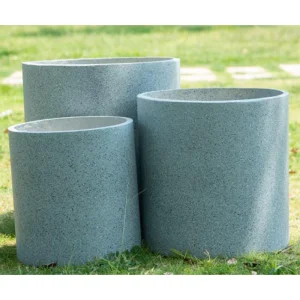
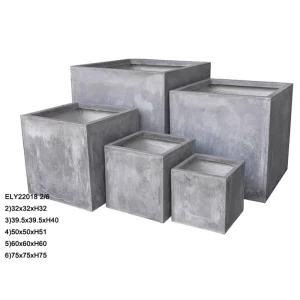
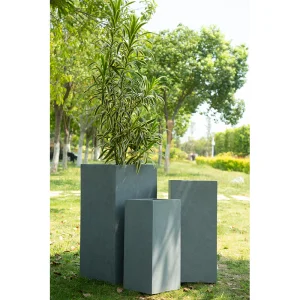
With major corporate entities in the automotive, robotics, and manufacturing sectors establishing global centers in Nagoya, indoor air quality and biophilic office aesthetics have become paramount. Our contemporary cube, tall square, and sleek cylinder planters fit seamlessly into minimalist corporate lobbies, executive boardrooms, and atrium gardens.
End-to-end manufacturing solutions designed for wholesale distributors, landscape procurement agencies, and trading houses in Japan.
We provide bespoke CAD modeling and 3D prototyping for custom landscape projects in Nagoya. From custom color matching (RAL & Pantone systems) to integrated drainage plug systems for indoor/outdoor versatility, our engineering team executes tailor-made specifications.
Operating under ISO 9001 and BSCI quality systems, each planter undergoes strict dimensional stability checks, salt-spray durability testing, and drop-load validation prior to container loading. Guaranteed zero-defect delivery to Nagoya buyers.
To minimize breakage and maximize container efficiency, our planters are packed using custom corrugated inner protection, heavy-duty edge guards, and fumigated wooden pallets tailored for rapid clearance at Port of Nagoya customs.
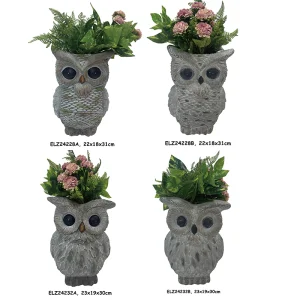
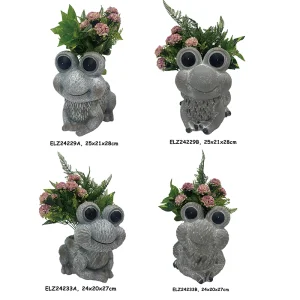
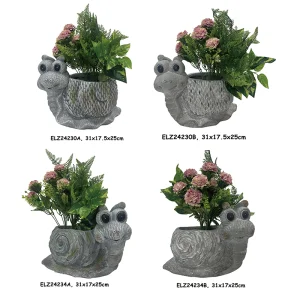
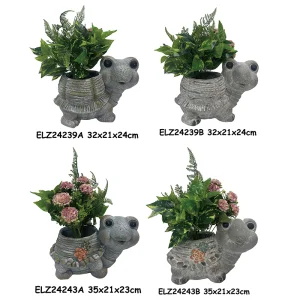
Explore our comprehensive catalog of lightweight fiber clay planters and artful garden statues ready for bulk export.
Technical, commercial, and operational insights for landscape procurement directors and wholesale buyers.
Contact our export engineering team today to receive a complete product catalog, factory-direct pricing tier, and physical material sample kits for your next commercial project in Aichi Prefecture.
Send Inquiry Now