As the Japanese landscape architecture and commercial outdoor living sectors undergo a structural transition toward lightweight, seismic-safe, and sustainable materials, global B2B procurement managers require suppliers capable of combining structural integrity with refined aesthetics. Modern urban real estate developments across Tokyo, Osaka, Nagoya, and Yokohama face severe floor-load limits, strict seismic building codes, and aggressive freeze-thaw cycles in northern prefectures such as Hokkaido.
This industry whitepaper outlines the technical specs, supply chain mechanics, material innovations, and market entry frameworks designed specifically for Japanese pottery importers, landscape architects, home center chains (Nitori, Cainz, Kメリ), and commercial project contractors.
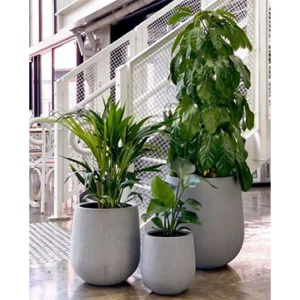
High-demand Fiber Clay architectural series engineered for Japanese balcony loading specs and residential garden aesthetics.
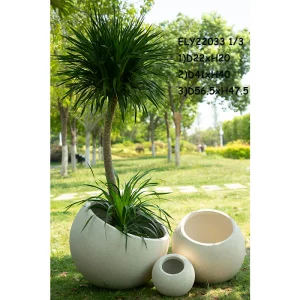
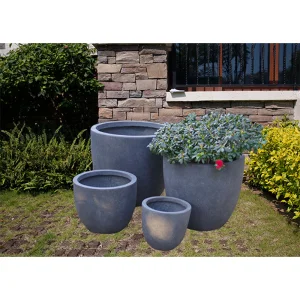
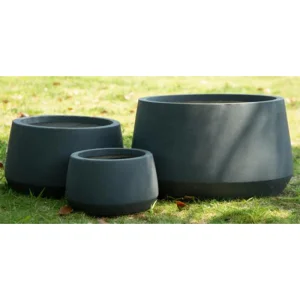
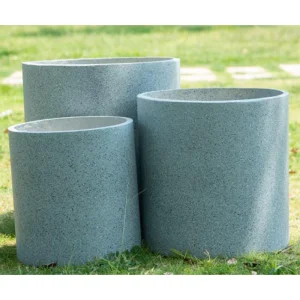
Japan's horticultural and commercial pottery market represents a uniquely sophisticated segment within the global garden supply ecosystem. Steeped in centuries of ceramic traditions—ranging from Shigaraki, Tokoname, and Arita wares—Japanese consumers and commercial buyers possess an acute appreciation for surface texture, natural patinas, and visual balance (Wabi-Sabi).
Over 67% of Japan’s urban population resides in multi-story residential complexes (Mansion apartments) across Kanto and Kansai regions. Balcony loading restrictions set by Japanese Building Standards (typically 180–200 kg/m²) strictly limit heavy traditional stoneware, driving mass adoption of engineered Fiber Clay planters.
Commercial developments in Tokyo (such as Roppongi Hills or Marunouchi precincts) require non-structural landscape elements to minimize fall-hazard risks during seismic events. Lightweight composite pottery significantly lowers center-of-gravity hazards compared to heavy cast concrete.
From humid sub-tropical summers in Kyushu to sub-zero freeze cycles in Tohoku and Hokkaido, outdoor containers suffer severe thermal expansion stress. Modern fiber clay substrates incorporate cross-linked fiber mesh to eliminate internal cracking during severe frost.
While European and North American B2B buyers prioritize massive volumetric containers for expansive suburban gardens, Japanese trade buyers demand precision dimensional tolerances, non-toxic eco-coatings, and modular nesting configurations to minimize ocean freight costs per container unit.
| Key Performance Criteria | Traditional Terracotta / Ceramic | Cast Concrete / GRC | Elandgo Engineered Fiber Clay |
|---|---|---|---|
| Density / Weight Ratio | Heavy (2.2 - 2.5 g/cm³) | Extremely Heavy (2.4 - 2.7 g/cm³) | Lightweight (0.8 - 1.2 g/cm³) |
| Freeze-Thaw Vulnerability | High (Porous exfoliation) | Moderate (Hairline cracking) | Zero Damage (-30°C certified) |
| Seismic Risk Profile | High (Brittle failure) | High (Structural mass hazard) | Low (High flexural resilience) |
| Eco Footprint & Kiln Energy | High Firing Energy (1200°C+) | High Carbon Cement Base | Low Carbon MgO Cold-Curing |
| Nesting Efficiency (Container LCL/FCL) | Poor (Thick walls) | Very Low | Optimized (Precision Tapered Walls) |
Our proprietary Fiber Clay manufacturing pipeline combines natural inorganic mineral clays, high-grade Magnesium Oxide (MgO), Magnesium Chloride (MgCl₂), and alkali-resistant fiberglass woven mesh matrices. This dynamic synthesis delivers structural properties tailored for demanding Japanese landscape conditions.
Unlike standard terra cotta fired in fossil-fuel kilns, our fiber clay utilizes an exothermic low-temperature curing reaction. This process reduces operational carbon emissions by up to 60% while forming a dense, crystalline structural matrix resistant to moisture retention.
Strategic inclusion of 3D alkali-resistant fiberglass netting provides high tensile strength (up to 18 MPa). This reinforcement prevents shattering during transport shocks and protects planters against shear stress caused by deep root growth.
Finishes are applied using inorganic mineral pigments and UV-stable acrylic sealants. Popular Japanese shades—including Charcoal Slate (Sumikuro), Warm Off-White (Shiro-shiruki), Cement Matte, and Rustic Sand—undergo 1,000-hour QUV accelerated weathering tests to prevent fading.
Understanding where and how commercial buyers deploy pottery is essential for catalog customization and successful trade penetration in Japan.
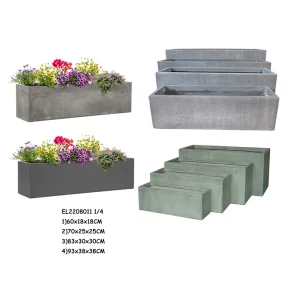
Compact sphere, trough, and low-bowl configurations fit cleanly onto tight urban apartment balconies in Setagaya, Minato, and Shinjuku districts. Their lightweight construction simplifies seasonal plant maintenance and re-arrangement.
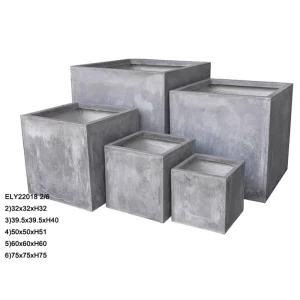
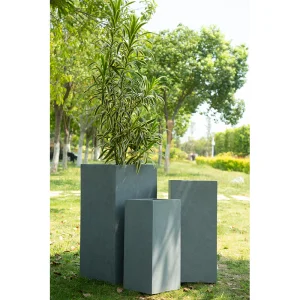
High-traffic commercial complexes in Ginza, Omotesando, and Umeda leverage tall square planters and modern cylinders to frame entrances, partition outdoor café seating, and accent hotel foyers without imposing structural weight burdens.
High-end Japanese hot-spring inns (Ryokan) and private residences in Kyoto and Nara combine weathered stone-finish fiber clay planters with Japanese maple (Momiji), moss varieties, and bonsai specimens to deliver timeless zen aesthetic harmony.
A comprehensive range of geometric planters and whimsical garden animalia statuary tested for high-volume wholesale distribution in Japan.
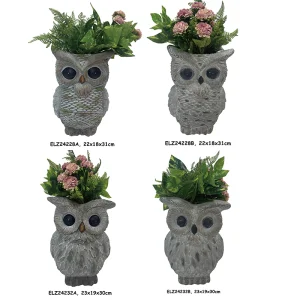
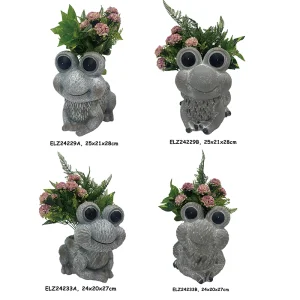
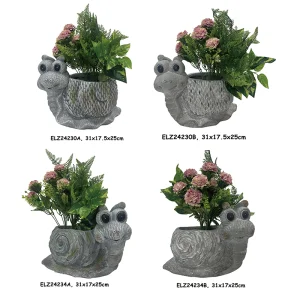
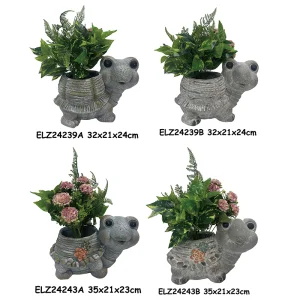
Exporting manufactured garden goods into Japan requires rigorous operational discipline, strict adherence to ocean transport moisture management, and meticulous packaging protocols designed for Japanese warehouse automation systems.
By engineering complementary draft angles (1.5° to 3° side walls), our product sets nest efficiently inside one another. This increases 40ft High Cube container volumetric utilization by up to 35%, drastically lowering unit freight costs to major Japanese ports (Yokohama, Kobe, Nagoya, Osaka).
Japanese e-commerce platforms (Rakuten, Yahoo! Japan, Amazon JP) enforce strict ISTA-1A drop test standards. We provide reinforced double-wall corrugated cartons, corner protectors, and molded pulp cushions to guarantee zero-defect fulfillment.
We support custom silicone and steel master mold development within 15–20 days. Japanese buyers seeking private-label branding can incorporate customized debossed logos, specific Japanese barcode labelling (JAN codes), and tailored color runs.
Technical and commercial guidance for Japanese trade buyers and importers.
Fiber clay planters generally enter Japan under HS Code 6810.99 (Articles of cement, concrete or artificial stone). Under current Japanese Customs (Zeikan) schedules, duty rates range between 0% and 3.3% depending on specific composite composition and preferential trade agreements.
Our specialized Magnesium Oxide (MgO) substrate features a low water absorption coefficient (< 8%). This minimal moisture retention prevents internal ice crystal expansion, guaranteeing structural stability down to -30°C without cracking or flaking.
Standard MOQ is typically 50–100 pieces per SKU/size, with a minimum mixed-item order volume of 1x20ft container (approx. 28 CBM). Flexible multi-item consolidation is available for initial sample orders.
Yes. We provide dual-purpose drainage configurations featuring removable rubber stoppers, elevated interior water reservoirs, or pre-drilled mesh-covered drainage outlets tailored for both indoor retail display and outdoor garden installation.
Production turnaround is generally 30–40 days following deposit approval. Ocean transit from Xiamen Port to Tokyo/Yokohama takes approximately 3 to 5 days, ensuring rapid stock replenishment for seasonal spring sales spikes.
All sealants, pigments, and binders used in our factory undergo heavy-metal and phthalate screening to comply with international REACH standards and Japanese Food Sanitation/Safety guidelines for residential garden accessories.
Elevate your product catalog with high-margin, lightweight fiber clay containers engineered for Japanese architectural standards. Request our comprehensive 2025 B2B OEM Catalog and FOB pricing list today.