Precision-engineered lightweight fiber clay planters designed for high-traffic commercial spaces, hotel terraces in Budapest, and residential masterplans across Hungary.
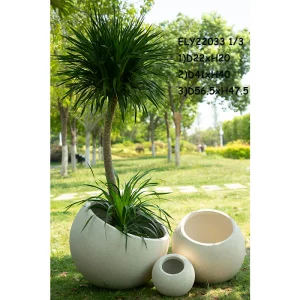
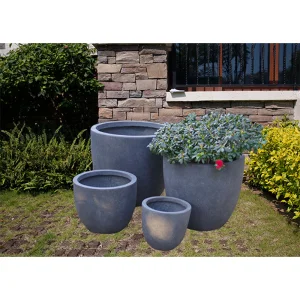
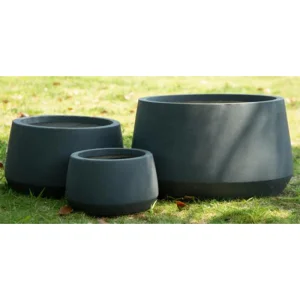
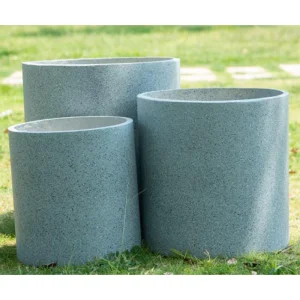
Hungary’s construction and landscape architecture sectors are experiencing a structural evolution. Driven by municipal sustainability initiatives under the Budapest Smart City 2030 framework, urban rejuvenation projects along the Danube corridor, and commercial hospitality expansions in Debrecen, Szeged, and the Lake Balaton resort area, the demand for high-durability commercial pottery has escalated exponentially.
Traditional terracotta and heavy unreinforced concrete planters, long utilized throughout Central Europe, present severe operational liabilities for modern procurement managers. Standard terracotta suffers from high moisture absorption rates (typically 12% to 18%), leading to catastrophic structural spalling during the harsh Pannonian frost cycles. Conversely, solid cast concrete containers impose excessive dead-load penalties on elevated building structures, balcony terraces, and green roof installations.
To resolve these structural and climatic bottlenecks, Hungarian real estate developers, landscape engineering firms, and high-volume garden center distributors are rapidly transitioning to advanced composite materials: primarily Fiber Clay (Fiberglass Reinforced Magnesium Oxychloride Cement). Our specialized OEM/ODM manufacturing facilities supply Hungarian commercial entities with high-strength, low-weight, freeze-thaw proof pottery solutions tailored to regional procurement standards.
Professional buyers in Hungary—ranging from wholesale importers supplying DIY retail chains (such as Praktiker or Bauhaus branches) to specifiers for institutional infrastructure projects—operate under rigid procurement metrics. Sourcing commercial pottery internationally requires satisfying stringent physical, regulatory, and supply chain criteria:
Hungary experiences rapid temperature fluctuations, transitioning from hot summers (+35°C) to freezing continental winters (-20°C). Planter matrices must maintain zero structural micro-cracking across freeze-thaw cycles.
With ocean freight and intermodal transport costs directly impacting landed margins in Central Europe, planters must feature stackable nesting geometry (nested sets of 3 to 5 pieces) to maximize FCL (Full Container Load) volume utilization.
Commercial glazes and surface pigments must withstand intense solar UV exposure without chalking or yellowing, while resisting efflorescence caused by alkaline soil fertilizers.
Our industrial pottery line serving the Hungarian market relies on a engineered material formulation comprising high-purity caustic calcined magnesia (MgO), magnesium chloride ($MgCl_2$) solution binder, high-grade alkali-resistant E-glass fiber mesh grids, and inert natural mineral fillers. This matrix yields physical properties exceeding traditional clay or polyresin alternatives.
| Physical / Engineering Parameter | Elandgo Fiber Clay Pottery | Standard Terracotta | Cast Architectural Concrete | Standard Plastic / Polyresin |
|---|---|---|---|---|
| Flexural Strength (MPa) | 18.5 - 22.0 MPa | 4.5 - 6.0 MPa | 12.0 - 15.0 MPa | 8.0 - 11.0 MPa |
| Bulk Density (g/cm³) | 1.15 - 1.35 g/cm³ | 1.90 - 2.10 g/cm³ | 2.30 - 2.50 g/cm³ | 0.95 - 1.05 g/cm³ |
| Water Absorption Rate (%) | < 7.8% | 14.0 - 18.0% | 8.0 - 10.0% | < 0.5% (Non-porous) |
| Frost Resistance (-25°C / 50 Cycles) | Zero Spalling / Delamination | High Failure Rate | Moderate Micro-cracking | Embrittlement / Cracking |
| Flame Retardancy Rating | Class A1 Non-Combustible | Class A1 | Class A1 | Combustible (Class B2/B3) |
| Environmental Footprint | Low Curing Energy / Recyclable | High Kiln Firing Energy | High Cement Carbon Footprint | Petrochemical Derived |
We provide integrated pottery manufacturing and supply chain solutions tailored specifically to the operational models of various commercial buyers in Hungary:
Custom 3D CAD modeling and prototype casting within 14 days for public squares, streetscapes, and corporate headquarters. Integrated root-barrier liners and customizable sub-irrigation drainage channels meet civil engineering specifications for projects in Budapest District V, VI, and IX.
Optimized nested set packaging protocols designed for high-density container loading. Private-label EAN/UPC barcoding, branded color retail packaging, and customized point-of-sale display pallets configured for immediate distribution across Hungarian and regional CEE retail hubs.
Bespoke surface finishes ranging from distressed stone textures and industrial basalt grey to metallic patinas. Engineered for intensive commercial use on outdoor dining terraces, rooftop lounges, and hotel lobbies along the Danube corridor.
Importing commercial pottery products into Hungary requires strict adherence to European Union regulations and efficient routing through major logistics gateways:
All glazes, pigments, and binding agents used in our manufacturing process undergo third-party testing (SGS/TÜV) to guarantee compliance with EU REACH Regulation (EC) No 1907/2006. Zero lead, cadmium, or toxic volatile compounds.
Orders shipped to Hungary are routed via primary maritime hubs including the Port of Koper (Slovenia), Port of Hamburg (Germany), or Port of Piraeus (Greece), followed by direct rail/road intermodal transport into BILK Logistics Center in Budapest.
Full export documentation support, including EUR.1 certificates of origin, detailed packing lists, and correct HS tariff classification (HS 6914.90 / 6810.99) to streamline customs clearance with NAV (National Tax and Customs Administration of Hungary).
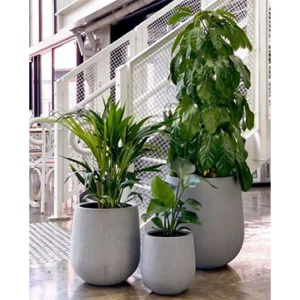
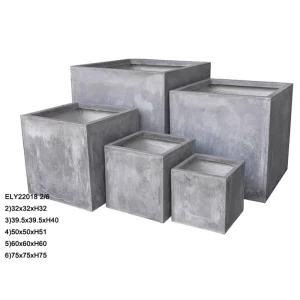
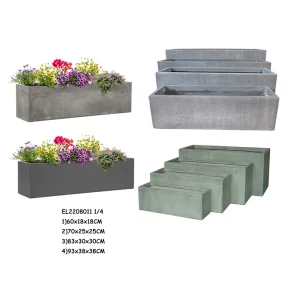
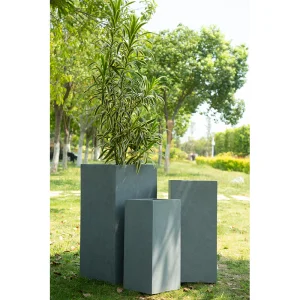
Explore our comprehensive lineup of fiber clay planters, trough containers, decorative statuary, and seasonal garden elements built for the European market.
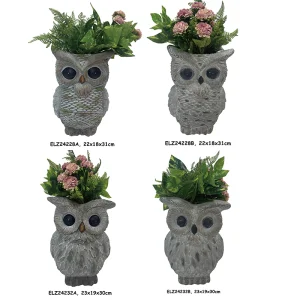
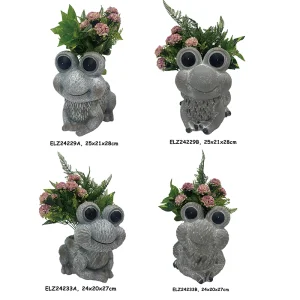
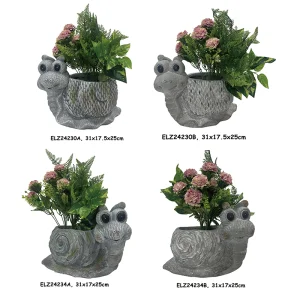
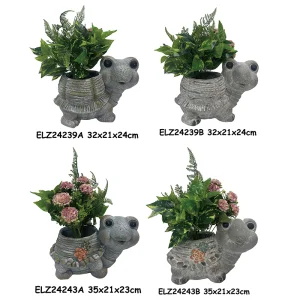
Partner directly with an established OEM/ODM pottery manufacturer. Request technical datasheets, full product catalogs, container price matrices, and custom sample shipments today.