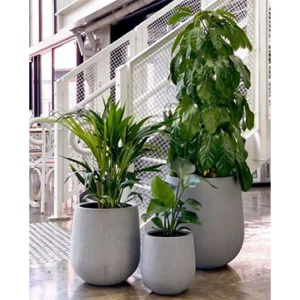
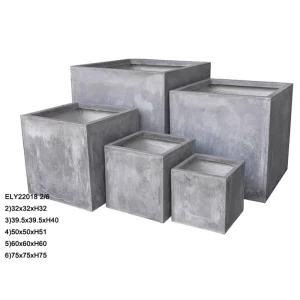
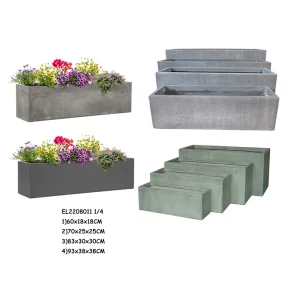
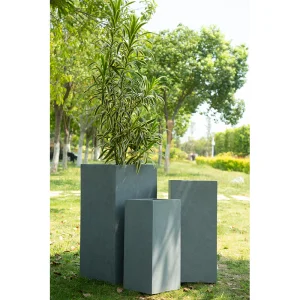
Engineered fiber clay solutions optimized for urban commercial spaces, luxury hospitality venues, and residential high-rises across Turkey.
Istanbul stands at the geographical and economic crossroad of Europe and Asia, acting as a high-growth hub for luxury real estate developments, international hotel chains, boutique commercial complexes, and public urban landscape renovations. From the historic hospitality corridors of Sultanahmet and Karaköy to the modern commercial towers of Maslak, Levent, and Ataşehir, the demand for high-durability, aesthetically sophisticated architectural pottery has scaled exponentially over the last decade.
Historically, the Turkish market relied heavily on traditional red terracotta and dense concrete planters. However, urban architectural evolution has presented structural limitations for these legacy materials. Heavy concrete planters impose significant structural dead loads on high-rise balcony cantilevers and rooftop terraces. Conversely, traditional unglazed clay terracotta suffers high failure rates in Istanbul’s specific microclimate, characterized by coastal wind loads, high humidity, and severe freeze-thaw cycles during winter transitions.
Key Market Pivot: Commercial buyers, landscape architects, and municipal contractors in Istanbul are aggressively migrating from heavy concrete and fragile terracotta to Fiber Clay Composites (MGO Cement + Fiberglass Mesh Matrix). Fiber clay delivers the natural tactile warmth of authentic stone while reducing structural tare weight by 60% and guaranteeing freeze-thaw resistance down to -20°C.
Optimized for structural load constraints in modern residential projects in Vadistanbul, Bomonti, and Kadıköy, enabling large-scale greenery without exceeding building floor mass limits.
Specially sealed surface matrices protect against coastal micro-salinization, high wind pressures along the Straits, and rapid temperature shifts across seasons.
Streamlined maritime supply chains connecting directly to Port of Ambarlı and Port of Haydarpaşa, ensuring fast customs clearance under Turkish import protocols.
Why enterprise buyers are replacing traditional stoneware with advanced ceramic-cement polymer structures.
The global pottery and garden planter industry is undergoing a structural transformation toward sustainable, lightweight, high-performance materials. At Elandgo Crafts (Xiamen Elandgo Crafts Co., Ltd.), our R&D team has spearheaded the formulation of advanced Fiber Clay. By reinforcing magnesium oxide (MgO) cement mixtures with alkali-resistant fiberglass mesh grids, we achieve structural tensile strength that far surpasses standard clay fired pots, while eliminating the brittleness inherent in legacy ceramic processes.
For commercial project directors managing developments in Turkey, this technological advance directly translates to lower sea-freight costs per unit (due to lower volumetric weight ratios), zero breakage during long-distance transit, and significantly reduced installation labor costs on-site.
To assist architectural specifiers, landscape engineers, and B2B buyers in Istanbul with technical compliance, the table below provides a detailed structural comparison between our engineered Fiber Clay products and traditional planter materials.
| Performance Parameter | Elandgo Fiber Clay | Traditional Terracotta | Precast Concrete | Rotomolded Plastic |
|---|---|---|---|---|
| Density / Bulk Weight | 1.2 - 1.4 g/cm³ (Lightweight) | 2.1 - 2.3 g/cm³ (Heavy) | 2.4 - 2.6 g/cm³ (Extremely Heavy) | 0.9 - 1.1 g/cm³ (Ultra Light) |
| Frost / Thermal Crack Limit | -20°C to +50°C (No Cracking) | -5°C (High Spalling Risk) | -10°C (Micro-cracking risk) | -15°C (Becomes Brittle) |
| Structural Reinforcement | Multi-layer Fiberglass Mesh | None (Brittle structure) | Steel rebar / Wire mesh | None |
| UV Degradation & Fade | UV-Stabilized Mineral Pigment | Natural Fade | High Weather Resistance | High Fading & Chalking |
| Tactile Surface Finish | Natural Matte Stone / Concrete texture | Clay / Matte finish | Rough Industrial Concrete | Artificial Plastic Sheen |
| Environmental Footprint | Low-heat natural curing process | High-energy kiln firing | High CO2 Portland Cement | Petroleum derivative base |
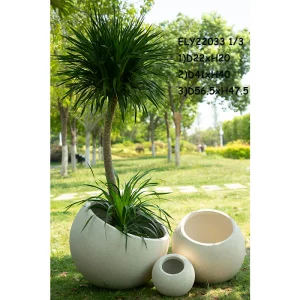
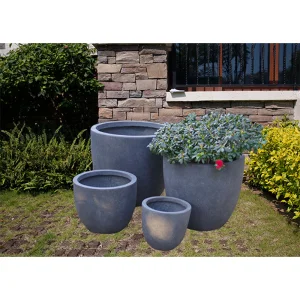
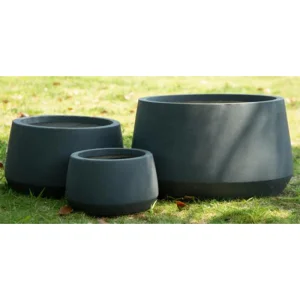
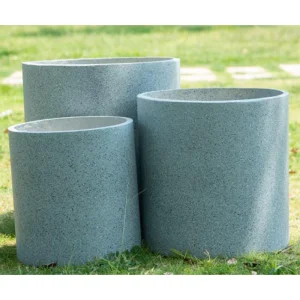
Restaurateurs along the Bosphorus waterfront (Nışantaşı, Bebek, Karaköy) require heavy-looking architectural pots that can withstand coastal salt spray while allowing rapid seasonal reconfiguration. Our cylinder and low bowl fiber clay lines provide ideal spatial zoning solutions for open-air dining areas.
Major master-planned projects like Galataport, Zorlu Center, and Metropol Istanbul utilize large trough and square planters to define public pedestrian walkways, establishing green boundaries with low structural impact on subsurface parking garages.
As global environmental regulations tighten and Turkish importers prepare for stringent EU carbon border adjustments, manufacturing efficiency and material sustainability have become vital selection criteria for wholesale importers. Elandgo Crafts is committed to advancing sustainable production standardizations across four core technical pillars:
Replacing traditional coal and gas kiln systems with room-temperature ambient solar-assisted curing chambers, reducing carbon intensity per unit produced by over 75% compared to ceramic pottery firing.
Developing internal modular water-reservoir inserts equipped with soil moisture sensors tailored for hot Mediterranean summers, reducing water consumption by 40% in commercial landscape installations.
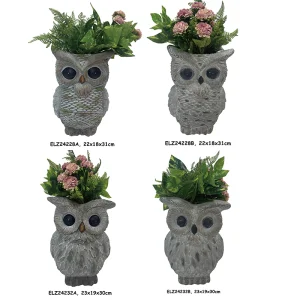
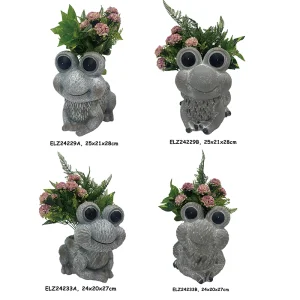
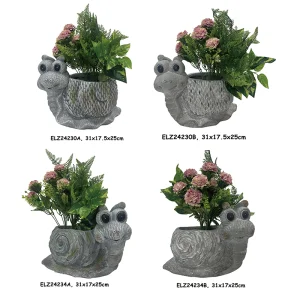
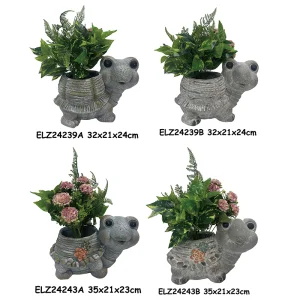
Explore our full line of classic architectural profiles, contemporary troughs, and artisanal decorative statues available for wholesale volume shipping.
Expert answers regarding shipping logistics, customs compliance, material standards, and OEM customization.
Equip your next commercial project or expand your wholesale catalog in Istanbul with high-performance, lightweight fiber clay pottery. Contact our trade engineering team today for pricing catalogs, technical specifications, and factory direct quotations.
Send Inquiry Now