Engineered Fiber Clay and Magnesium Oxide (MGO) sculptures designed to satisfy rigorous Chilean building standards and micro-climate demands.
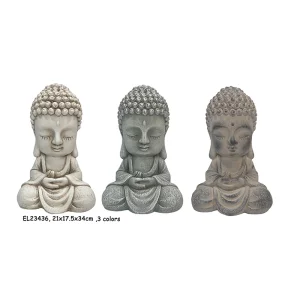
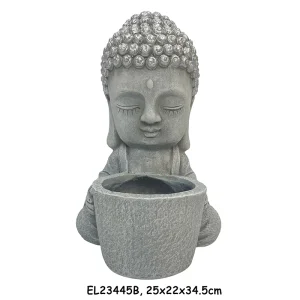
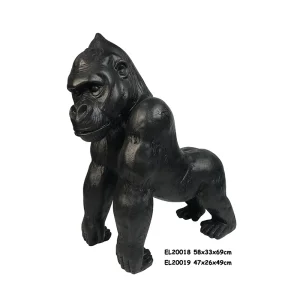
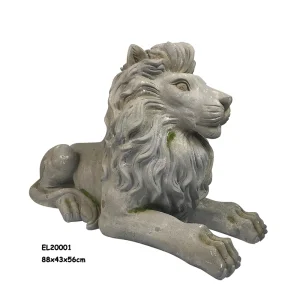
Navigating urban modernization, commercial expansion, and extreme weather variances across Chile's macro-regions.
Chile stands as one of South America's most economically stable and urbanized nations. Metropolitan hubs such as Greater Santiago, Concepción, and Valparaíso are undergoing rapid commercial real estate transformations. From premium high-rise roof gardens in Las Condes and Vitacura to major civic plazas and coastal promenades, the demand for large-scale architectural statuary, decorative urns, and sculptural focal points has surged by over 34% in recent procurement cycles.
Architects and landscape planners are moving away from traditional, heavy concrete or bronze monuments due to structural dead-weight constraints in seismic design, opting instead for advanced composite materials that offer identical aesthetic splendor with drastically reduced mass.
Chile presents a unique climatic spectrum that demands extraordinary material durability from statutory installations. Sourcing managers must consider four distinct environmental stressors:
Evaluating local Chilean artisan foundries against high-volume, tech-driven international supply chains.
Local sculptural fabrication within Chile is predominantly anchored around artisanal stone masonry in Putaendo, small-scale bronze foundries in Santiago’s industrial perimeters, and boutique ceramic studios. While local artisans excel in custom fine-art restoration and heritage conservation projects, Chile’s domestic manufacturing sector faces significant bottlenecks when fulfilling large-scale commercial orders for hospitality chains, public parks, and residential real estate developers:
Chile's industrial mining base is world-renowned for raw copper and lithium, yet specialized synthetic resins, high-purity Magnesium Oxide (MGO) slurries, and alkaline-resistant fiberglass mesh must be imported at high spot rates. This increases the bill-of-materials (BOM) cost for domestic Chilean statue workshops by 40-60% compared to integrated East Asian supply hubs.
A typical local Chilean workshop utilizing traditional hand-carving or hand-cast wet concrete can yield fewer than 15-20 large-format statuary units per month per facility. For commercial developments requiring hundreds of uniform fiber clay light-weight planters, Buddha statues, or garden sculptures, local procurement leads to multi-month project delays.
Domestic Chilean producers rarely possess in-house climatic testing chambers, freeze-thaw delta testing rigs, or multi-axis vibration testing for seismic shear balance. Sourcing from accredited global factories bridges this gap by ensuring every batch arrives backed by physical lab certificates.
Unlocking financial and operational efficiencies through the China-Chile Free Trade Agreement (FTA).
Under the enhanced China-Chile Free Trade Agreement (FTA), Chilean importers benefit from 0% preferential tariff rates on most stone, ceramic, and composite mineral craft categories (HS Code 6810 and 3926 series). This duty-free status drastically lowers total landed cost (TLC) compared to European or North American exports, which carry higher freight overheads and premium labor markups.
Key trade routes from major Chinese export hubs (such as Xiamen Port in Fujian Province) connect directly to Chile's primary maritime gateways:
When procurement directors in Santiago calculate TCO, product weight is as critical as unit purchase price. Traditional concrete or cast iron sculptures incur exorbitant ocean freight, drayage fees, and heavy crane unloading expenses. Fiber Clay (MGO) sculptures change this equation completely:
TCO = Unit Factory Cost (FOB) + Reduced Ocean Freight (70% Weight Saving) + Zero Duty (FTA) + Low Local Handling (No Heavy Crane Required)
How advanced manufacturing processes guarantee precision, scale, and longevity for Chilean B2B buyers.
Our OEM manufacturing lines employ a proprietary matrix blending Magnesium Oxide (MGO), Magnesium Chloride (MgCl2), high-strength fiberglass mesh reinforcement, and organic clay slurry. This creates a non-combustible, shatter-resistant architectural material with structural flexural strength exceeding 18 MPa.
Using industrial 3D digital scanners and automated CNC master mold carving, we transform custom Chilean architectural blueprints or artist sketches into physical master molds in under 10 days. Batch reproducibility ensures 100% volumetric consistency across thousands of units.
Every statue undergoes multi-stage surface treatments including UV-inhibiting clear coats, anti-efflorescence sealants, and hydrophobic nano-sealers. This guarantees resistance against yellowing, salt erosion, and surface chalking under intense Chilean atmospheric conditions.
Tailoring statutory aesthetic and mechanical properties to regional commercial projects.
High UV exposure and hyper-arid air deteriorate traditional paints within months. Our inorganic oxide pigmented Buddha and zen statues retain full color integrity because colorants are molecularly integrated throughout the entire MGO wall matrix rather than sprayed on the surface.
Coastal moisture laden with sodium chloride rapidly corrodes steel-reinforced art pieces. Our 100% non-metallic fiberglass mesh structural framework eliminates internal rusting, spalling, and cracking in Viña del Mar and Valparaíso sea-facing installations.
Structural load limits on Santiago high-rises enforce strict weight limits per square meter. Our Fiber Clay statues provide the commanding visual gravitas of natural granite or heavy concrete while reducing structural static load by up to 70%, simplifying structural engineering sign-offs.
Engineered performance parameters for commercial decision makers in Chile.
| Performance Metrics | Advanced Fiber Clay (MGO) | Cast Precast Concrete | Polyester Resin / GRP | Natural Carved Granite |
|---|---|---|---|---|
| Average Density / Weight | Lightweight (1.2 - 1.4 g/cm³) | Heavy (2.3 - 2.5 g/cm³) | Medium (1.5 - 1.7 g/cm³) | Extremely Heavy (2.6+ g/cm³) |
| Seismic Shock Resilience | Excellent (High Tensile Flexure) | Poor (Brittle Fracture Risk) | Moderate | Poor (High Static Mass Risk) |
| UV Degradation Resistance | Outstanding (Inorganic Matrix) | Good | Poor (Yellowing/Chalking) | Impervious |
| Freeze-Thaw Tolerance (-20°C) | Passed (Low Water Absorption <8%) | Moderate (Cracking Risk) | Good | Excellent |
| Fire Safety Rating | Class A1 Non-Combustible | Class A1 Non-Combustible | Combustible (Class B/C) | Class A1 Non-Combustible |
| Chilean Import Duty (China FTA) | 0% Duty Rate | 0% Duty Rate | 0% Duty Rate | 0% Duty Rate |
| Mass Customization (OEM) | High Precision / Fast Lead | Slow Molding / Heavy Tooling | High Cost Molds | Extremely Slow / Manual |
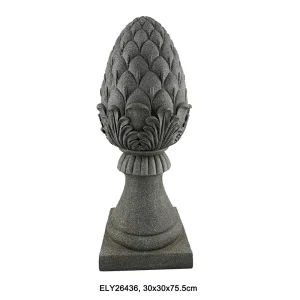
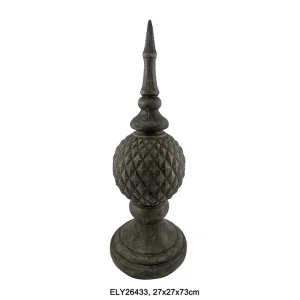
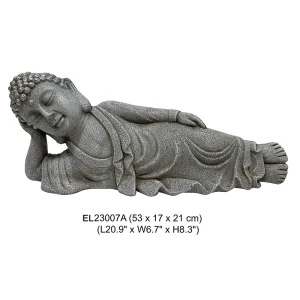
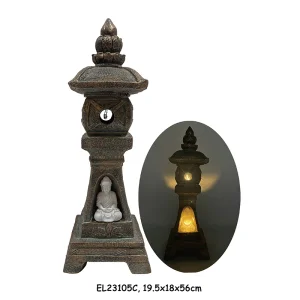
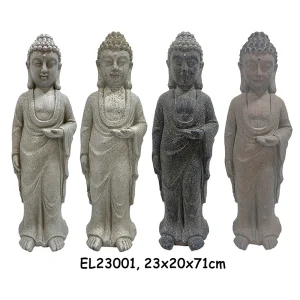
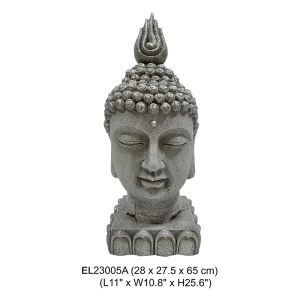
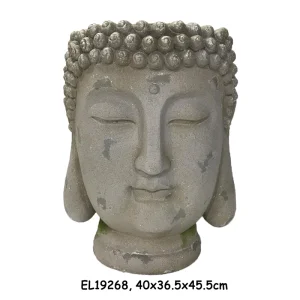
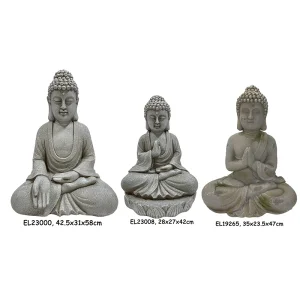
Explore our full line of weather-tested architectural figurines, outdoor lighting pagodas, and garden accents.
Technical and logistical insights for landscape architects, commercial buyers, and statue importers in Chile.
Our Fiber Clay and Magnesium Oxide (MGO) statuary utilize UV-resistant inorganic mineral colors mixed directly into the composite slurry prior to molding. Unlike superficial acrylic paints used by low-cost producers, our solid-body mineral pigmentation prevents peeling, bleaching, or surface flaking even in high UV index environments like the Atacama region or high-altitude Andean resorts.
Under the China-Chile Free Trade Agreement (FTA), importers must submit a valid Certificate of Origin (Form F or FORM E FTA equivalent issued by China Council for the Promotion of International Trade - CCPIT). Our export documentation department prepares all paperwork, including commercial invoices, packing lists with detailed net/gross weights, and HS Code declarations (6810.99 or 3926.40), ensuring 0% preferential customs tariff entry at Chilean entry ports.
Yes. We specialize in OEM and ODM bespoke manufacturing for commercial real estate developers, hotel chains, and public landscape contractors in Chile. Clients provide 3D CAD models, render files, or scale sketches. Our factory produces digital 3D models, creates clay prototypes, and casts production molds within 10 to 14 days, followed by full mass-production scaling.
Direct ocean vessels departing from Xiamen or Ningbo port arrive at Puerto Valparaíso or San Antonio in approximately 28 to 32 days. To minimize freight costs, we utilize master carton nesting and specialized palletizing techniques. Because Fiber Clay is 70% lighter than concrete, container space is fully optimized for volumetric cubic capacity (CBM) rather than hitting weight limits prematurely.
Request a complete wholesale price list, material laboratory test reports, or custom project consultation for your Chilean architectural developments.