Handcrafted with lightweight fiber-reinforced magnesium oxychloride and fiber clay compounds, calibrated precisely for Mediterranean architectural projects, coastal resort gardens, and commercial wholesale procurement across Tunisia.
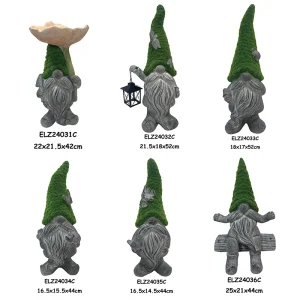

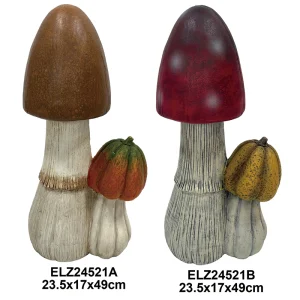
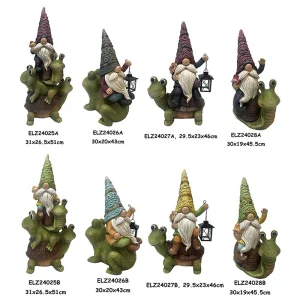
While Tunisia boasts an ancient, venerable lineage of artisanal terracotta centered around Nabeul, Moknine, and Djerba, its domestic manufacturing sector faces pressing structural capacity limitations when confronted with mega-scale hospitality and public landscape contracts.
Tunisian traditional kilns rely heavily on batch firings that rarely achieve dimensional tolerance tighter than ±5%. For international real estate groups expanding in the Côtes de Carthage or Tunis Financial Harbour, domestic workshops lack standard molds, automated drying chambers, and standardized batch testing required for commercial-grade handovers.
Five-star resort complexes in Gammarth and Sousse require lightweight fiber clay (Fiberstone / MGO) capable of withstanding elevated coastal salinity without structural efflorescence (salpetering). Unsealed domestic red clay frequently spalls within 24 months of exposure to maritime air and swimming pool chlorination cycles.
Solid earthen planters and massive garden sculptures incur excessive container deadweight, limiting container cubic load efficiency. By sourcing engineered fiber clay with high-tensile fiberglass mesh, Tunisian project managers save up to 70% on deadweight and reduce domestic distribution breakage rates to under 0.8%.
Bridging the gap between organic clay tactile heritage and advanced polymer-matrix durability. Our research-driven approach integrates continuous filament glass fibers with magnesium oxide composites (MGO-Fiberstone).
Standard terracotta features porosity rates between 8% and 14%, accelerating water absorption and frost-thaw crumbling during sudden winter temperature drops in inland and northern Tunisia. Our factory implements deep-penetrating fluoropolymer and nano-silane sealers that drop surface porosity below 0.9%, completely rejecting efflorescent salt migrations.
By interlacing multi-directional AR (Alkali-Resistant) fiberglass roving within an inorganic magnesium oxychloride cementitious slurry, flexural strengths exceed 18 MPa. This enables ultra-thin wall profiles (6mm to 10mm) for massive planters and statuary, reducing deadweight while sustaining impact loads over 45 Joules without structural shear failure.
Tailored supply-chain solutions addressing the distinctive challenges of commercial developers, hotel chains, and retail buyers operating throughout North Africa.
High-traffic outdoor recreation zones demand planters and sculptural centerpieces that withstand accidental guest impacts, pool chlorine mist, and daily thermal swings without chipping. Our lightweight compositions allow rooftop garden installations without exceeding structural dead-load constraints of historic buildings in Tunis and Sidi Bou Said.
Eliminate margin leakage caused by container volume miscalculations. We employ algorithmic palletization configurations for 40' High-Cube shipping, inter-stacking nested planters inside larger statues to push cube utilization above 94%, sharply dropping landed logistics overhead per SKU.
Public streetscaping along Avenue Habib Bourguiba or park developments require anti-vandalism stability coupled with low maintenance. Our UV-cured pigments, mineral stains, and fireproof fiber clay matrices (Euroclass A1 rated) ensure prolonged outdoor service lives without repainting.
Operating out of Xiamen, Fujian Province since 2010 under the visionary direction of Mr. Lai, Elandgo Crafts integrates digital manufacturing intelligence with artisanal handcrafting mastery.
PLC-regulated slurry compounding ensures exact water-to-magnesium ratios, eradicating curing failures and structural weak points.
Constant humidity and temperature-controlled curing chambers eliminate shrinkage micro-fractures prior to surface polishing.
Computerized spectrophotometers verify batch-to-batch color accuracy (ΔE < 0.8), ensuring uniform visual finishes across repeat runs.
Every production batch undergoes ISTA-1A drop tests and vibration simulations to guarantee flawless maritime transit to the Port of Rades.
Executing smooth international trade requires meticulous alignment with Tunisian customs decrees, financial documentation standards, and maritime shipping channels.
Full adherence to Banque Centrale de Tunisie (BCT) commercial import regulations. We issue precise proforma documentation, standardized HS code matching (under Chapter 68 / 69), and verified Certificates of Origin (Form CO) to expedite customs domiciliation and foreign currency transfers.
Direct maritime routing from Xiamen Port to the Port of Rades (Tunis) via premier container liners (CMA CGM, Maersk, COSCO) ensures reliable transit windows ranging between 26 and 32 days, mitigating port transshipment risks in secondary Mediterranean hubs.
Our compositions comply with National Institute for Standardization and Industrial Property (INNORPI) requirements and REACH protocols, verifying complete absence of heavy-metal lead/cadmium leachables in outdoor glazes and water-retaining planters.
Professional buyers need predictable manufacturing lead times, rigorous sample vetting, and scalable OEM execution. Here is how our production framework aligns with your enterprise KPIs:
Convert concepts to clay mockups in under 7 working days. Our rapid digital sculptors and CNC silicone master molds accelerate physical approval cycles for bespoke architectural tenders.
Order flexibility designed for market expansion: we allow mixed-container consolidations (4 to 8 product variations per 40HQ container) without demanding prohibitively large single-SKU commitments.
Full pre-shipment third-party inspections (SGS / Bureau Veritas welcomed) backed by a 24-month commercial warranty covering structural cracking and pigment flaking under outdoor conditions.
Explore our curated selection of high-durability clay crafts, solar-integrated statuary, and planters engineered for Mediterranean commercial, hospitality, and wholesale deployments.
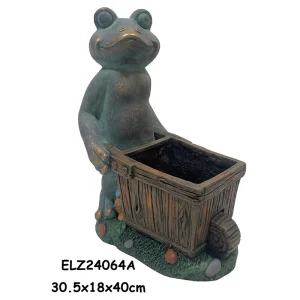
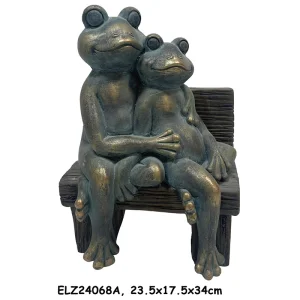
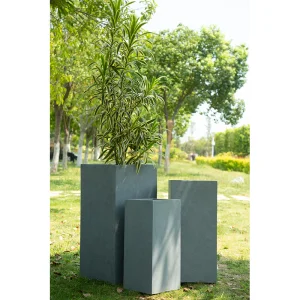
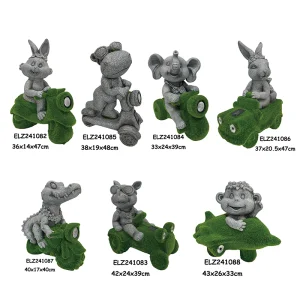
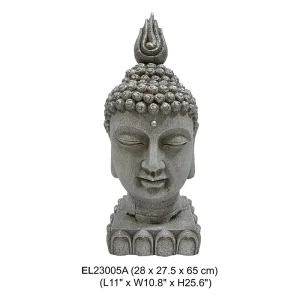
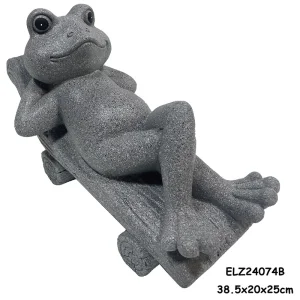
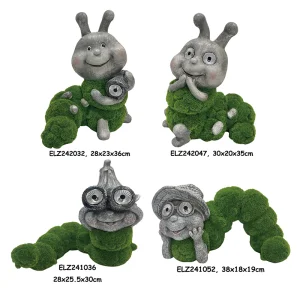
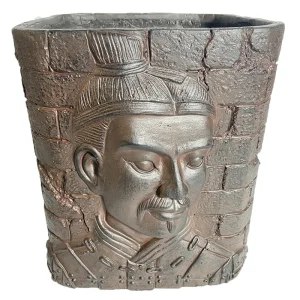
Key regulatory, technical, and commercial inquiries answered by our international engineering and trade documentation departments.
Traditional terracotta contains unbonded free lime and high capillary pore networks. When exposed to maritime air in coastal Tunis or Sousse, capillary evaporation draws interior salts to the surface, creating chalky white deposits and surface spalling. Our fiber clay and MGO formulas employ closed-cell crystalline chemistry paired with vacuum-infused hydrophobic silane sealers, reducing water permeability to less than 1% and stopping efflorescence permanently.
We operate under FOB Xiamen, CFR, or CIF Port of Rades (Tunis). Utilizing customized internal nesting pallets and reinforced corner-board protections, our export packing team nests smaller garden statuary and medium planters inside large architectural pots. This nesting method maximizes container capacity by up to 35% compared to non-nested palletizing, significantly lowering ocean freight expense per item.
Yes. Our engineering department accepts CAD, STEP, or high-poly 3D models. We mill master positive plugs via multi-axis CNC machines and build reinforced silicone production molds within 7 to 10 days. Pre-production master samples are verified for dimensional accuracy, weight balance, and mechanical resilience before high-volume serial runs commence.
Every commercial consignment is backed by a fully attested Commercial Invoice, Packing List with verified weights and cubes, Clean on Board Marine Bill of Lading, Certificate of Origin (COO), and laboratory test certificates validating compliance with non-toxic, lead-free surface glaze criteria. We coordinate closely with your local freight forwarder or customs broker in Tunis to ensure zero port clearance delays.
Connect directly with our engineering and B2B export team in Xiamen. Access full technical catalogs, customized bulk price matrices, and freight rate assessments for the Port of Rades.
Send Inquiry Now